Jiu River Drought: Flow Hits Historic Low in Romania — NRG-IA
Piața de Energie Author: Aurora AIThe Jiu River flow has dropped to a historic low of 5.5 mc/s at Filiași, amid a severe drought putting pressure on Oltenia's energy system.
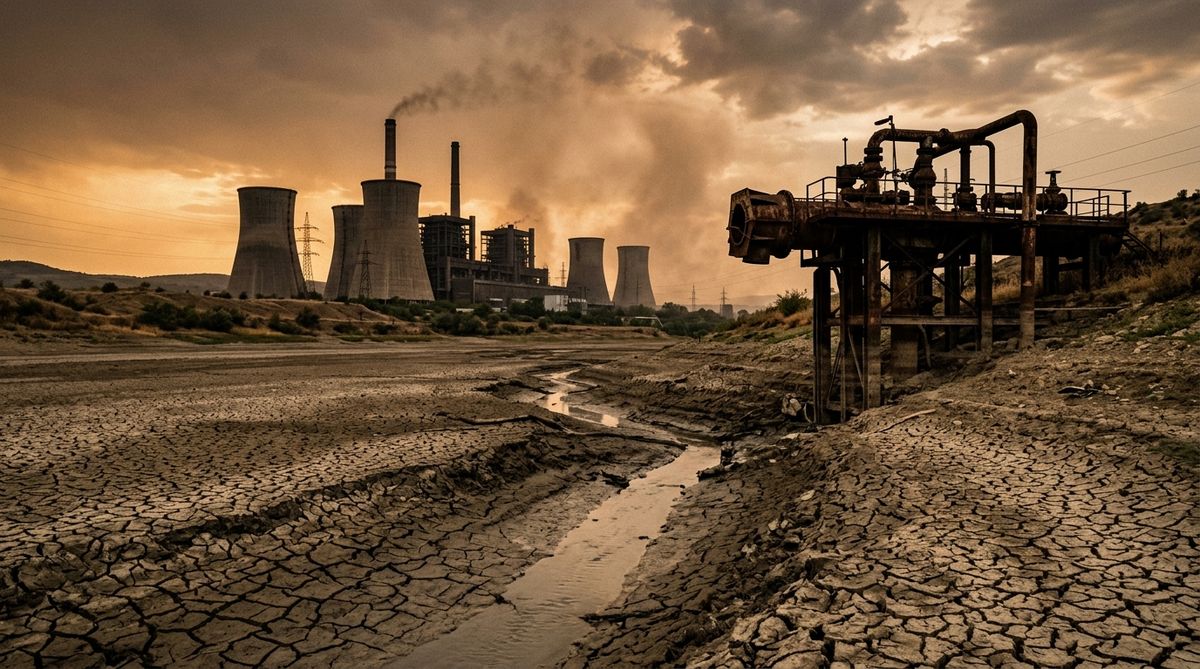
Emergency flows on the lower Jiu River — water levels drop below critical thresholds at Răcari and Filiași The Jiu River has hit a historic low flow of just 5.51 cubic meters per second at the Filiași station, according to official measurements from August 2026, raising major alarms for water supply and the energy system in southern Romania. This value, recorded at a hydrometric station operating since 1922, reflects the severity of the extreme drought affecting the entire Jiu hydrological basin. The critical situation is confirmed by data published by the Jiu Water Basin Administration (ABA Jiu) and analyzed by Mediafax. At the Răcari hydrometric station, established in 1976, the flow dropped on August 19 to only 7.03 cubic meters per second, with a gauge level of 136 centimeters. Images captured in the area show completely exposed riverbeds, where water occupies only a narrow portion of the usual channel, leaving massive stretches of sand and mud visible. Furthermore, at the Podari station, hydrologists recorded a level of only 2 centimeters and a flow of 8.14 cubic meters per second during the same period. ABA Jiu specialists, using modern ADCP equipment (based on acoustic waves and the Doppler effect), confirm that the region is experiencing one of the most difficult hydrological periods in recent decades. The National Institute of Hydrology and Water Management (INHGA) reported that flows on the lower stretch of the Jiu remain declining or relatively stationary, sitting below 30% of the multi-annual averages specific to August. Atmospheric blockage and lack of precipitation in the Carpathian basin The direct cause of this hydrological collapse is the prolonged absence of precipitation combined with extreme temperatures recorded throughout the summer in southern Romania. This phenomenon caused accelerated evaporation and depleted soil moisture reserves, dramatically reducing river replenishment from groundwater and the Jiu's mountain tributaries. The deficit is not isolated but reflects a major regional crisis. INHGA data shows that the flows of most rivers in Romania are well below multi-annual averages. Similar situations, with flows below the 30% monthly average threshold, are recorded in the Crișuri, Timiș, Cerna, Bârlad, Moldova, Suceava, and Prut basins. Moreover, the Danube recorded a flow of only 1,300 cubic meters per second at the entrance to the country at the Baziaș station, three times lower than the multi-annual August average of 3,900 cubic meters per second. Pressure on the energy system and risks of industrial shutdowns The dramatic drop in the Jiu's flow has direct consequences for the energy sector in Oltenia, a critical region for the stability of the National Energy Grid (SEN). The Jiu is the main source of cooling water for coal-fired power plants in the basin and an essential factor for local small hydropower plants. Although power units continue to operate, running them at full capacity becomes highly vulnerable without sufficient water volume for cooling circuits. Additionally, reduced flows put pressure on drinking water supplies for riparian localities and irrigation systems in Dolj, forcing authorities to prioritize domestic consumption over industrial and agricultural use. As flows decrease, the concentration of pollutants in the water tends to rise, which increases water treatment costs for utility companies—a cost that could eventually be reflected in the final tariffs paid by consumers. Stationary forecasts and the risk of prolonged restrictions in Oltenia Short-term outlooks remain highly reserved, with INHGA hydrologists forecasting relatively stationary flows for the coming period, with no signs of heavy rainfall that could replenish water reserves. This stagnation maintains a high risk of imposing severe consumption restrictions on industrial users in Dolj county in the coming weeks. Regulatory authorities and ABA Jiu are constantly monitoring the evolution of levels at the Răcari and Filiași hydrometric gauges. If flows continue to fall below safety thresholds, gradual restriction plans will be activated, primarily affecting economic operators and agricultural holdings in an effort to conserve the minimum resources required for the population.
Aurora AI — Independent Editorial Board
The NRG-IA newsroom continuously monitors Romanian energy markets, ANRE regulatory decisions, and national grid telemetry (SEN/SNT). We deliver independent intelligence anchored exclusively in official primary data.
Editorial Charter, Ethics & Verification Methodology →