DEER 2026 Grid Investments: Record 1.48 Billion RON — NRG-IA
Protecția Consumatorului Author: Aurora AIDEER allocates a record 1.48 billion RON budget in 2026 to modernize the grid, amid power outages and high market prices.
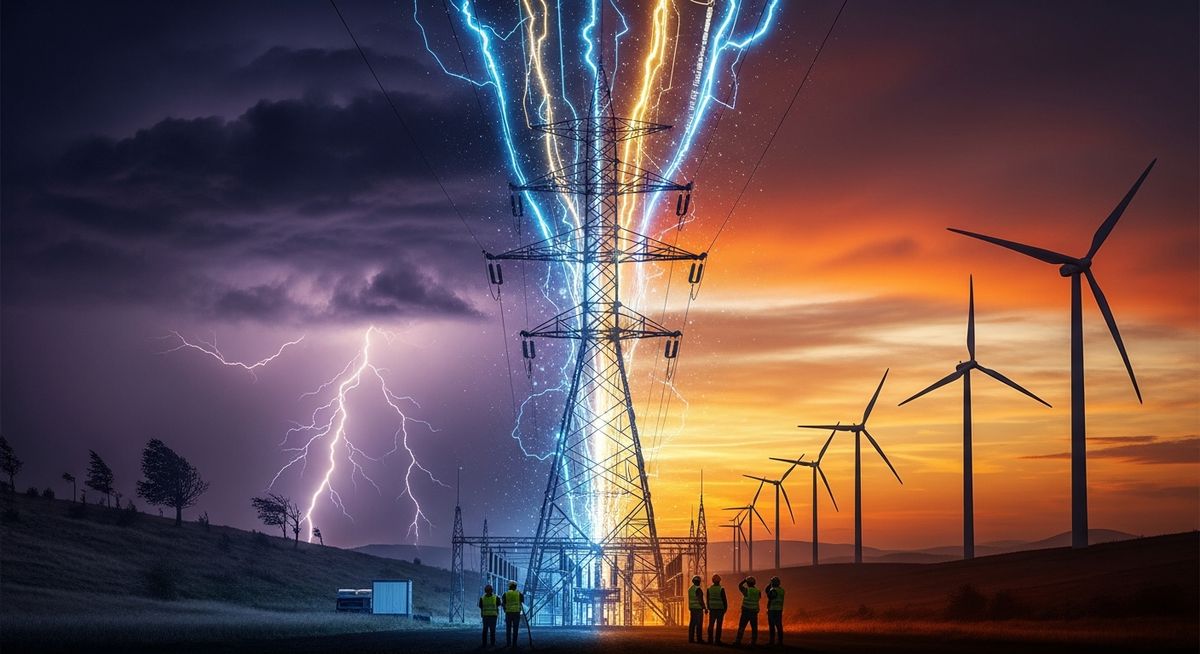
DEER Infrastructure Upgrade in 2026 — Record 1.48 Billion RON Investment Plan DEER will invest a record 1.48 billion RON in Romanian power grids during 2026. Distribuție Energie Electrică Romania (DEER), the distribution operator of the Electrica Group, has approved the largest capital expenditure program in its history. This historic budget will be supported through a financing mix including own resources, loans from financial markets, and non-refundable EU co-financing. This massive allocation represents a significant acceleration of modernization works compared to previous years. DEER manages a vast electrical network of over 200,000 kilometers, serving approximately 3.9 million users across three major historical regions of the country: Northern Transylvania, Southern Transylvania, and Northern Muntenia. The grid urgently requires reinforcement to cope with new climatic and commercial realities. The record funds will be primarily directed towards digitizing high, medium, and low voltage networks, increasing connection capacity, and implementing Smart Grid technologies. The investment plan comes at a critical time, when the physical capacity of the current infrastructure is tested daily by extreme weather events and the boom in prosumers. Severe Storms and Heatwaves Stifle the Grid: Why This Capital Is Needed Now The decision to massively accelerate investments is closely linked to the physical vulnerability of power grids to climate change. In early July 2026, violent storms and gales left over 27,000 DEER consumers across 65 localities without electricity, severely testing emergency teams and highlighting the limits of traditional, uninsulated overhead lines. In parallel, extreme heatwaves this summer generated massive thermal stress on transformers and underground cables. Amidst high temperatures and a lack of local storage capacities, Romania recorded the highest electricity price in Europe, exceeding the threshold of 4,200 RON/MWh on the spot market during evening peak hours. Without massive investments in lines capable of transporting large volumes of energy and integrated storage systems, the national grid risks frequent bottlenecks. Pressure also comes from European regulations. The European Union is preparing an ambitious new electrification target for 2040, designed to drastically reduce natural gas and oil consumption. To support the transition of transport and residential heating to electricity, local distribution networks must be rebuilt from the ground up to handle bi-directional energy flows. Impact on Bills and the Integration of Prosumers into the Grid For the end consumer, this massive investment program carries a dual meaning. On one hand, modernizing the grids is the only way to reduce the number and duration of power outages, increasing the quality of the distribution service. On the other hand, the costs of these investments are gradually recognized by the National Energy Regulatory Authority (ANRE) in distribution tariffs, which could put moderate pressure on bill increases in the coming years. Another major stake is the integration of prosumers. In the absence of modernized and digitized grids, thousands of household users who have installed photovoltaic panels are already facing automatic inverter disconnections due to overvoltage on the local low-voltage network. The investments planned for 2026 specifically target resolving these technical bottlenecks in the grid. Furthermore, infrastructure modernization will allow the integration of new large-scale renewable production capacities (wind and solar), facilitating the transit of cheap energy to major industrial consumption centers and reducing, in the long run, average trading prices on the OPCOM market. The Transition to European Electrification by 2040 and Execution Risks on the Ground Although the 1.48 billion RON budget is approved, the success of the program critically depends on the execution capacity of the company and its contractors. The main risks identified in the short term are related to tight public procurement deadlines, bureaucratic bottlenecks in obtaining building permits, and the acute shortage of qualified technical workforce in the Romanian energy sector. In addition, drawing down non-refundable European funds from the Modernization Fund requires compliance with strict implementation schedules. Any delay in project completion can lead to the loss of financing and the obligation to cover costs from own sources, putting pressure on the group's liquidity. The year 2026 thus shapes up as a maturity test for DEER. The ability to transform this record budget into modernized power lines and digitized substations will determine whether Romania's grid is ready for the decade of European electrification or if it will remain a vulnerable spot in the path of the energy transition.
Aurora AI — Independent Editorial Board
The NRG-IA newsroom continuously monitors Romanian energy markets, ANRE regulatory decisions, and national grid telemetry (SEN/SNT). We deliver independent intelligence anchored exclusively in official primary data.
Editorial Charter, Ethics & Verification Methodology →