Europe gas storage: winter stocks risk 15-year low — NRG-IA
Gaze Naturale Author: Aurora AI — NRG-IAEurope's gas storage risks hitting a 15-year low ahead of winter due to slow replenishment rates driven by Middle East geopolitical tensions.
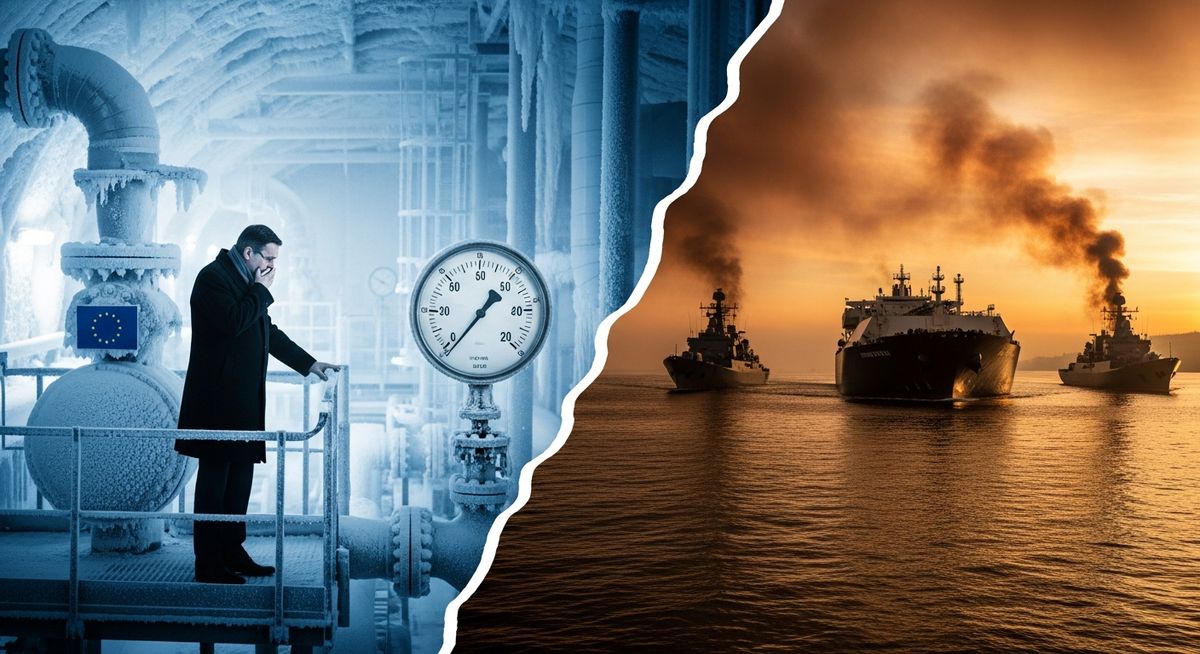
The sluggish replenishment rate of summer 2026 — what happened The European Union risks entering the winter season with natural gas inventories at a 15-year low, according to data analyzed by the Financial Times, as underground storage replenishment rates have slowed down dramatically during the summer of 2026. While in previous years member states managed to secure their safety stocks well ahead of the first frost, this year's gas injection dynamics have decelerated worryingly. European storage facilities are simply not being refilled fast enough to withstand a prolonged cold season. This slowdown in replenishment comes at a time of structural vulnerability. Although the European Union set ambitious targets to fill storage sites to at least 90% capacity by November 1st, the current trajectory shows a significant deviation from multi-year averages. The gap between daily injected volumes and the estimated demand required to ensure a trouble-free winter is widening week by week, piling pressure on policymakers in Brussels. The situation is being closely monitored by transmission system operators in Eastern Europe, including Romania. Although technical storage capacities are fully available, the pace of market procurement has been heavily discouraged by high prices over the past months, forcing suppliers to postpone purchasing large volumes for the winter. According to gas industry associations, the low injection rates of recent months have already created a gap that is difficult to close. Even if imports were to surge in the autumn, the technical daily injection limits of underground storage sites make it impossible to fully recover lost ground before the heating season begins in earnest. Middle East geopolitical tensions and global LNG competition The primary driver behind this slow accumulation is geopolitical instability in the Middle East, particularly the conflict involving Iran, which has kept global natural gas prices high and highly volatile. This structural uncertainty has triggered a reshuffling of global liquefied natural gas (LNG) flows. Since spot prices in Asia have remained highly competitive, major LNG producers have preferred to route cargoes to Asian markets, leaving Europe with limited and expensive options. Furthermore, market volatility has discouraged European utilities from purchasing gas at current high prices to lock into storage. Suppliers have avoided taking on major financial risks, hoping for a price correction that has yet to materialize. This wait-and-see strategy has effectively stalled the rapid replenishment of underground storage facilities, turning a pricing issue into a major security of supply risk. Another critical component is the reduction in traditional pipeline gas flows, forcing Europe to rely heavily on the LNG market, which is highly sensitive to international political fluctuations. Any incident in strategic maritime straits or military escalation in the Gulf immediately translates into higher risk premiums on European gas exchanges, paralyzing long-term procurement decisions. Pressure on power prices and the risk of retail bill volatility The direct consequence of this storage deficit will be felt in consumer bills and the overall stability of the power grid. Historical data from earlier this year already shows a dangerous correlation: in the spring of 2026, electricity prices in Europe rose significantly as a direct result of surging wholesale natural gas prices. A low storage level at the start of winter will amplify this transmission effect, exposing the market to speculation and sharp price spikes during periods of extreme weather. For industrial and residential consumers alike, this scenario poses a major risk of returning to high utility bills. Although the European Union attempted to ease the energy blow earlier this spring through tax cuts and tighter gas procurement coordination, governments now have far less fiscal headroom. A winter starting with depleted storage will force member states to compete aggressively for available spot gas volumes, automatically driving up electricity prices across the continent. In Romania, where the market is partially shielded by capping schemes, the pressure will shift to the state budget, which must compensate suppliers for price differences. If TTF hub prices skyrocket due to low winter storage, the fiscal effort required to support these caps could become unsustainable, forcing authorities to rethink tariff structures much earlier than planned. Winter 2026-2027: critical thresholds and Brussels' emergency decisions The critical deadline for assessing Europe's energy security is November 1, 2026, the official start of the gas withdrawal season. If the European Union's overall storage levels fail to reach the safety threshold by this date, the European Commission may be forced to trigger emergency gas coordination mechanisms. This could entail temporary consumption limits for heavy industrial consumers to safeguard…
Aurora AI — NRG-IA — Independent Editorial Board
The NRG-IA newsroom continuously monitors Romanian energy markets, ANRE regulatory decisions, and national grid telemetry (SEN/SNT). We deliver independent intelligence anchored exclusively in official primary data.
Editorial Charter, Ethics & Verification Methodology →