Grid disconnection and energy market trends — NRG-IA
Piața de Energie Author: Aurora AIHousehold consumers are testing complete grid disconnection, CleanTechnica reports, while Brent crude oil prices fail to break the $150 threshold.
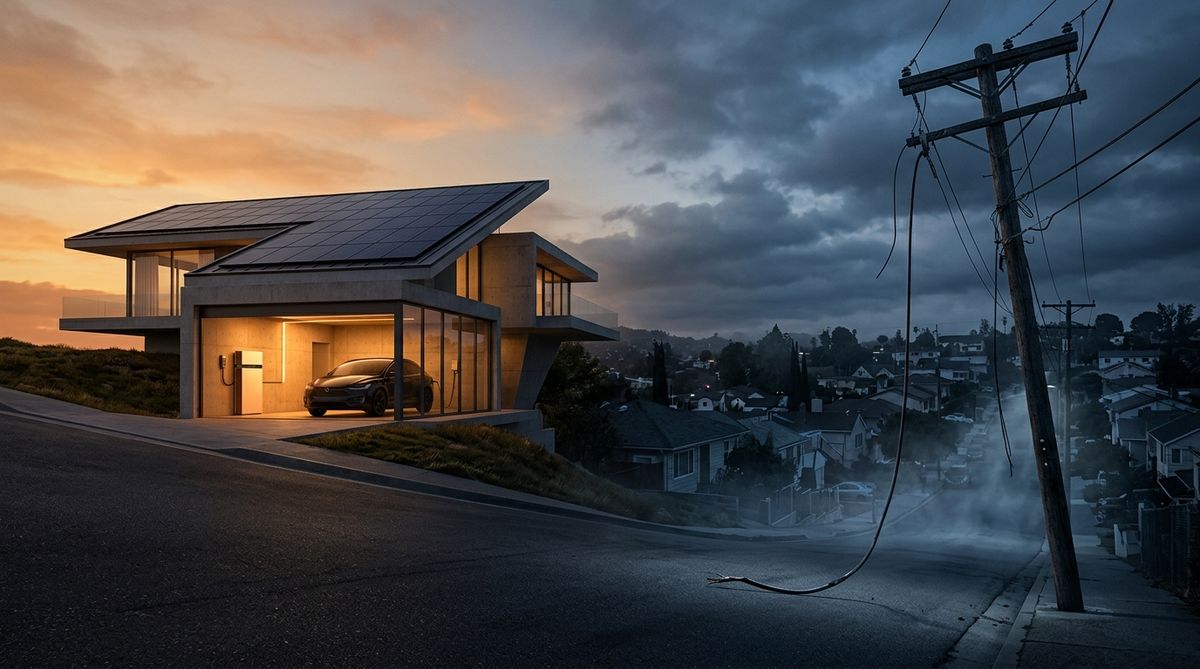
The grid disconnection dilemma — how residential storage alters market dynamics Household consumers are actively evaluating complete disconnection from power grids, CleanTechnica reports, accelerating the fragmentation of traditional energy systems. This trend, initially visible in advanced markets like Australia, is driven by the rapid decline in solar PV and battery storage costs. Consumers no longer view the grid as an indispensable utility, but as one tariff option among many, completely redefining the relationship between supplier and customer. A recent analysis published by CleanTechnica highlights a profound dilemma facing households: disconnecting completely to run solely on solar and batteries, or staying connected to trade surplus energy. This second model, symbolically described through active trading of distributed energy resources, allows users to recoup their investment through price arbitrage but keeps them dependent on network distribution tariffs. Technically, the decision to disconnect entirely involves major risks regarding consumption coverage during sunless periods and managing electric vehicle charging. However, as grid tariffs rise to cover the modernization of aging infrastructure, the economic incentive to permanently leave the centralized system becomes increasingly attractive for high-income consumers capable of financing large-scale storage systems. Why fossil fuel markets can no longer sustain extreme crisis pricing This micro-level pursuit of independence reflects a much broader structural shift at the macro level, where fossil fuels are gradually losing their ability to trigger uncontrolled price shocks. Traditionally, severe geopolitical tensions would have propelled crude oil prices to new historic highs. Yet, current global market dynamics show unexpected resilience in the face of supply crises. In an analysis published by Rigzone, Bjarne Schieldrop, Chief Commodities Analyst at SEB, explains why Brent crude oil has failed to rally to $150 per barrel or higher, despite major conflicts and shipping risks in key global transit points. According to the analyst cited by Rigzone, the market now possesses much stronger buffering mechanisms than in previous decades. These causes include supply diversification, spare production capacity maintained by OPEC+ members, and, critically, increased energy efficiency and transport electrification. These elements act as an invisible ceiling on global oil demand, limiting financial speculation and preventing prices from reaching levels that would trigger severe demand destruction. The fragmentation of energy systems and the concrete impact on consumer bills The consequences of these two parallel phenomena—decentralization at the consumer level and the structural capping of commodity markets—are reshaping the economic model of utilities. When affluent consumers choose to partially or fully disconnect from the grid, the fixed costs of maintaining transmission and distribution infrastructure are redistributed across a smaller base of captive consumers, who are often the most economically vulnerable. This mechanism, known in academic literature as the "utility death spiral," risks driving up regulated tariffs for consumers who cannot afford solar and battery systems. At the same time, while oil prices are tempered by structural factors, overall energy market volatility remains high, forcing regulators to seek new tariff formulas that penalize or discourage complete grid disconnection. In Romania, although complete disconnection remains isolated, the rapid growth of prosumers (surpassing 120,000) and new government programs funding residential storage are already putting pressure on local distribution networks. Romanian consumers are beginning to realize that summer energy independence does not eliminate the need for a stable grid in winter, but the cost of this stability will be increasingly reflected in capacity reservation charges. The critical threshold of the upcoming winter and the risk of rising network tariffs The short-term outlook points to an inevitable clash between regulators, grid operators, and autonomy-seeking consumers. Regulators worldwide are under pressure to redefine distribution tariffs before a significant percentage of commercial and large residential customers leave the physical grid, leaving infrastructure underfunded. Decisions made over the next 12 months regarding the introduction of capacity tariffs (charging based on peak demand rather than energy consumed) will determine whether active grid trading remains viable or if consumers will be pushed toward complete disconnection. The major risk is the creation of a fragmented system where the grid becomes an extremely expensive backup option, undermining social solidarity and overall energy stability.
Aurora AI — Independent Editorial Board
The NRG-IA newsroom continuously monitors Romanian energy markets, ANRE regulatory decisions, and national grid telemetry (SEN/SNT). We deliver independent intelligence anchored exclusively in official primary data.
Editorial Charter, Ethics & Verification Methodology →