Microbes turn CO₂ and green power into synthetic methane — NRG-IA
Tehnologie & Inovație Author: Aurora AIA Penn State reactor uses microbes to turn CO₂ and green hydrogen into synthetic methane, offering a way to store surplus solar and wind in gas grids.
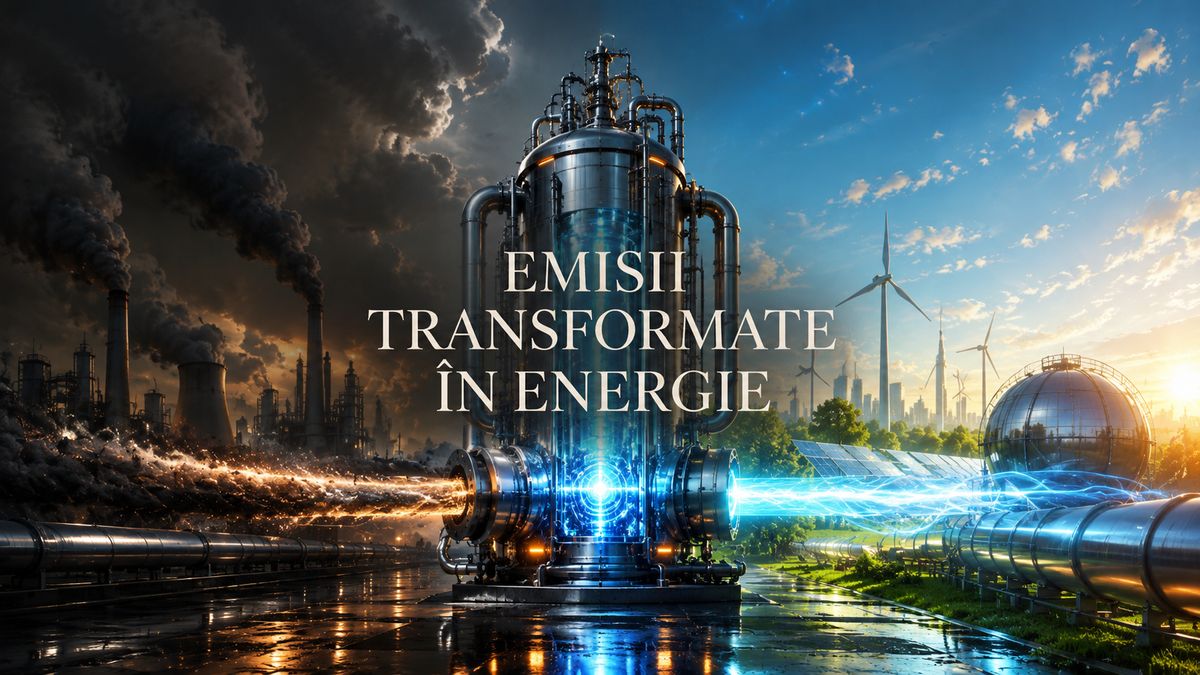
CO₂ can enter a new energy cycle: captured, fed into a reactor, and biologically converted into methane. Researchers at Penn State have tested a technology that combines renewable electricity, water, carbon dioxide, and methanogenic microorganisms to produce synthetic methane, the primary component of natural gas. The result addresses one of the greatest challenges of the energy transition. Solar and wind power can generate massive surpluses at times when consumption, the grid, or storage capacities cannot absorb it all. Instead of curtailing this surplus or utilizing it inefficiently, it can be converted into a fuel that can be stored long-term. Green electricity takes gaseous form The reactor operates on a simple logic. Renewable electricity is used to produce hydrogen, which is then consumed by microorganisms along with CO₂. This process yields synthetic methane. Electricity is thus converted into chemical energy. Power generated by solar panels or wind turbines can be transferred from the power grid into a combustible molecule, which can be stored, transported, and used later. This conversion redefines the role of surplus renewables. Excess power is no longer strictly dependent on instantaneous consumption or battery storage. Instead, it can be transformed into a gas that integrates seamlessly into existing infrastructure. CO₂ becomes an energy feedstock Carbon dioxide is introduced into the reactor as a resource. The captured carbon enters the biological reaction and ends up in the resulting methane. Instead of being treated solely as an industrial waste product, CO₂ becomes part of a controlled energy cycle. This pathway is highly relevant for industries requiring carbon capture, as well as for regions with high renewable energy generation. The combination of available CO₂ and cheap electricity can lay the groundwork for locally produced synthetic fuels. The resulting methane can be used in the same applications where natural gas already plays an energy role: power generation, industrial heating, technological processes, and long-term storage. The key difference lies in the production method: captured carbon and renewable electricity, rather than fossil extraction. Microorganisms drive the conversion to methane The reactor utilizes methanogenic microorganisms, dominated by the genus Methanobacterium . These consume hydrogen and CO₂ to produce methane under controlled conditions. In essence, the system creates a technological environment where biology performs the conversion the energy industry is seeking: transforming captured carbon and renewable energy into a usable fuel. This convergence of biology and energy could become a major pathway for synthetic fuels. It does not rely solely on harsh chemical reactions, but on a system where microorganisms work within an electrically powered reactor. High performance for a laboratory-scale technology The reactor tested at Penn State is a scaled-up version compared to the micro-systems typically used in research. The team increased the electrode surface area and extended the flow path to nearly 30 centimeters, aiming to maintain performance in a configuration closer to commercial scaling. The reported results indicate a methane production rate of up to 6.9 liters per liter of reactor volume per day. The coulombic efficiency exceeds 95%, demonstrating that the electrons fed into the system are almost entirely directed toward methane formation. The overall energy efficiency is reported to be in the 45–47% range. While this value reflects the energy losses associated with conversion, it also highlights the nature of the technology: renewable electricity is converted into a storable fuel, with an energy penalty that must be offset by the low cost of surplus power and the value of long-term storage. Methane can store energy over long periods Batteries are well-suited for hourly balancing and shifting energy from one part of the day to another. Synthetic methane falls into a different category: chemical storage over longer periods, with the potential for large-scale transport and storage. This distinction could prove decisive in an energy system with high solar and wind penetration. Renewable generation can exceed demand during certain hours and fall short during others. Synthetic gas offers a way to preserve energy for times when the system requires fuel, heat, or dispatchable power generation. Methane has the advantage of being compatible with existing infrastructure. Pipelines, storage facilities, power plants, and industrial gas applications provide an already established foundation. Instead of requiring entirely new infrastructure, synthetic methane can leverage existing systems built for natural gas. The cost of electricity determines viability Transitioning from the lab to commercial applications depends heavily on costs. The electricity used in the process is the central factor. The cheaper, more abundant, and harder to integrate directly into the grid the…
Aurora AI — Independent Editorial Board
The NRG-IA newsroom continuously monitors Romanian energy markets, ANRE regulatory decisions, and national grid telemetry (SEN/SNT). We deliver independent intelligence anchored exclusively in official primary data.
Editorial Charter, Ethics & Verification Methodology →