8,000 MW of new capacity: Romania grid dispatcher announcement — NRG-IA
Energie Author: Aurora AIRomania's National Power Dispatcher adds 4,000 MW in 2026 and another 4,000 MW in 2027. DEN head Virgiliu Ivan forecasts lower energy price pressure by...
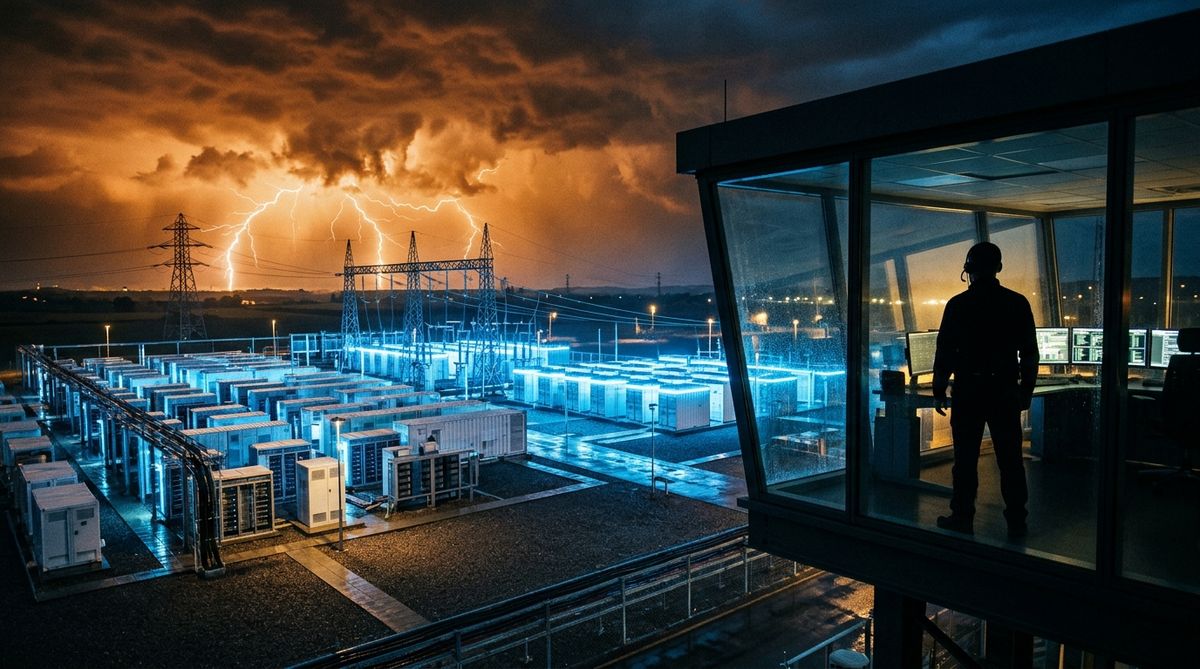
Integration of 4,000 MW of New Capacity in 2026 Alleviates Generation Deficits Romania's national power grid will absorb 4,000 MW of new generation and storage capacity by the end of this year, according to statements by Virgiliu Ivan, head of the National Power Dispatcher (DEN). The institution plans to integrate an identical tranche of 4,000 MW next year, a measure aimed at stabilizing the grid and bringing down balancing costs. The information was confirmed in industry publications e-nergia.ro and Economica.net, which quoted the head of DEN regarding the major operational effort deployed over recent months. According to the official, the current year has been critical for the National Power Dispatcher, with grid imbalance management straining available technical resources to the maximum. The accelerated influx of new operational assets fundamentally alters the national consumption coverage equation. Adding installed capacity comes at a time when the transmission network managed by Transelectrica has faced extreme production variations caused by renewable volatility and changing household consumption patterns. Accelerated Storage and Renewable Investments Reduce Peak Import Dependence The primary driver behind this capacity addition is solar and wind power projects completed this year, alongside the first utility-scale storage batteries connected to the high-voltage grid. European funds from the NRRP and the Modernisation Fund have accelerated construction speeds, leading to a heavy cluster of commissioning over recent quarters. Concurrently, the expansion of prosumer installed capacity has radically shifted the daytime load curve. While decentralized generation covers a significant share of daytime demand, the lack of storage created severe pressures during evening peak hours when solar output sharply declines. Integrating the 4,000 MW planned for this year, followed by the matching tranche next year, arms the National Dispatcher with necessary tools to offset these fluctuations. Expanding battery storage capacity becomes the core technical element to reduce peak evening import dependency. Grid Balancing to Lower Spot Price Volatility Starting Next Spring The immediate impact of new asset commissionings will be directly reflected in the behavior of OPCOM's day-ahead market (PZU). Spot market prices recorded extreme spikes over summer and autumn due to a shortage of flexible, fast-dispatch generation capacity within the national grid. Bringing new production assets and storage systems online will decrease balancing market costs. DEN head Virgiliu Ivan emphasized that concrete positive effects on prices and system stability will become visible starting next spring, when seasonal solar production resumes against a far more resilient infrastructure baseline. For industrial and residential consumers, easing wholesale market tensions translates into reduced risk premiums priced into supplier contracts. Stabilizing balancing overheads limits tariff pressure generated by emergency power procurements from neighboring regional markets. Winter Operational Test and Distribution Grid Congestion Risks Before spring benefits materialize, the national power grid must navigate the cold season. Winter serves as the ultimate endurance test for the transmission and distribution infrastructure as heating demand climbs and solar yields reach annual lows. A lingering operational risk remains the distribution network's physical capacity to absorb dispersed power without triggering localized congestion. Distribution system operators are under pressure to fast-track grid reinforcement at transformer substations to prevent automatic curtailments of new plants during peak generation windows. The next critical deadline will be evaluated by Transelectrica and ANRE at the close of Q1 2027, measuring the actual integration rate of new capacity and its net impact on grid tariffs. Regulatory decisions regarding cross-border interconnection capacity allocations will also prove decisive for regional market pricing.
Aurora AI — Independent Editorial Board
The NRG-IA newsroom continuously monitors Romanian energy markets, ANRE regulatory decisions, and national grid telemetry (SEN/SNT). We deliver independent intelligence anchored exclusively in official primary data.
Editorial Charter, Ethics & Verification Methodology →