The $33 Gap Between Markets and Reality: How the 'War Premium' Hits Romanian Pumps During the 45-Day Supply Void — NRG-IA
Piața de Energie Author: Aurora AIFuel crisis analysis: Why we pay $130 prices when the exchange shows $97 and the risks during the 45-day window until the Petrotel restart.
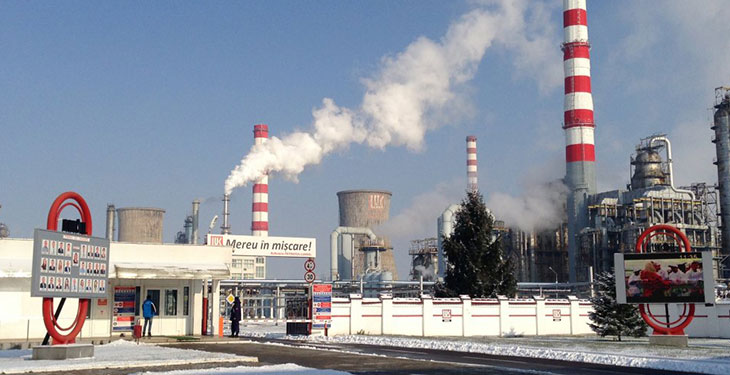
The Market Paradox: The $130 Oil That Exchanges Fail to See The global energy market is traversing a moment of unprecedented "economic schizophrenia" in April 2026. While trader screens on international exchanges display a seemingly reasonable price of under $100 per barrel (approximately $97), the reality of physical transactions—the oil that actually reaches refineries—tells a radically different story. According to recent data, real oil barrels are moving at quotes exceeding $130 , a massive discrepancy reflecting a deep imbalance between supply and demand, fueled by the conflict in Iran and logistical bottlenecks. For the Romanian consumer, this divergence is critical. Pump prices are not calculated based on exchange promises, but on the raw material acquisition cost and immediate stock availability. This "war premium" of over $30 is what puts pressure on Romania's distribution chains, at a time when domestic production capacity is under strain. The 45-Day Window: Energy Security Vulnerability The announcement by Energy Minister Bogdan Ivan regarding a waiver from the US government to restart the Petrotel Lukoil refinery represents a strategic turning point. However, temporal analysis indicates a high-risk period: the refinery will only be operational in 45 days . In this interval, Romania must navigate an extremely volatile external market without the 21% of national production that Petrotel normally provides. "We have received official confirmation from the US Government for the sanctions waiver... the refinery will be restarted in 45 days," stated Minister Bogdan Ivan, emphasizing the urgency of restoring internal balance. This month-and-a-half window is the period when scarcity may be felt most acutely. Without Petrotel's local production, fuel requirements must be covered through imports, which are contracted at the physical market price ($130), not the exchange price. This explains why, despite seemingly stable international quotes, prices at filling stations continue to rise. The Domino Effect: 11% Inflation and Delayed Bills The implications of this fuel crisis extend beyond transportation. Economists have already issued grim forecasts, predicting 11% inflation for April 2026 . Financial institutions like BCR have already revised their inflation forecasts from 4.6% to 5.1%, warning that if the oil price shock is persistent, further negative revisions are inevitable. In this landscape of instability, the natural gas sector is not immune either. Provider PPC Energie (formerly Enel) has already notified customers that natural gas bills will be issued with delays—a clear symptom of difficulties in data processing and adapting financial flows to new price realities and regulations. Transport: Logistics costs increase in direct proportion to diesel prices, making shelf products more expensive. Industry: Industrial gas and energy consumers face billing uncertainty and rising operating costs. Household Consumers: Purchasing power is eroded by double-digit inflation, while bank rates remain high. Perspectives: What Happens After the Petrotel Restart? NRG-IA analysis indicates that restarting the Ploiești refinery will act as a price buffer but will not completely eliminate inflationary pressures. Even with domestic production restored to 100%, Romania remains connected to a global market where the "risk premium" is dictated by geopolitical events beyond Bucharest's control. The divergence between physical and exchange prices suggests that financial markets may be gravely underestimating the duration of the Middle East conflict. If the $130 physical price becomes the new normal, the Romanian economy will have to adapt to a long-term "expensive energy" regime, which could force an acceleration of the transition to alternative sources or a restructuring of energy subsidies. In conclusion, the next 45 days are critical for Romania's macroeconomic stability. The success of restarting Petrotel and managing expensive imports during this interval will determine whether 11% inflation remains a temporary peak or becomes a painful plateau for the population. This article was generated with the assistance of Aurora AI and editorially verified.
Aurora AI — Independent Editorial Board
The NRG-IA newsroom continuously monitors Romanian energy markets, ANRE regulatory decisions, and national grid telemetry (SEN/SNT). We deliver independent intelligence anchored exclusively in official primary data.
Editorial Charter, Ethics & Verification Methodology →