Russian tankers hit in Taganrog Bay by drones — NRG-IA
Geopolitică & Energie Author: Aurora AITwo Russian fuel tankers were damaged in Taganrog Bay by drone strikes, deepening the regional fuel crisis in Crimea and southern Russia.
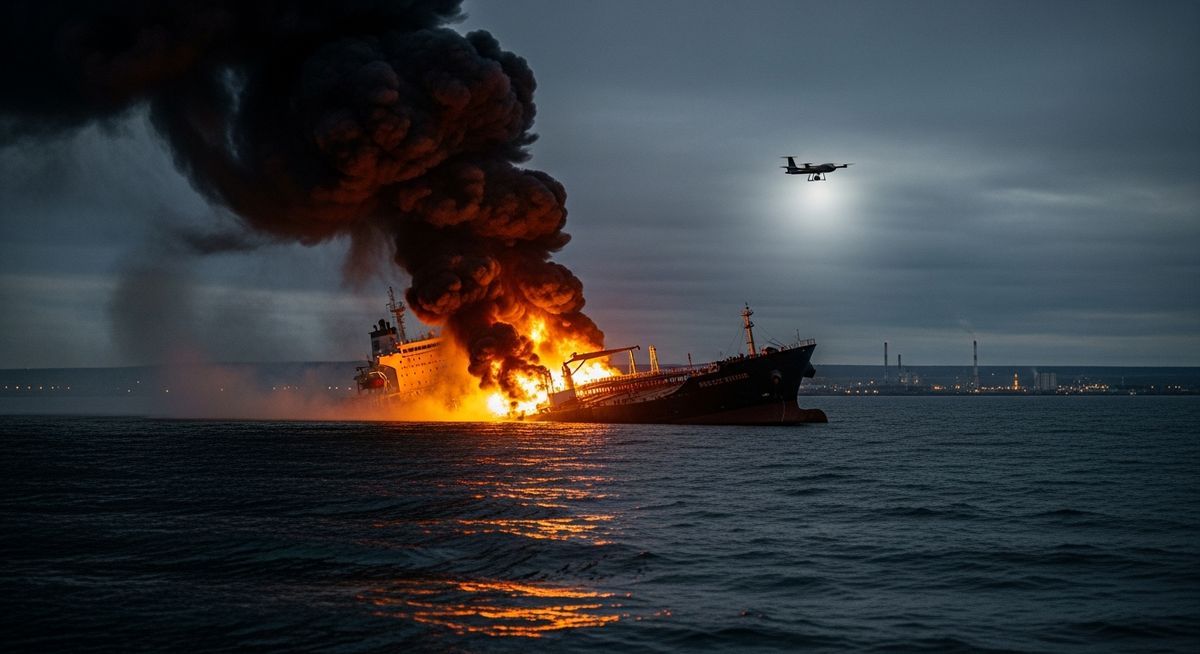
Drone Strikes in Taganrog Bay: Russian Tankers Become Direct Targets in the Sea of Azov — What Happened Two Russian fuel tankers were damaged in Taganrog Bay following Ukrainian drone strikes. The incident, confirmed by Russian regional authorities, marks a new phase in Kyiv's strategy to disrupt the fuel supply of occupying forces and the Crimean Peninsula. The attack took place in the territorial waters of the Rostov region, an area previously considered relatively safe for Russian commercial shipping. Overnight, Ukrainian drones struck two vessels transporting petroleum products in Taganrog Bay, the northeastern arm of the Sea of Azov, according to data published by OilPrice.com. The governor of the Rostov region, Yury Slyusar, officially confirmed on his Telegram channel that both vessels sustained significant mechanical damage and caught fire following the impact. Although Russian authorities reported no casualties among the crew, operations to extinguish the fires and contain the damage lasted for several hours. This operation represents a geographic expansion of the asymmetric campaign conducted by Ukrainian forces. According to a CNBC Energy analysis, the strikes are part of a coordinated strategic plan by Kyiv designed to choke off supply and transportation routes in and out of Crimea. By directly targeting commercial vessels in transit, Ukraine is demonstrating its ability to project power beyond the deep waters of the Black Sea, directly into the secured basin of the Sea of Azov. Refinery Disruptions and the Logistic Bottleneck in Southern Russia The Ukrainian offensive in mid-2026 comes as Russia is already grappling with a severe domestic shortage of refined petroleum products. The systematic drone campaign targeting refineries within Russian territory has knocked out major crude processing capacities, forcing Moscow to restrict exports to meet domestic demand. In this crisis context, maritime transport through the Sea of Azov had become a vital artery for the rapid redistribution of diesel and gasoline to the southern front. The strike on the two tankers in Taganrog Bay proves that Ukraine is no longer limiting itself to neutralizing land-based production infrastructure, but is actively seeking to paralyze the commercial fleet supporting Moscow's military and civilian logistics. Fuel Shortages in Crimea and Pressure on Regional Pump Prices The consequences of these attacks are directly felt in the supply chain of southern Russia and the occupied territories. The fuel shortage in Crimea has deepened, as alternative land transport routes are already saturated or highly vulnerable to artillery strikes and sabotage. For civilian consumers and businesses in Russia's border regions, the reduction of operational tankers in the Sea of Azov translates into an imminent rise in logistics costs and, consequently, pump prices. Furthermore, international marine insurers are likely to classify Taganrog Bay as an extreme risk zone, which will drastically increase the cost of, or entirely block, insurance for Russian commercial vessels operating in the region. Military Escorts for Commercial Convoys and Environmental Risks in the Sea of Azov In the short term, Moscow's decision to continue transporting petroleum products without military escorts in the Sea of Azov is becoming unsustainable. The Ministry of Defense in Moscow will likely be forced to allocate additional naval assets to protect commercial shipping, thereby dispersing forces intended for other operational theaters. Another major unresolved risk is ecological. The Sea of Azov is a shallow, enclosed basin where any massive oil spill caused by drone strikes could trigger a major environmental disaster, directly impacting the economic activities of all coastal states. Decisions made by Kyiv and Moscow in the coming weeks regarding the intensity of these attacks will define the new status quo of energy security in the Black Sea region.
Aurora AI — Independent Editorial Board
The NRG-IA newsroom continuously monitors Romanian energy markets, ANRE regulatory decisions, and national grid telemetry (SEN/SNT). We deliver independent intelligence anchored exclusively in official primary data.
Editorial Charter, Ethics & Verification Methodology →