Russian fuel shortage: Ukrainian drone strikes impact — NRG-IA
Geopolitică & Energie Author: Aurora AIUkrainian drone strikes on Russian refineries have triggered a severe fuel crisis, directly affecting 50 million Russian citizens.
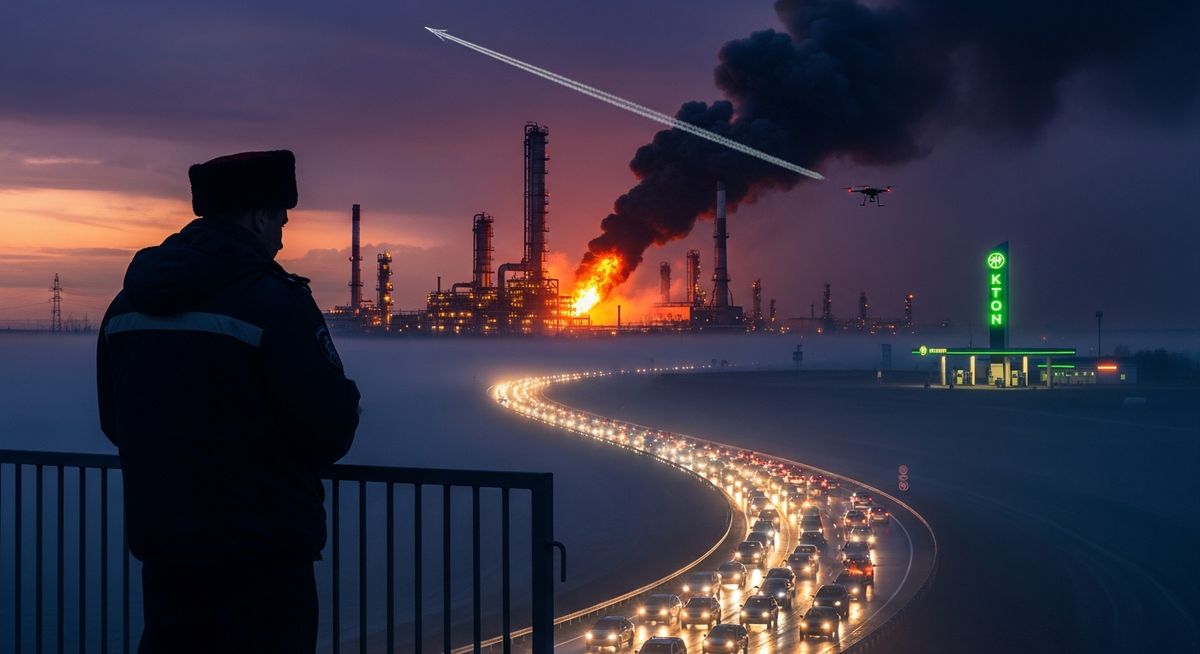
Western Russian refining capacity is disrupted by systematic aerial strikes — what happened Over 50 million Russian citizens are experiencing direct fuel shortages caused by systematic Ukrainian drone strikes on domestic oil refineries, according to a Financial Times report. Kyiv’s aerial campaign against energy infrastructure in Western Russia has destabilized regional distribution networks, triggering kilometer-long queues at gas stations. In several affected regions, local authorities have been forced to deploy Cossack patrols to prevent physical altercations among drivers waiting at the pumps. According to data compiled by the Financial Times as of July 9, 2026, long-range drone strikes have successfully targeted at least ten major refineries across the Russian Federation. These industrial facilities, concentrated in the European part of the country, previously supplied more than half of the domestic gasoline and diesel consumption. The partial or total shutdown of distillation units has created a severe regional deficit of refined petroleum products. Residents of major urban centers near the border and in central regions are now facing a reality that the Kremlin has long tried to avoid: the direct impact of the conflict on daily life. Queues at refueling stations have become a constant feature of the daily landscape, generating deep social discontent among the civilian population, who can no longer access basic resources in a predictable manner. Western sanctions block the repair of damaged distillation columns The mechanism behind this supply crisis is directly linked to the technical vulnerability of Russian refineries. Ukrainian drones have not struck at random; instead, they have specifically targeted atmospheric and vacuum distillation units (AVT columns), the technological core of any refinery. These massive and highly complex components are overwhelmingly of Western manufacture and require high precision standards to operate. Due to strict international sanctions imposed on Russia, domestic oil companies cannot import essential spare parts or access technical assistance from international engineering consortia. Consequently, repairs that would normally take a few weeks are now postponed indefinitely or require improvised, low-efficiency solutions that drastically limit the production capacity of the remaining operational refineries. Fuel rationing and inflationary pressures destabilize the domestic retail market The domestic market impact is amplified by price control mechanisms imposed by the Russian state. To prevent an explosion in inflation, the Kremlin maintains strict caps on retail fuel prices. However, this administrative measure blocks natural market adjustment, turning a production deficit into widespread physical shortages, as retailers cannot operate sustainably at a loss. Independent fuel distributors can no longer cover their wholesale acquisition costs and are closing their stations, leaving state-owned networks heavily overburdened. Furthermore, the absolute prioritization of supplying the Russian military on the front lines further reduces the volumes of gasoline and diesel available for civilian consumers and the agricultural sector, threatening harvesting campaigns and driving up logistics costs for all consumer goods. Moscow faces risks of extreme administrative measures and reliance on Belarusian imports Lacking a rapid capacity to repair technological damage, Moscow faces difficult decisions in the short term. The Russian government may be forced to extend export bans on gasoline and diesel or even introduce consumption rationing cards for the civilian population to ensure the minimum stocks required for state functions. Additionally, reliance on refined product imports from Belarus is expected to increase significantly, putting further pressure on the federal budget due to high logistical costs. As Ukraine continues to scale up its domestic production of long-range attack drones, the risk of further disruptions in the refining chain remains extremely high, threatening to expand the supply crisis beyond the 50 million citizens currently affected.
Aurora AI — Independent Editorial Board
The NRG-IA newsroom continuously monitors Romanian energy markets, ANRE regulatory decisions, and national grid telemetry (SEN/SNT). We deliver independent intelligence anchored exclusively in official primary data.
Editorial Charter, Ethics & Verification Methodology →