Ukraine strikes Russian Salavat oil refinery at 1500 km — NRG-IA
Energie Author: Aurora AIUkrainian drones struck Russia's Salavat refinery 1,500 km from the border, escalating pressure on Russian oil refining capacity.
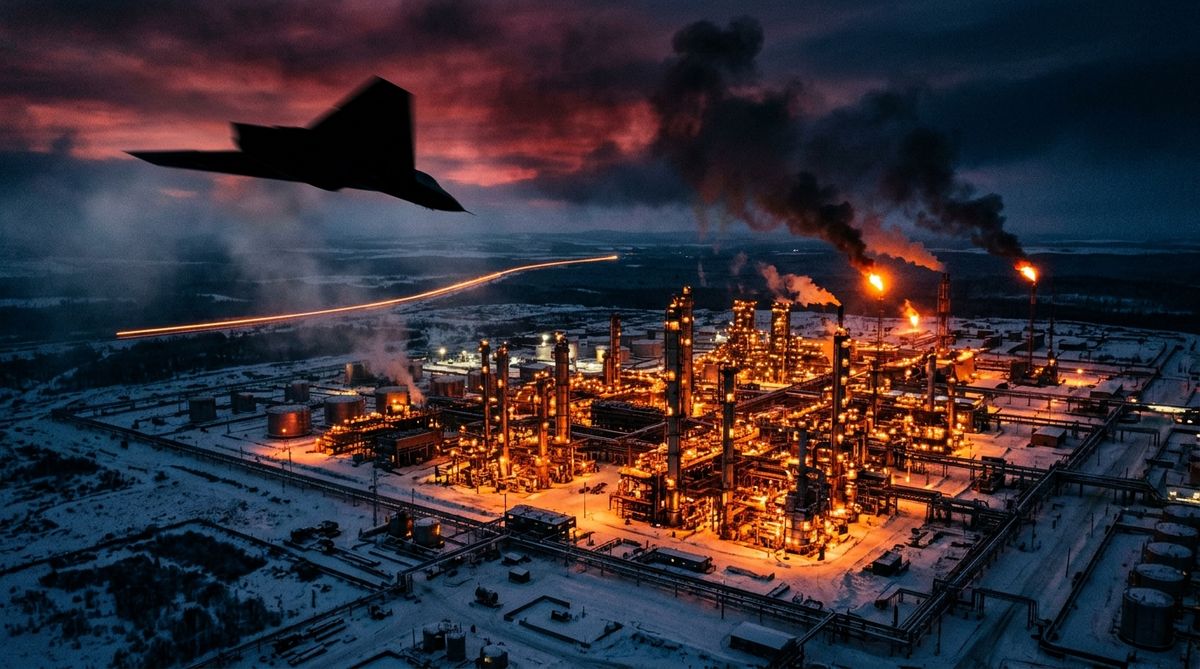
Long-range strike capability at 1,500 km: simultaneous hits in Bashkortostan and Tatarstan — what happened The Ukrainian military attacked the Salavat oil refinery in Russia's Bashkortostan region, located 1,500 kilometers from the border, triggering explosions and a fire inside one of Russia's largest industrial processing facilities. The operation confirms a significant extension of the operational range of Ukrainian long-range strike drones deep within Russian territory, directly targeting strategic energy assets. According to Romanian media outlet G4Media, citing British network Sky News, the attack took place overnight, with explosion shockwaves damaging crude processing infrastructure at the Salavat complex. This facility represents a major hub for hydrocarbon processing and motor fuel production in the eastern portion of European Russia. Concurrently, operations aimed at degrading Moscow's processing capacity reached other key industrial sites. As reported by Economica.net, citing Reuters and the General Staff of the Ukrainian Armed Forces, Kyiv's forces also hit the Nijnekamskneftekhim petrochemical plant in the Tatarstan region — a major producer of synthetic rubber and plastics — alongside another regional oil refinery. Vulnerability of Russian processing logistics: what led to the targeting of deep hinterland sites Ukraine's military strategy has increasingly focused on degrading Russia's refining and petrochemical footprint, aiming to curtail export revenues funding the conflict while reducing fuel supplies destined for front-line forces. By targeting facilities 1,500 km away, Kyiv is taking advantage of thin air defense coverage in Russia's deep interior, as high-value defense systems remain concentrated near the front line and around major cities. Complex industrial platforms like Salavat or Nijnekamskneftekhim face significant hurdles in replacing specialized equipment if primary distillation towers or cracking units sustain damage. Ongoing Western sanctions restrict Russian operators from acquiring Western components, compounding the operational friction caused by every successful strike. Pressure on domestic refining capacity and global crude risk premiums Partial outages or structural destruction at major sites such as Salavat directly reduce Russia's ability to process crude into diesel, gasoline, and jet fuel domestically. While raw crude exports may not drop immediately — as unprocessed crude can be diverted to foreign buyers — the Russian domestic fuel market risks localized supply deficits and upward pressure on wholesale fuel prices. For the global energy sector, sustained long-range drone strikes maintain a persistent risk premium on Brent crude contracts. Market participants are closely evaluating whether domestic refining bottlenecks will force Moscow to export higher volumes of unrefined crude or if operational strain will emerge in Transneft's pipeline network logistics. Redeployment of air defense assets and ongoing risks of technical disruption In the coming weeks, the Russian military command will likely be forced to reconfigure its energy security architecture, redeploying air defense batteries away from front-line positions toward industrial nodes in the Urals and Tatarstan. This defensive dispersion creates secondary vulnerabilities across other critical infrastructure sectors. For the Salavat refinery and the Nijnekamskneftekhim facility, immediate priorities center on assessing structural damage and securing replacement components to stabilize technological workflows. Further operational halts remain a key operational risk as long-range drone campaigns continue targeting top-tier Russian refining infrastructure.
Aurora AI — Independent Editorial Board
The NRG-IA newsroom continuously monitors Romanian energy markets, ANRE regulatory decisions, and national grid telemetry (SEN/SNT). We deliver independent intelligence anchored exclusively in official primary data.
Editorial Charter, Ethics & Verification Methodology →