Danube Lows Hit Power in Romania, Hungary, and Serbia — NRG-IA
Piața de Energie Author: Ioana BuzoaicaThe Danube's record-low level hits power output in Romania, Hungary, and Serbia, squeezing regional energy margins as Paks halts and Serbian hydro drops.
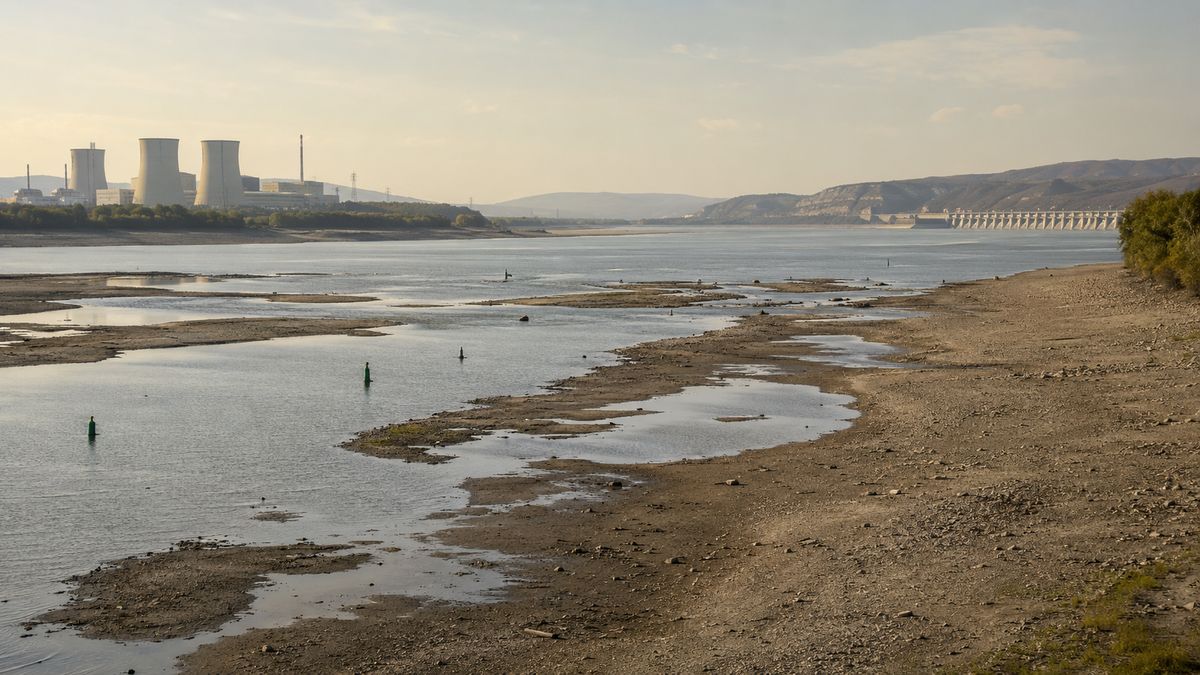
The extremely low level of the Danube is no longer affecting just isolated power plants. In Romania, Hungary, and Serbia, three interconnected power systems are simultaneously losing significant generation capacity just as high temperatures keep electricity demand under pressure. The latest deterioration comes from Serbia, where the river's level has dropped to its lowest since 1985, and the daily output of the country's largest hydropower plant has plummeted to just 20% of its normal level , according to the Serbian Energy Minister. In Hungary, the Paks nuclear power plant, with a total capacity of approximately 2,000 MW , was operating on Sunday at just over 10% capacity and was set to halt production entirely. In Romania, the low level of the Danube has already led to the shutdown of one reactor at Cernavodă, and the Government has funded temporary works to keep the second reactor connected to the National Energy System. Meanwhile, Bucharest is in talks with neighboring countries to secure imports during peak consumption hours. The situation is transforming the water deficit from a hydrological issue into one of security of electricity supply. While the three countries are not losing the same generation technology or the same volumes, the losses are occurring simultaneously in a region where grids are interconnected and rely on cross-border flows to offset imbalances between generation and consumption. Serbia: The Danube cuts hydro generation to a fifth of its normal level Serbia provides the latest signal of deterioration. Reuters reported on Sunday that the Danube's level has dropped to its lowest since 1985 , and the daily output of Serbia's largest hydropower plant has fallen to just 20% of normal production . The Đerdap hydropower system, known in Romania as the Iron Gates, plays a central role in Serbia's hydro generation. State-owned utility Elektroprivreda Srbije indicates that the Đerdap 1 and Đerdap 2 hydropower plants have a combined installed capacity of approximately 1,410 MW and an average annual output of about 6,770 GWh . The company's entire hydro sector accounts, on average, for over 30% of its electricity generation. Furthermore, Đerdap 1 is a joint Serbian-Romanian facility. The complex built on the Danube is symmetrical, with each country operating its own plant and associated infrastructure. A reduction in output on the Serbian side does not automatically mean an identical drop on the Romanian side, but both systems depend on the same hydrological conditions of the river. Just days earlier, the output of Serbia's largest hydropower plant had dropped to about a third of its usual level. The decline to 20% indicates that the hydrological situation has continued to deteriorate. Hungary temporarily loses its main source of electricity The pressure is even higher in Hungary. Paks is the country's sole nuclear power plant, featuring four Russian-designed reactors with a total capacity of approximately 2 GW . On Sunday, the plant was operating at just over 10% of its total capacity. Prime Minister Peter Magyar announced that Paks would halt production after the Danube, used to cool the reactors, dropped to record lows. This marks the first complete shutdown caused by such conditions in over four decades. The impact is disproportionate to the mere capacity lost. Paks normally supplies a highly significant portion of Hungary's electricity, and the temporary loss of approximately 2,000 MW pushes the system toward additional imports at a time when temperatures are nearing 40°C . Magyar warned of five critical days ahead for the power system and urged companies, public institutions, local administrations, and the population to reduce or shift consumption away from the peak hours of 17:00–22:00 . The government is also considering mandatory restrictions for large industrial consumers. Mark Radnai, vice president of the Tisza party, estimates that the additional import requirements and rising electricity prices could cost Hungary 100–200 billion forints , equivalent to approximately $315–630 million . This estimate is from the political representative and does not represent an already incurred cost. Romania enters the same period with reduced domestic generation Romania is already experiencing its own episode of energy stress caused by the Danube. The river's flow at the entry point into the country had dropped to approximately 1,650 cubic meters per second , nearly three times below the multi-annual average for July of around 4,700 cubic meters per second . The low level has affected the water supply required to operate the Cernavodă nuclear power plant. One of the reactors was shut down, and authorities funded works to temporarily redirect water from a canal so that the second reactor could remain connected to the grid. Romania thus entered August with reduced domestic generation and an additional need for external power. During recent peak periods, imports reached around 1,700 MW , against a…