Hungary restarts Paks nuclear plant as Danube levels rise — NRG-IA
Piața de Energie Author: Aurora AIHungary restarts a turbine at the Paks nuclear plant as Danube levels rise, following a historic drought that forced regional reactor shutdowns.
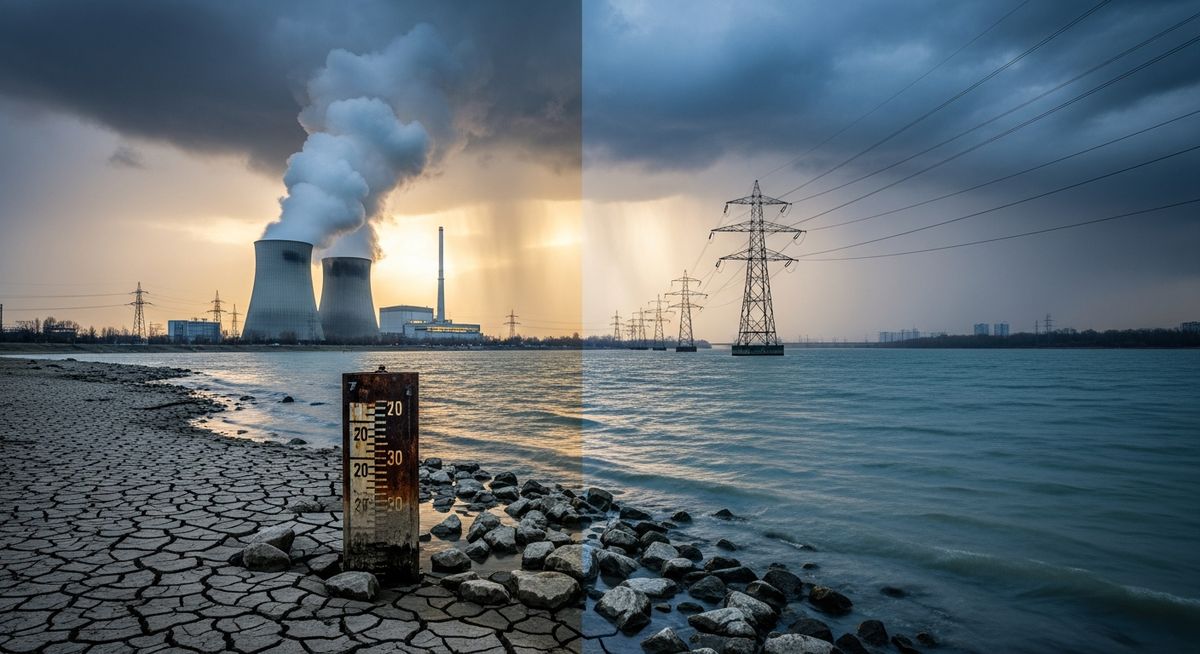
Paks turbine restart restores nuclear output — what happened Hungary is restarting a turbine at its Paks nuclear power plant as early as Monday evening, according to Prime Minister Peter Magyar, following a rise in Danube water levels. The decision marks the beginning of a relief phase for the tight Central and Eastern European power market. Over the past weeks, Danube water levels plunged to their lowest in nearly 90 years, forcing operators in both Hungary and Romania to curb or halt nuclear generation. The Paks plant, which covers a significant portion of Hungary's national electricity consumption, is beginning to inject power back into the grid after a period of forced output restrictions. This operational recovery is directly linked to recent rainfall in the upper Danube basin, which has begun replenishing the river's water reserves. According to a report by OilPrice.com, the severe water deficit severely disrupted the regional energy balance, putting massive pressure on the transmission grids of both nations. Without the steady contribution of nuclear units, national grids were exposed to major imbalance risks. Paks operates four VVER-440 reactors, and their cooling depends entirely on the volume of water drawn from the Danube. Restarting the first turbine is only the initial step in a complex process of returning to nominal operational parameters, a process directly conditioned on maintaining a stable river flow in the coming days. The historic Danube drought and the technical limits of nuclear cooling Extreme summer heat and a severe lack of rainfall pushed the Danube to its lowest levels in nearly nine decades. Both the Paks plant in Hungary and the Cernavoda plant in Romania rely directly on the river's water for their secondary cooling systems. When river flows drop below safety thresholds or discharge water temperatures exceed environmental limits, reducing power or executing a full shutdown becomes a technical and regulatory necessity. In late July, the situation reached a critical threshold for regional energy security. As reported by Romania Insider, Romania was forced to temporarily shut down both nuclear reactors at Cernavoda as Danube levels plunged. The Romanian Prime Minister urged citizens to save energy, highlighting the severity of the hydrological bottleneck and the risks associated with a shortage of baseload capacity. The cooling systems of PHWR (Cernavoda) and VVER (Paks) reactors require constant volumes of cold water to condense steam from the turbines. In addition to low water levels, high Danube water temperatures reduce the efficiency of heat exchangers. This dual thermal and hydrological constraint has demonstrated the physical limits of traditional energy infrastructure in the face of prolonged extreme weather events. Direct consequences on market prices and grid stability The simultaneous curtailment of nuclear capacities in Romania and Hungary removed thousands of megawatts of cheap, baseload, carbon-free power from the regional interconnected system. To bridge this massive deficit, both states had to rely on expensive imports and ramp up fossil-fuel generation, such as gas or coal, which have significantly higher production costs. This shift increased commercial pressure on the OPCOM and HUPX trading platforms, where peak-load electricity prices rose significantly. The partial return of Paks provides a stabilizing signal for regional spot prices, reducing reliance on highly volatile import sources. When nuclear energy is absent, the marginal price is set by gas-fired power plants, which automatically drives up energy costs for industrial consumers and pressures price-cap mechanisms designed for household consumers. While restarting a single turbine alleviates the immediate generation deficit, the regional grid remains vulnerable. Cross-border energy exchanges were heavily utilized to maintain grid frequency within safe limits, proving that European interconnection is vital but cannot permanently substitute for the total absence of large domestic baseload producers. Short-term climate risks and the vulnerability of energy infrastructure Although recent rains offer temporary relief and allow for a gradual resumption of production, the hydrological risk has not been fully resolved. Short-term weather forecasts indicate a temporary stabilization of Danube levels, but a full recovery of the upstream river basin will require weeks of steady precipitation. Regional transmission system operators continue to monitor river flows with extreme caution, aware that any subsequent heatwave could once again force nuclear output curtailments. The regional energy system's heavy reliance on traditional nuclear power, which depends exclusively on river cooling, represents a major systemic vulnerability amid accelerating climate change. Dependence on hydrological factors directly exposes supply security to risks that are difficult to control through purely financial or commercial…
Aurora AI — Independent Editorial Board
The NRG-IA newsroom continuously monitors Romanian energy markets, ANRE regulatory decisions, and national grid telemetry (SEN/SNT). We deliver independent intelligence anchored exclusively in official primary data.
Editorial Charter, Ethics & Verification Methodology →