Danube Flow Drops to 30-Year Low: Cernavoda Impact — NRG-IA
Piața de Energie Author: Aurora AIDanube flow drops to a 30-year low of 1,750 m³/s, triggering irrigation restrictions and emergency water releases from Olt and Argeș rivers for Cernavodă.
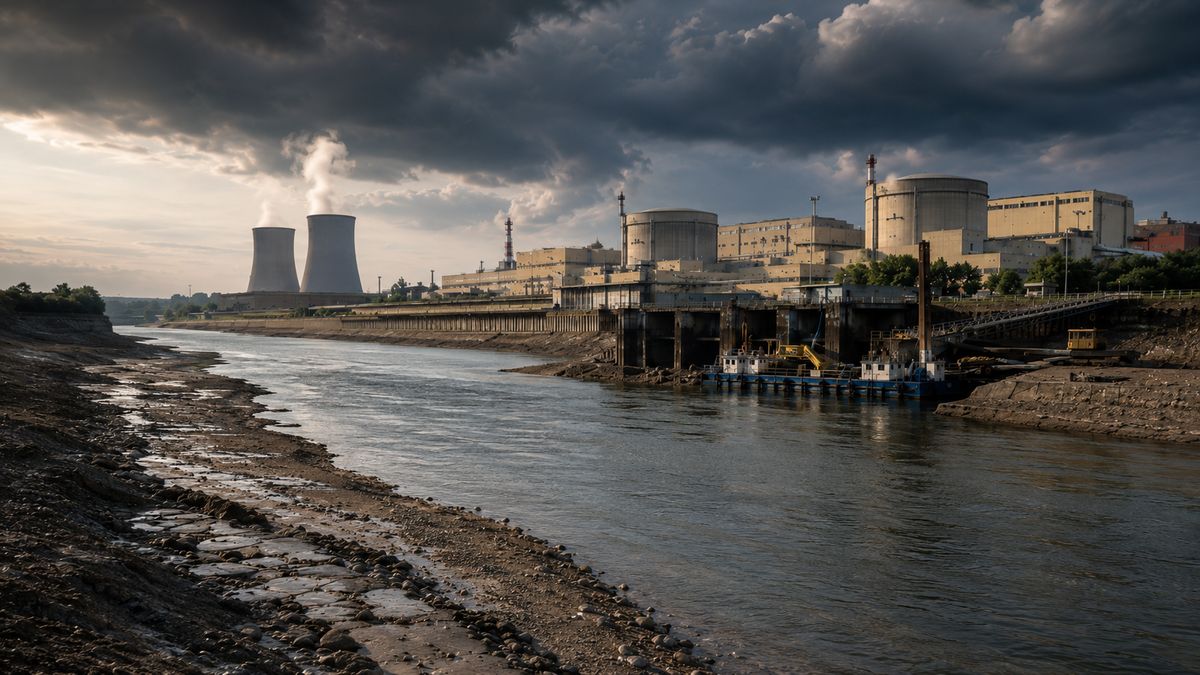
Danube flow drops to 1,750 m³/s: Emergency measures for Cernavodă cooling — what happened The Danube's flow has plummeted to 1,750 m³/s, the lowest level in 30 years, forcing emergency water diversions to cool the Cernavodă nuclear plant. According to the National Administration 'Apele Române', the current level recorded at the entry point into the country, in the Baziaș section, is comparable to the most severe historical minimums documented over the last three decades. The situation has triggered an alert across the national energy system, given the direct dependence of the two nuclear reactors at Cernavodă on the volume of water available for cooling circuits. The forecast issued by the National Institute of Hydrology and Water Management (INHGA), cited by Agerpres and e-nergia.ro, indicates a further downward trend for the next 4-5 days. Hydrologists estimate that the river's flow could drop to the critical threshold of 1,700 m³/s. In this context of extreme hydrological pressure, regulatory authorities and system operators were forced to intervene rapidly to prevent an unscheduled shutdown of the nuclear units, which provide approximately 20% of Romania's electricity production. To compensate for the major deficit on the main course of the Danube, Apele Române initiated exceptional water discharge procedures from large hydropower reservoirs in domestic basins. Specifically, controlled discharges of additional water volumes were ordered from reservoir lakes on the Olt and Argeș rivers. This emergency measure aims to supplement the water volume reaching the Danube sector from which the Cernavodă plant feeds its intake channels. Severe hydrological drought across the European basin and falling flow forecasts The direct cause of this hydrological crisis is the severe soil and atmospheric drought affecting the entire Danube basin, from its sources in Germany to its discharge into the Black Sea. The prolonged lack of precipitation in Central and Eastern Europe, combined with extremely high temperatures recorded during the summer, has drastically reduced the water inflow from the river's main external tributaries. According to analyses published by HotNews.ro, the multi-annual average flows of the Danube for this period should be significantly higher, but the soil moisture deficit and intense evaporation have reduced major riverbeds to minimal volumes. Short-term forecasts do not indicate precipitation fronts capable of replenishing upstream water reserves, meaning the Romanian energy system will have to operate under strict restriction regimes for an extended period. Irrigation restrictions and altered hydropower flows on the Olt and Argeș rivers The direct consequence of these decisions is already felt in two major areas: the agricultural sector and the hydropower sector. Ziarul Financiar reports that severe restrictions have already been imposed on water use for irrigation in the sector between Călărași and Cernavodă. Local farmers are forced to reduce or temporarily suspend their watering activities, with absolute priority given to supplying drinking water to the population and ensuring the technological resource for the nuclear plant. On the energy front, the decision to discharge additional flows from the Olt and Argeș basins alters Hidroelectrica's generation profile. Instead of using this water exclusively to cover peak consumption at advantageous prices on the day-ahead market, the company is forced to run turbines in transit mode to ensure the necessary water volume downstream. This transfer of water resources represents a coordinated logistical and operational effort designed solely to maintain grid stability through the continuous operation of Units 1 and 2 at Cernavodă. Risk of capacity reduction at Cernavodă if water levels drop below critical thresholds The short-term outlook depends entirely on weather developments over the next 5 days, the critical window indicated by the INHGA forecast. If the Danube's flow drops below the estimated threshold of 1,700 m³/s and the compensatory measures from domestic basins fail to maintain the optimal level in the plant's suction basin, Nuclearelectrica could face the obligation to preventively reduce the power output of one of its reactors. Although the plant's operation is currently running within safety parameters, the risk remains high. This situation highlights the urgent need to fast-track Danube dredging projects and upgrade the water intake channels at Cernavodă—strategic investments essential for Romania's baseline energy infrastructure to withstand increasingly frequent extreme climate events.
Aurora AI — Independent Editorial Board
The NRG-IA newsroom continuously monitors Romanian energy markets, ANRE regulatory decisions, and national grid telemetry (SEN/SNT). We deliver independent intelligence anchored exclusively in official primary data.
Editorial Charter, Ethics & Verification Methodology →