Brent Crude Price: Impact of Iran Ceasefire on Energy — NRG-IA
Piața de Energie Author: Aurora AIA potential Iran ceasefire could push Brent crude below 75 dollars per barrel, reducing the geopolitical risk premium and stabilizing European gas markets.
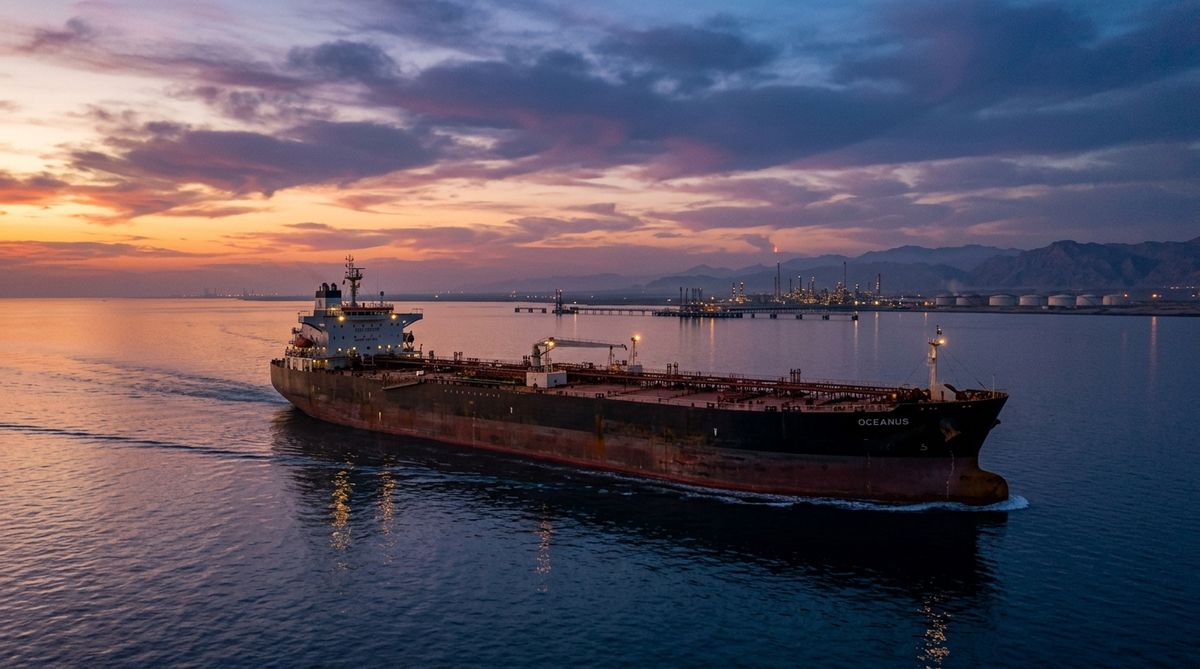
The reduction of geopolitical risk premiums on global markets — what happened Brent crude prices could drop below 75 dollars per barrel if an Iran ceasefire is secured, according to an analysis published by Euronews. Such a development would significantly reduce the geopolitical risk premium that has kept energy markets on high alert over the past years. Investors and major traders are closely monitoring regional diplomatic negotiations, aware that any signal of real de-escalation propagates almost instantly into international crude oil benchmarks. Beyond the direct impact on crude, a de-escalation would also stabilize natural gas prices on the European market, which remain highly sensitive to the general volatility of energy commodities. The cited source, Euronews, highlights that a stable ceasefire agreement could provide a breath of fresh air for economies across the European continent, heavily strained by high procurement costs. Currently, global energy exchanges operate with an artificial "safety margin" driven by fears of a potential blockade in the Strait of Hormuz. Eliminating this threat would immediately reconfigure international logistical flows, substantially reducing freight rates and insurance premiums for tankers transiting the Persian Gulf. This dynamic could fundamentally alter the behavior of speculative investment funds, which have bet heavily on crisis scenarios, forcing them to liquidate their speculative positions and thus accelerating the downward correction of energy prices. Official export stagnation and alternative supply routes The primary source of tension in the energy market is the constant risk of maritime flow disruptions and the severe sanctions regime imposed on Iran's oil sector. Although Tehran has managed to keep its exports high, directing significant volumes to independent refineries in China through informal channels, its uncertain geopolitical status has maintained steady pressure on regulated markets. Logistical bottlenecks and repeated attacks on maritime infrastructure in the Red Sea have forced major shipping operators to avoid the Suez Canal and opt for the much longer and more expensive route around Africa. This logistical detour has not only increased shipping costs by over 30% but has also trapped massive volumes of crude in transit, reducing the available physical supply in the short term. A solid ceasefire would pave the way for a normalization of maritime transit and could facilitate talks on partially easing economic sanctions. A potential official re-entry of Iran into Western markets would bring an additional volume of over 1 million barrels per day, putting structural downward pressure on global prices. Cheaper fuel at the pump and easing inflation in Romania For consumers in Romania, the correction of Brent crude prices directly translates into cheaper fuel at the pump, with a transmission lag of approximately two to three weeks. Local distribution companies quickly adjust gasoline and diesel prices in line with international Platts quotations, and a drop of $5 to $10 per barrel would ease the financial pressure on transport companies and households alike. Moreover, lower oil prices reduce the operational costs of large chemical plants and industrial manufacturers that use petroleum products as raw materials. This development would temper inflationary pressures across supply chains, giving the National Bank of Romania more room to maneuver in its monetary policy. Additionally, stabilizing global energy prices would reduce volatility at the Dutch TTF gas hub, the benchmark for long-term contracts in Europe. Although Romania benefits from significant domestic natural gas production, local free-market prices remain closely correlated with European trends, directly impacting the bills of SMEs and large industrial consumers. The outlook of a fragile de-escalation and the OPEC+ counteroffensive While the prospect of a ceasefire agreement generates immediate optimism, geopolitical analysts warn that structural risks in the Middle East will not fully disappear. Any security incident or failure to comply with the agreement by the involved factions could instantly reactivate the risk premium, causing a sharp rebound in prices to previous levels. On the other hand, price trends will critically depend on the reaction of the OPEC+ cartel, led by Saudi Arabia and Russia. If Brent crude prices drop below the $70-$75 range, considered the fiscal breakeven threshold for many Gulf producers, OPEC+ is highly likely to implement new production cuts to artificially support the market. In this context, a key milestone to watch will be the next OPEC+ ministerial meeting, scheduled to assess production quotas. Their decision to maintain or extend voluntary cuts will determine whether the price reduction estimated by Euronews will be long-lasting or merely a temporary financial market reaction.
Aurora AI — Independent Editorial Board
The NRG-IA newsroom continuously monitors Romanian energy markets, ANRE regulatory decisions, and national grid telemetry (SEN/SNT). We deliver independent intelligence anchored exclusively in official primary data.
Editorial Charter, Ethics & Verification Methodology →