How to fix dry lawn patches efficiently — NRG-IA
Ghid Consumator Author: Aurora AIDry patches in the lawn often signal pressure losses and water waste. Casa-gradina.ro explains how optimizing irrigation reduces utility bills.
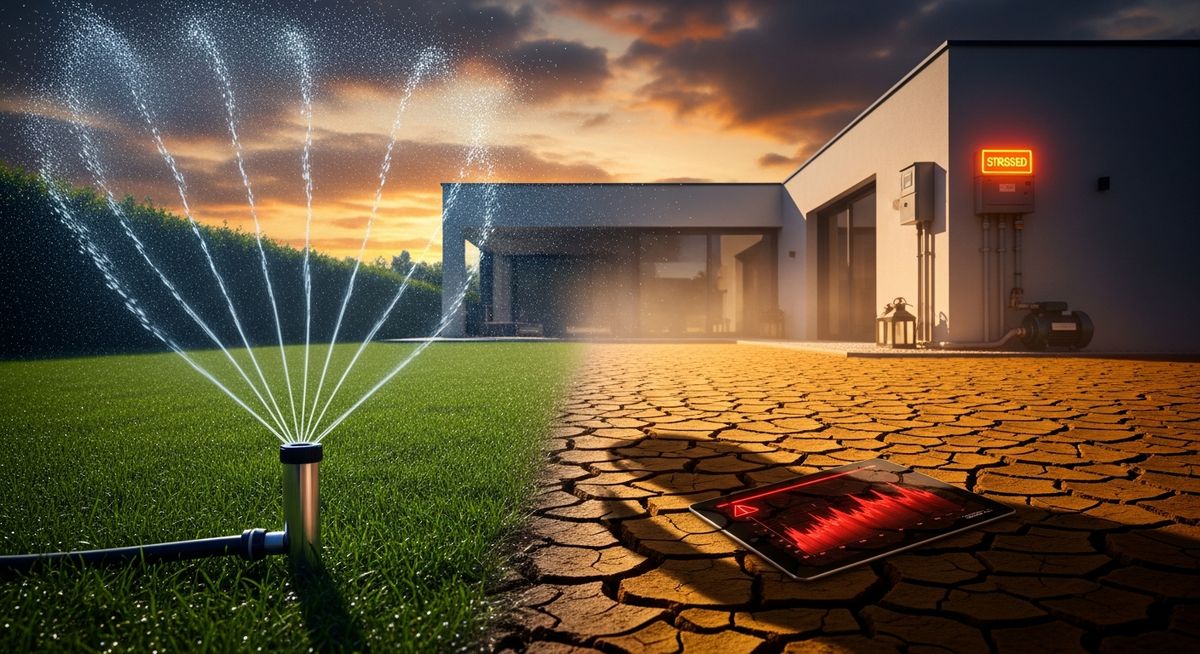
Optimizing Residential Watering Under Thermal Stress — What Dry Patches Indicate Nearly 40% of a household's drinking water consumption during summer is directed toward irrigation, and the appearance of dry patches in the lawn often signals an inefficient distribution of resources. Maintaining a green, dense, and uniform lawn represents a major aesthetic and technical challenge during heatwaves, according to an analysis published by Casa-gradina.ro via Profit.ro. Beyond the unsightly appearance, localized turf degradation points to collateral pressure and resource losses within the irrigation system. Homeowners tend to compensate for these dry areas by linearly increasing the watering time for the entire surface. This metabolically flawed approach does not solve the root issue; instead, it accelerates water waste and overburdens electric pressure pumps. To correct this anomaly, it is necessary to pinpoint the exact physical blockages in the soil or design flaws within the sprinkler network. Technical data shows that an uncalibrated irrigation system can lose up to 30% of its water volume through rapid evaporation or peripheral runoff before the liquid ever reaches the grass roots. Remedying dry patches requires a structured approach based on soil diagnostics and mechanical flow adjustments, rather than massively pumping additional water volumes. Soil Compaction and Technical Malfunctions of Sprinkler Systems The primary cause of dry patches is excessive soil compaction, a phenomenon that blocks the natural infiltration of water and oxygen to the root system. When the soil becomes impermeable, water pools on the surface and evaporates quickly under solar radiation, leaving the roots dry even under a daily watering schedule. The technical solution recommended in this case is mechanical lawn aeration, a process that breaks the compact crust and restores drainage channels. Another common cause is clogged nozzles or incorrectly adjusted spray angles, which create dry zones. Limescale deposits or impurities from the supply network can partially block sprinkler orifices, reducing their operating radius. Without periodic checks on coverage uniformity, certain lawn sections will remain under-irrigated while others become oversaturated. Furthermore, the presence of pests or fungal diseases, favored by stagnant night-time moisture, can rapidly destroy roots in localized areas. Correctly identifying the cause — whether it is a soil issue, equipment malfunction, or biological infection — is the only way to avoid unnecessary expenses on fertilizers and extra water. Economic Consequences: Hidden Costs on Water and Energy Bills For an average household, the inefficient use of an automated irrigation system translates directly into massive increases in operating costs. High-power water pumps serving sprinkler systems consume a significant amount of electricity when running for extended cycles to compensate for dry patches. At current active energy tariffs, the redundant daily operation of a 1.5 kW pump can add visible costs to the monthly electricity bill. On the water supply side, losses are even more severe in areas using the public distribution network. Increased tariffs from water and sewage utility operators penalize excessive consumption, turning inefficient lawn watering into a major expense. Additionally, over-watering strains local water networks during droughts, sometimes leading to local supply restrictions. Premature equipment wear is another direct economic consequence. Operating pumps outside their optimal pressure parameters and running them during inappropriate hours shortens the lifespan of motors and solenoid valves, generating additional maintenance and replacement costs. Transitioning to Smart Irrigation and Sustainable Soil Management To prevent lawn degradation and optimize costs, owners must transition from simple timer-based controllers to smart irrigation systems equipped with soil moisture sensors and weather connectivity. These technologies automatically adjust the volume of dispersed water based on precipitation forecasts and actual soil saturation levels, completely eliminating redundant watering. Another critical short-term measure is shifting the watering schedule. Irrigation should be carried out exclusively in the early morning hours when evaporation rates are minimal and wind does not disrupt the trajectory of water jets. This simple practice ensures deep water penetration into the soil and reduces total consumption by up to 20% without affecting plant health. In the long run, lawn resilience depends directly on soil quality. Periodically applying sand to improve clay soil structure (top-dressing) and annual scarification to remove the layer of dry organic debris (thatch) are essential tasks. These mechanical interventions guarantee that every liter of water paid for and pumped reaches where it is needed most: the lawn roots.</
Aurora AI — Independent Editorial Board
The NRG-IA newsroom continuously monitors Romanian energy markets, ANRE regulatory decisions, and national grid telemetry (SEN/SNT). We deliver independent intelligence anchored exclusively in official primary data.
Editorial Charter, Ethics & Verification Methodology →