Romanian DAM Power Price Surges 36.4% to 1,321 RON/MWh — NRG-IA
Piața de Energie Author: Ioana BuzoaicaElectricity traded on Romania's Day-Ahead Market reached an average of 1,321.54 RON/MWh for Nov 16, up 36.4% day-on-day, highlighting ongoing market pressure.
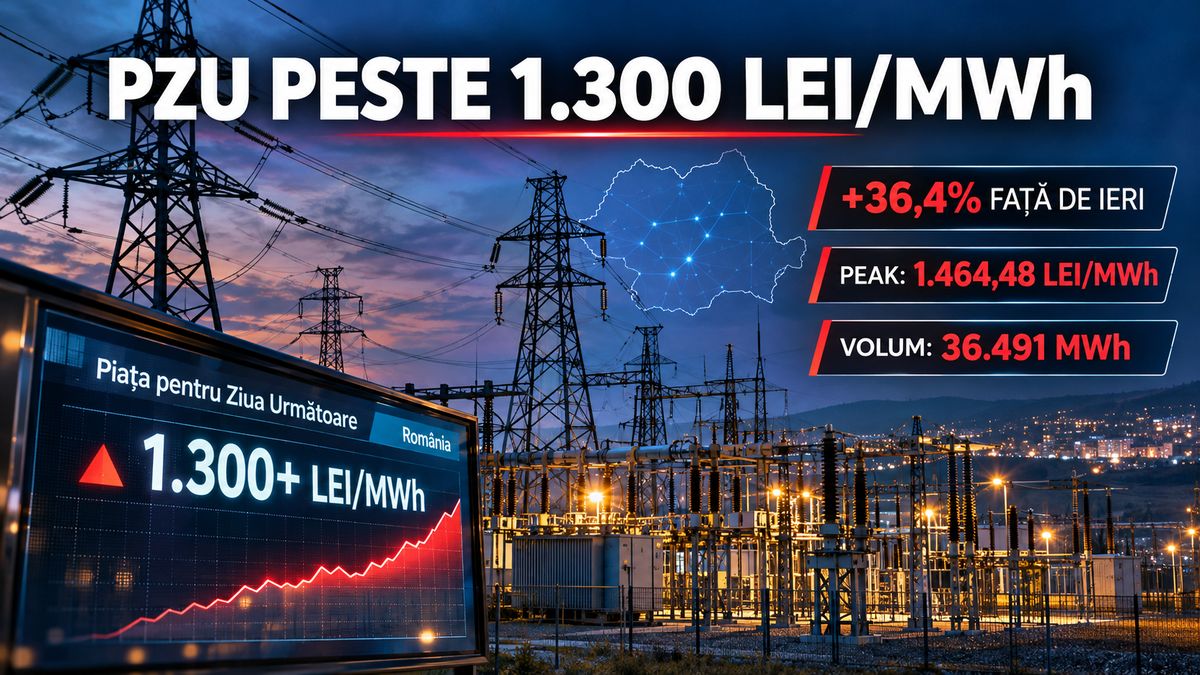
Electricity prices on Romania’s Day-Ahead Market (DAM/PZU) surged by 36.4% for delivery on November 16, 2026, reaching an average of 1,321.54 RON/MWh, according to data published by power exchange OPCOM. Just a day earlier, the average stood at 968.53 RON/MWh. The 353.01 RON/MWh day-on-day jump underscores the sharp short-term volatility inherent in the wholesale power market. This price surge comes at a critical juncture for the Romanian energy system. State power producer Nuclearelectrica reconnected Unit 2 of the Cernavodă nuclear power plant to the national grid on November 11 and scheduled Unit 1 to return on November 13, reaching full capacity by November 14. The restoration of nuclear output marks a crucial step in boosting domestic power supply after months of availability issues triggered by low Danube water levels and technical outages. However, DAM settlement prices demonstrate that restoring major baseload generation capacity does not automatically relieve market pressure. Day-ahead spot clearing prices remain heavily dictated by hourly supply-demand fundamentals, the availability of other generation sources, and market conditions across interconnected European power grids. From 968 to 1,321 RON/MWh in a Single Day According to OPCOM figures, the ROPEX_DAM Base index for Monday, November 16, cleared at 1,321.54 RON/MWh. The peak-load benchmark, ROPEX_DAM Peak, reached 1,464.48 RON/MWh, while the off-peak average stood at 1,178.59 RON/MWh. The ~286 RON/MWh spread between Peak and Off-Peak indices highlights the premium placed on consumption timing. Electricity dispatched during high-demand hours commands a significantly higher market price than power traded during off-peak windows, even within the same delivery day. Total volume traded on the day-ahead market for November 16 reached 36,491.3 MWh (~36.5 GWh). This figure reflects short-term spot market liquidity rather than total national electricity consumption, which also incorporates volumes contracted through long-term bilateral agreements and other commercial mechanisms. Monday’s price increase must also be viewed through the lens of the weekend-to-weekday shift. The resumption of industrial and commercial activity naturally alters the load profile. However, determining the exact weight of weekday demand resumption on price movement requires cross-analyzing load forecasts, available domestic dispatch, and cross-border commercial flows. While the 36.4% jump is substantial, it reflects a day-on-day comparison rather than a sustained shift relative to preceding weeks. The Romanian market had already recorded elevated spot price levels throughout the first half of November; Monday’s trend signals persistent market volatility rather than an absolute historical record. Cernavodă Returns, but Prices Depend on the Entire Energy Mix The nuclear context is particularly relevant to current market dynamics. Both units at Cernavodă faced curtailments over the summer due to low water flows on the Danube River, which strained cooling conditions required for safe operation. Subsequently, Unit 1—initially reconnected on November 6—was taken offline again on November 9 following an unplanned outage in the non-nuclear section of the plant. Unit 2 re-entered the National Power System on November 11, and Nuclearelectrica subsequently announced a revised reconnection schedule for Unit 1, targeting full nominal capacity by November 14. The operator estimated that operating both 700 MW units at full capacity restores coverage for roughly 20% of Romania’s domestic electricity consumption. The return of nuclear generation naturally reduces the volume of marginal power that must be covered by expensive thermal plants or imports. Nevertheless, the ultimate impact on clearing prices depends on net available volume in each settlement interval and the short-run marginal cost of thermal units needed to clear the stack. In coupled European day-ahead markets, prices are set through implicit auction market clearing, subject to grid constraints and available cross-border transfer capacities. Consequently, even as nuclear generation supplies a substantial block of stable baseload power, market clearing prices can remain elevated whenever clearing the marginal demand unit requires high-cost dispatchable thermal plants. Particularly during peak load hours, hydro availability and wind and solar output heavily dictate the remaining volume that must be met by fossil fuel generation or regional imports. Hydrological conditions remain a vital variable beyond the nuclear plant. Persistently low Danube river discharge has curtailed hydro generation over recent months, impacting major run-of-river assets like the Iron Gates hydro complex. A sustained recovery in hydro reservoir levels would enhance system flexibility and overall supply, though its price effect remains subject to weather patterns and regional power demand. Why Romania Can Face High Prices Despite Higher Domestic Output…
Ioana Buzoaica — Independent Editorial Board
The NRG-IA newsroom continuously monitors Romanian energy markets, ANRE regulatory decisions, and national grid telemetry (SEN/SNT). We deliver independent intelligence anchored exclusively in official primary data.
Editorial Charter, Ethics & Verification Methodology →