Energy Investment signs 1.6 GWh BESS deals in Romania — NRG-IA
Energie Regenerabilă Author: Ioana BuzoaicaEnergy Investment signed deals for 1,605 MWh of BESS in Romania. First projects are targeted for 2027, pending final investment and grid connection.
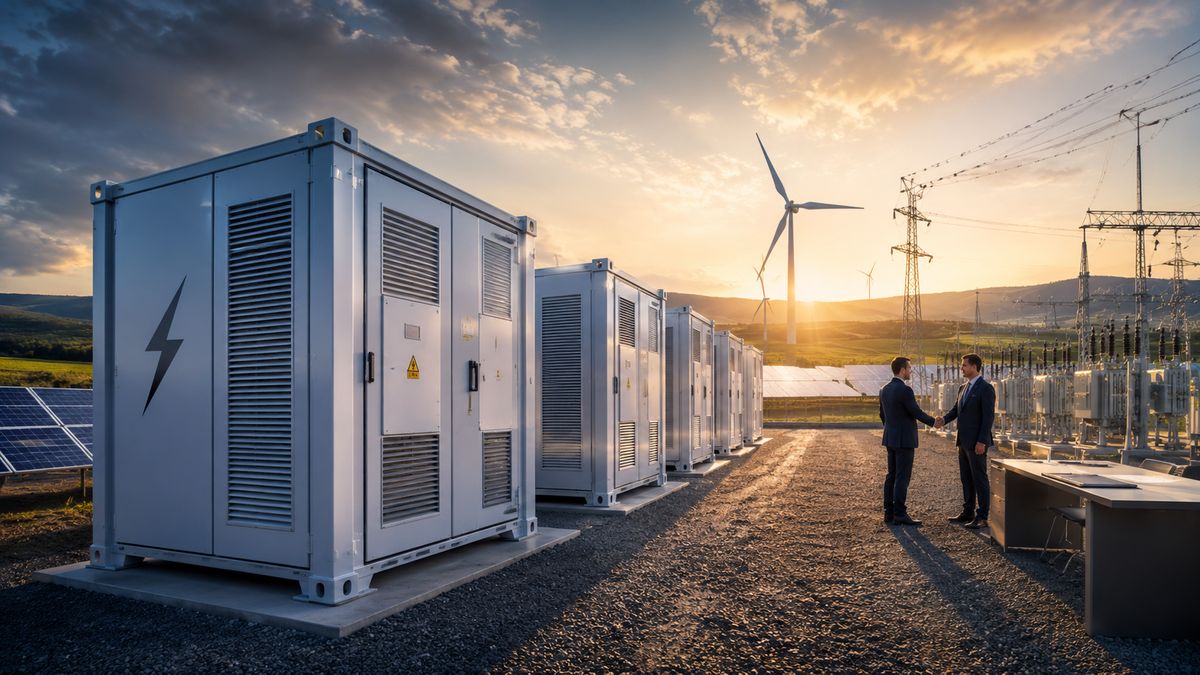
Energy Investment, a Romanian renewable energy developer, has announced cooperation agreements with Cornex New Energy and Sany Microgrid for battery energy storage systems (BESS) with a total capacity of 1,605 MWh in the Romanian market. Signed at the The smarter E Europe exhibition in Munich, the agreements cover a 1 GWh BESS project with Cornex, alongside two projects developed with Sany Microgrid: a 3 MW/5 MWh system and a 150 MW/600 MWh system. The total announced capacity of approximately 1.6 GWh is nearly equal to the roughly 1,630 MWh of storage operational in Romania as of mid-June. The key difference is that the existing battery capacity is already grid-connected, whereas Energy Investment's portfolio is still in the development and structuring phase. A 1 GWh project with Cornex The largest agreement was signed with Cornex New Energy, targeting the development of a 1 GWh BESS system in Romania. Energy Investment is set to manage the development and execution of the project, while Cornex will supply the storage technology. Cornex separately confirmed the 1 GWh cooperation with Energy Investment for the Romanian market in a press release issued after the Munich event. The installed capacity in MW has not yet been disclosed for the 1 GWh project. This detail is critical to how the battery will operate within the grid. A capacity of 1 GWh indicates how much energy the facility can store. The power output, expressed in MW, determines how quickly it can charge or discharge energy into the grid. Without this figure, the nominal discharge duration at maximum output cannot be calculated. Sany enters with two projects, including a 150 MW system The second agreement was signed with Sany Microgrid, a division of the Chinese industrial conglomerate Sany Group. The cooperation includes two projects: a 3 MW/5 MWh system and a 150 MW/600 MWh project. The latter has a nominal duration of approximately four hours at maximum output, before accounting for technical losses and operational limits. A 150 MW/600 MWh system is highly relevant for the Romanian market. It can participate in grid balancing, charge during hours of abundant renewable generation, and deliver power during peak demand periods or times of higher wholesale prices. Sany is not starting from scratch in Romania. In April, the company began constructing an integrated solar-plus-storage project in Dobrești, Dolj County, which the group presented as its first large-scale, grid-connected solar-plus-battery demonstration project in Europe. Galați and southern Romania under consideration Energy Investment is analyzing several locations, including the Galați area and southern Romania. The company cites grid flexibility needs, renewable energy integration, and the presence of large industrial consumers as its primary criteria. Site selection is not a minor detail. A large-scale battery only generates value if it is located in an area where the grid can absorb the power, where grid connection capacity is available, and where price spreads or balancing needs justify the investment. For a BESS project, land and battery containers represent only a fraction of the investment. Grid connection, transformers, substations, grid guarantees, financing, and the revenue model are decisive factors in moving from a memorandum of understanding to commercial operation. First projects expected in 2027 Marius Ion, founder and CEO of Energy Investment, pointed to 2027 as the target timeline for commissioning the first projects. However, this schedule depends on completing permitting, grid connection, licensing, financing, and equipment procurement. This caveat must remain central to the story. While the agreements are significant in terms of volume and supplier selection, they do not yet represent a final investment decision (FID) for the entire 1.6 GWh capacity. To date, the investment value, financing structure, power purchase agreements (PPAs), final locations, full EPC contracts, and individual timelines for each project have not been made public. 1.6 GWh does not automatically mean lower bills Storage investments can help alleviate peak-hour pressure, integrate solar and wind generation, and curb wholesale market volatility. However, they do not automatically lower final consumer bills. The impact depends on how the batteries are operated, their access to energy and balancing markets, grid tariffs, congestion levels, and the system's ability to dispatch stored energy precisely when it has the highest value. For Romania, the significance of this announcement lies elsewhere: these 1.6 GWh projects indicate that the market is shifting from small-scale or purely co-located solar batteries to grid-scale assets capable of providing flexibility, balancing, and price peak management. If all projects are permitted, financed, and built, the volume announced by Energy Investment would add a storage capacity comparable to nearly the entire operational battery fleet in Romania today.
Ioana Buzoaica — Independent Editorial Board
The NRG-IA newsroom continuously monitors Romanian energy markets, ANRE regulatory decisions, and national grid telemetry (SEN/SNT). We deliver independent intelligence anchored exclusively in official primary data.
Editorial Charter, Ethics & Verification Methodology →