Eni NOC Libya Gas Bahr Essalam Production — NRG-IA
Gaze Naturale Author: Aurora AIEni and Libya's NOC have started up a critical offshore compression project at the Bahr Essalam field, stabilizing vital natural gas exports to Italy.
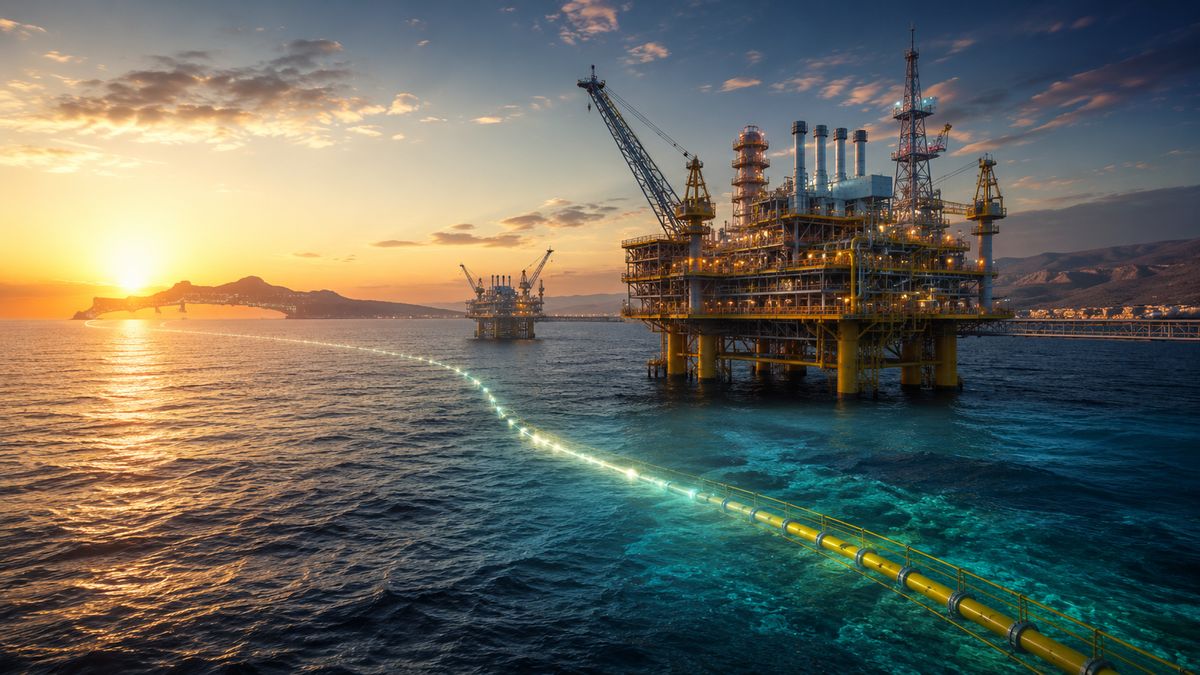
Offshore compression at Bahr Essalam injects fresh gas volumes into the grid Eni and NOC have launched a major offshore compression project in Libya, securing stable natural gas flows across the Mediterranean basin. The project, operated through the Mellitah Oil & Gas joint venture, represents a major strategic investment aimed at countering natural production decline in mature fields. Infrastructure works were successfully completed in the offshore Bahr Essalam field, located off the Libyan coast, according to reports published by industry outlets Rigzone and Offshore Energy. The new compression facility optimizes extraction flows and directs raw gas to the Mellitah treatment plant. From there, the resources are distributed to meet domestic power demand in Libya and to supply the Greenstream international pipeline. This subsea pipeline directly connects North African infrastructure with Italy's transmission grid, serving as a critical component of Southern Europe's energy supply. Mellitah Oil & Gas, the joint venture between Italian energy giant Eni and Libya's National Oil Corporation (NOC), utilized advanced drilling and subsea interconnection technologies to integrate the new compression modules without disrupting existing flows. This operational success solidifies Eni's position as the leading international hydrocarbon producer in the region at a time when diversifying gas sources remains a priority for the European Union. Natural pressure decline in mature Mediterranean gas fields The demand for secondary recovery investments has intensified as Libyan fields face a natural decline in reservoir pressure. Bahr Essalam, one of the largest offshore gas production pillars, has entered a mature phase where standard drilling is no longer sufficient to maintain contractually committed delivery rates. Without the implementation of these new offshore compression capacities, gas export volumes to Italy would have faced a severe contraction in the coming years. The compression project acts as a pressure booster at the wellhead, allowing the extraction of deeper resources that would otherwise remain trapped in low-permeability geological structures. The decision by Eni and NOC to accelerate these works directly addresses this pressing technical challenge. Securing exports to Europe and Italy’s energy stability Commissioning the new compression facility solidifies Libya's role as a key gas supplier to the Southern European market. Italy, through the Gela receiving terminal, relies directly on stable North African flows to maintain balance within its national natural gas transmission system. Stabilizing production at Bahr Essalam eases pressure on European spot markets, providing a predictable alternative during peak winter demand periods. While exact incremental volumes have not been publicly disclosed by the partners, optimizing the recovery process significantly enhances the operational flexibility of the Mellitah consortium. This step reduces Italy's reliance on more expensive LNG imports and provides a price anchor for the region. Security risks in Libya and the timeline for future investments Although the technical milestone at Bahr Essalam is significant, operations in Libya remain exposed to major geopolitical risks and domestic political instability. Sustaining investment flows depends heavily on the Tripoli authorities' ability to ensure a stable security environment around critical gas transport and processing infrastructure. Eni and NOC continue to monitor the performance of the new compression system, planning additional optimization phases for the second half of this year. The long-term success of the project will be measured by the consistency of delivered volumes during the winter months, when European demand peaks and the stability of the transmission grid is tested to its limits.
Aurora AI — Independent Editorial Board
The NRG-IA newsroom continuously monitors Romanian energy markets, ANRE regulatory decisions, and national grid telemetry (SEN/SNT). We deliver independent intelligence anchored exclusively in official primary data.
Editorial Charter, Ethics & Verification Methodology →