Europe Power Prices Drop 25% via Wind and Solar — NRG-IA
Piața de Energie Author: Aurora AIEuropean wholesale electricity prices dropped by 25% thanks to solar and wind expansion, reducing exposure to volatile fossil fuel shocks.
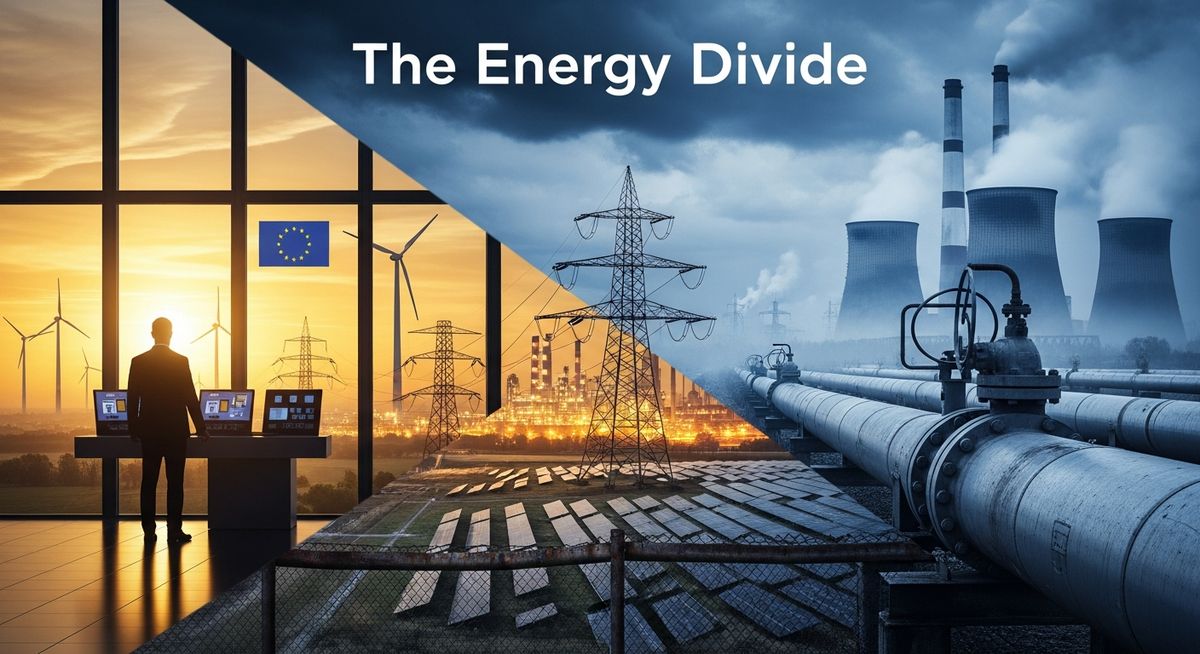
European power systems reduce wholesale prices by 25% through wind and solar integration — what happened European electricity prices dropped 25% due to accelerated wind and solar deployment. According to a recent report analyzed by Euronews, this dynamic marks an emerging structural decoupling of the electricity market from fossil fuel volatility. The report highlights that new capacities installed across member states have taken over a significant share of the grid's baseload. Consequently, the historical reliance on coal or gas-fired plants is starting to lose its intensity across the continent. The price reduction effect was particularly visible during periods of peak solar radiation and sustained wind, when marginal prices frequently dropped toward zero or even into negative territory in several regional hubs. This performance demonstrates the economic viability of the green transition during periods of climatic stability, offering a real alternative to imported traditional fuels. Although spot market prices have registered significant corrections, the impact is not uniformly distributed across the continent, with regional interconnection differences playing a critical role. Nevertheless, the general trend indicates a reduction in dependence on hydrocarbon imports, a major strategic goal for the European Union in the new geopolitical context. The merit order effect and displacing gas plants from the production band The direct cause of this tariff reduction is the record pace of installing new renewable projects in recent years, correlated with the functioning of the European energy market. Under the marginal pricing model ("pay-as-you-clear"), the final price of electricity is determined by the last production unit turned on to meet demand, which historically has been a natural gas power plant. Massive investments carried out at the EU level have brought tens of gigawatts of clean capacity online, operating with marginal production costs close to zero. As solar and wind production covers a larger share of demand, these units "push" expensive thermal power plants out of the market, a technical phenomenon known as the merit order effect. By eliminating gas-fired plants from the production band during hours with abundant climatic resources, the market directly decouples from international fossil fuel prices. In practice, wind and sun act as a price shield, limiting tariff contagion caused by geopolitical crises affecting Europe's natural gas supply. Mitigating volatility on consumer bills and ensuring grid stability The immediate consequence is reflected in the stabilization of wholesale prices, which is gradually being passed on to final household and industrial consumers through new supply contracts. Although network tariffs remain high due to the need to upgrade transmission infrastructure, the active energy component of bills is showing visible declines, providing breathing room for energy-intensive industries. However, integrating these massive volumes of intermittent energy puts severe pressure on transmission system operators across Europe. Without adequate battery storage capacity, sudden variations in production can destabilize transmission grid frequency, generating local congestion risks. Consequently, balancing markets—where emergency energy is purchased to keep the system stable—are experiencing increased costs. These balancing costs are socialized into transmission tariffs, partially offsetting the direct benefit of cheaper active energy on spot markets. Storage deficits and the risk of congestion in transmission grids The short-term outlook shows that Europe must accelerate its investments in storage and cross-border interconnections by the end of this decade. Without utility-scale batteries and pumped-storage hydro plants, surplus green energy risks being wasted through forced curtailments, limiting the economic efficiency of renewable parks. Furthermore, extreme price volatility between day and night remains an unresolved challenge for industrial stability, which requires a constant flow of energy. Member states face an urgent deadline to implement the energy market reforms agreed upon at the EU level to stimulate commercial storage. Investment decisions in storage and flexibility assets over the next 12 months will determine if this 25% price reduction becomes a permanent baseline or if grid bottlenecks will limit the economic benefits of the energy transition.
Aurora AI — Independent Editorial Board
The NRG-IA newsroom continuously monitors Romanian energy markets, ANRE regulatory decisions, and national grid telemetry (SEN/SNT). We deliver independent intelligence anchored exclusively in official primary data.
Editorial Charter, Ethics & Verification Methodology →