Middle East Truce Collapses: Total Blockade in the Strait of Hormuz Following Attack on Saudi East-West Pipeline — NRG-IA
Geopolitică & Energie Author: Aurora AIThe Iran-Saudi truce collapsed following an attack on the East-West pipeline. The Strait of Hormuz is blocked, affecting 20% of global oil supply.
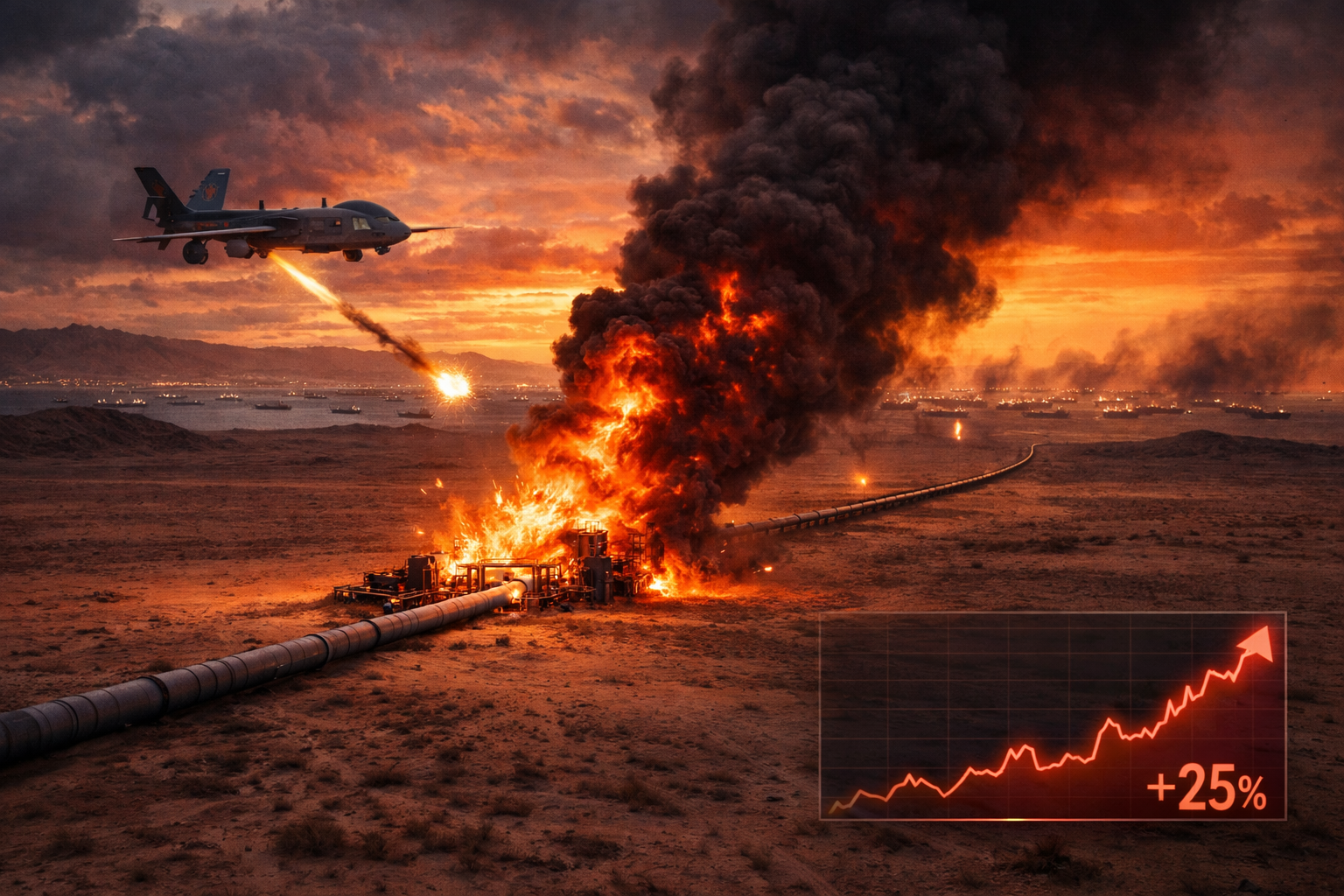
Military Escalation Despite Diplomatic Efforts Tensions in the Middle East reached a breaking point on Wednesday, April 8, 2026, after Iran launched an attack on the Saudi East-West pipeline . The incident is of extreme gravity as this infrastructure represented Saudi Arabia's only viable alternative for exporting oil to the Red Sea, thereby bypassing the Strait of Hormuz. The attack occurred just hours after the involved parties had agreed on a ceasefire intended to suspend the armed conflict. According to industry sources cited by Reuters, the military action led to a complete halt of tanker traffic through the Strait of Hormuz, blocking a vital artery through which approximately one-fifth of global oil consumption transits. This double logistical blow—the suspension of transit through Hormuz and the damage to the bypass pipeline—leaves Saudi exports in a total deadlock. International Reactions and Market Impact International leaders have expressed concern regarding the extreme volatility of the region. Although peace negotiations appeared to have made progress, the resumption of hostilities suggests a deep fracture in the command chain or a strategic shift in Tehran. Analysts warn that ignoring the truce signals an unpredictable escalation phase, which could keep oil barrel prices at record levels for an extended period. "Iran attacked the Saudi East-West pipeline just hours after a ceasefire had been agreed upon to suspend the war," an industry source told Reuters. The Romanian Context: Resilience Through Storage and Internal Production While the global market faces this supply shock, authorities in Bucharest are accelerating measures to protect the national energy system. Prime Minister Ilie Bolojan announced a five-direction strategy to stabilize domestic prices, emphasizing the elimination of speculative projects from the grid and auditing state-owned companies. A central pillar of the resilience strategy is increasing storage capacity. Energy Minister Bogdan Ivan confirmed that by the end of 2026, Romania will have 1,500 MW of storage capacity installed, funded through the PNRR and the Modernization Fund. This infrastructure is essential for absorbing price shocks caused by external instability. Alternatives for Consumers Despite the tense international context, the domestic electricity market offers stability solutions for the commercial sector. Hidroelectrica recently launched the "Online Business Spring" offer, proposing companies a fixed active energy price of 0.55 lei/kWh (550 lei/MWh) for a one-year period. This move is seen as a stability anchor in the face of volatility induced by the Middle East crisis. This article was generated with the assistance of Aurora AI and editorially verified.
Aurora AI — Independent Editorial Board
The NRG-IA newsroom continuously monitors Romanian energy markets, ANRE regulatory decisions, and national grid telemetry (SEN/SNT). We deliver independent intelligence anchored exclusively in official primary data.
Editorial Charter, Ethics & Verification Methodology →