Russia Fuel Crisis Hits Agriculture, Transport, and Services — NRG-IA
Geopolitică & Energie Author: Ioana BuzoaicaRussia's fuel crisis hits key economic sectors. Farmers face harvest fuel shortages, bus routes are cut, and Moscow weighs a total diesel export ban.
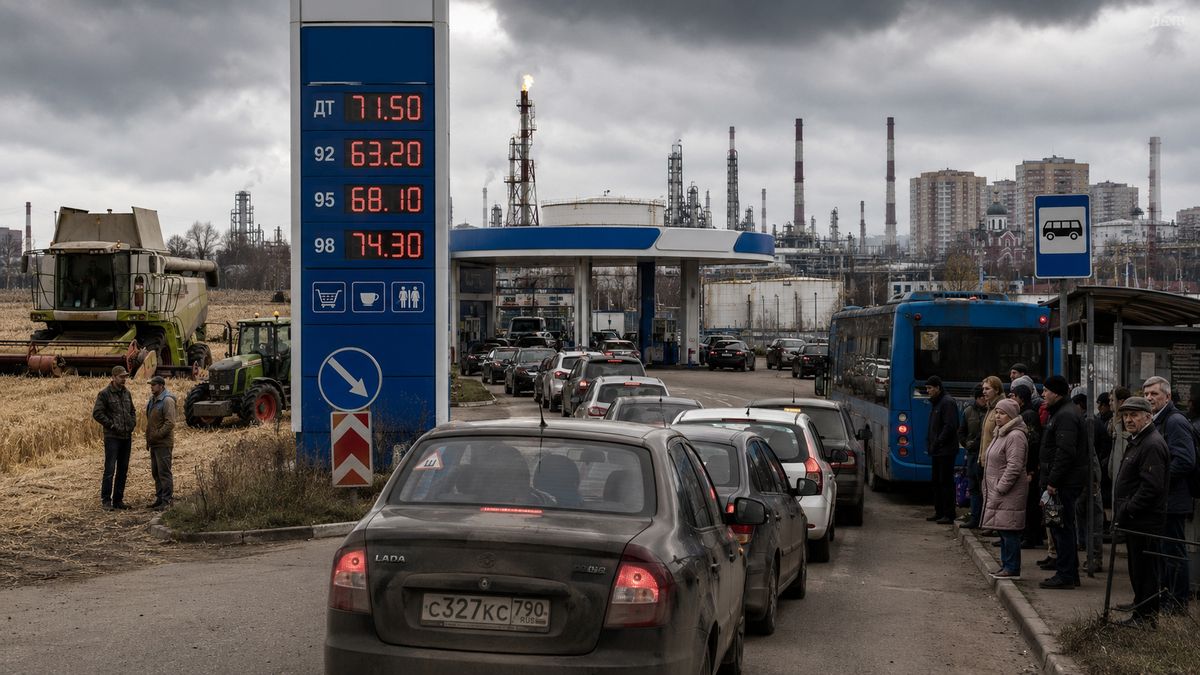
Russia's fuel crisis is entering a phase with direct impacts on the domestic economy. Gasoline and diesel have become harder to find in numerous regions, and the pressure is spreading beyond filling stations: to grain harvesting, local public transport, sanitation, freight distribution, and daily household costs. Ukrainian drone attacks on refineries, depots, and energy infrastructure have reduced the availability of refined products at a time of high summer demand. Russia remains one of the world's largest oil producers, but its domestic market depends on a complete supply chain: refining, storage, rail transport, deliveries to regional depots, and distribution at the pump. Simultaneous bottlenecks across these links have turned fuel availability into a national economic strain. Vladimir Putin has publicly acknowledged shortages in several regions and called for measures to stabilize supply. The Kremlin is tapping gasoline reserves, estimated by Putin at 1.7 million tons, while a complete ban on diesel exports is under consideration. The priority outlined by the Russian president is agriculture, as the harvesting campaign depends on supplying machinery with diesel and gasoline. Gasoline becomes the fragile link in Russia's energy chain Market data shows growing pressure on refined products. Industry specialists cited by Reuters estimate that Russia's gasoline production has fallen below consumption levels since May, while diesel production remains roughly in line with domestic demand. The situation is also visible in the wholesale market. Volumes of AI-92 and diesel traded on the SPIMEX exchange have fallen to less than half compared to June 2025, while the availability of AI-95 is about one-third lower. Delayed deliveries amplify the pressure: market participants report frequent delays of one to two months for ordered shipments. In practice, immediately available fuel ends up commanding a much higher price. Depots with pre-existing stocks or those that have recently received products purchased on the exchange can sell quick volumes loaded directly into road tankers. These small batches have ended up trading at values roughly twice the SPIMEX wholesale market average. This discrepancy explains why Russia can have crude oil but struggles to secure gasoline where demand is immediate. Crude must be processed, delivered, and distributed through a regional infrastructure operating under severe strain. Independent stations climb toward 140 rubles/liter Supply pressure has created two distinct markets at the pump. Independent stations, which buy fuel from the wholesale market and depend on rapid deliveries, have begun displaying prices of over 100 rubles/liter. In some cases, Reuters sources point to values of 120–140 rubles/liter for gasoline and diesel. Networks operated by major oil companies have maintained prices closer to pre-crisis levels. AI-92 gasoline hovered around the 63–66 rubles/liter range, while AI-95 was in the 70–73 rubles/liter zone. These networks operate under pressure from authorities to limit increases to a pace close to inflation. The price difference has shifted demand to major oil companies' stations, where fuel is running out quickly. In certain areas, some retail outlets have temporarily suspended fueling until the next delivery arrives. Queues have become part of the local landscape, and regional authorities have introduced restrictions and rationing measures in several regions. Rosstat reported a 30% weekly increase in gasoline prices in Sevastopol, a sign of tension in regions where the supply chain is most vulnerable. Nationally, prices are rising at a slower pace, but regional disparities are becoming increasingly significant for households and businesses. Imports from India, Belarus, and Kazakhstan ease localized pressure Moscow has begun supplementing domestic production with imports. Reuters reported that Russia had received or was set to receive at least 60,000 tons of gasoline from India, with two other tankers carrying cargoes of 30,000–40,000 tons each. Belarus increased rail deliveries of gasoline to Russia to over 70,000 tons in the first half of June, nearly three times the level of the first half of May. Kazakhstan has also agreed to supply 50,000 tons of petroleum products in July and August. For the Russian market, these volumes buy time and flexibility, but the scale of consumption highlights the limits of this solution. During the summer season, Russia's gasoline demand exceeds 110,000 tons per day. The first confirmed batch from India is equivalent to just over half a day of national consumption. Industry sources stated that Russia is targeting imports of up to 400,000 tons of gasoline per month from several countries. Such a volume would ease pressure on the domestic market, but normal operations still depend on the recovery of refineries, the pace of domestic deliveries, and the logistics network's capacity to move fuel to affected regions. The relationship with…
Ioana Buzoaica — Independent Editorial Board
The NRG-IA newsroom continuously monitors Romanian energy markets, ANRE regulatory decisions, and national grid telemetry (SEN/SNT). We deliver independent intelligence anchored exclusively in official primary data.
Editorial Charter, Ethics & Verification Methodology →