Criza din Ormuz explicată: de ce pot crește carburanții și costurile din Europa — NRG-IA
Geopolitică & Energie Author: NRG-IAAnalysis of the fuel shortage risk in Europe and the impact of rising oil prices on consumption, amid the blockade in the Strait of Hormuz.
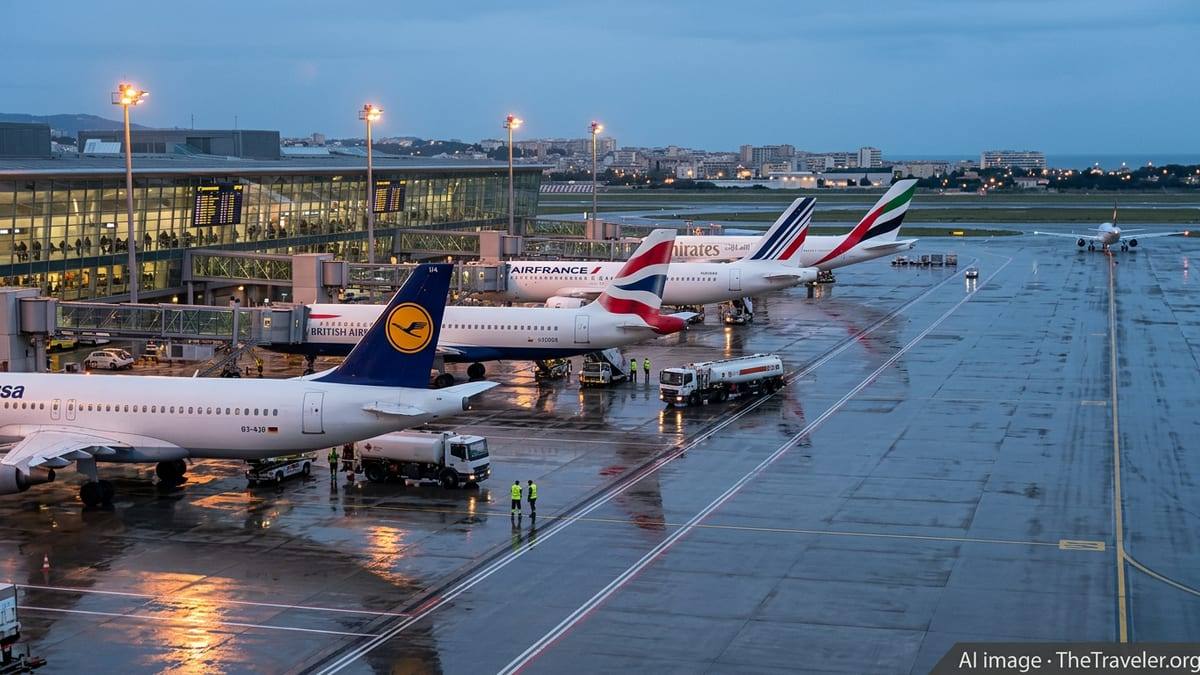
Geopolitical Context and the Strangulation of Energy Flows The Strait of Hormuz, a vital artery through which approximately one-fifth of global oil consumption passes, has once again become the epicenter of a crisis threatening to destabilize the global economy. Amid recent diplomatic tensions, including Israel's exclusion of Spain from the Gaza ceasefire monitoring mechanisms, regional stability is more fragile than ever. This instability is not just a foreign policy issue, but a direct risk factor for the European consumer's pocket. "Europe is just 3 weeks away from a jet fuel shortage if crude oil deliveries are not resumed through the Strait of Hormuz," warn market analysts quoted by Profit.ro. The Critical Threshold: 21 Days That Could Ground European Aviation The air transport sector is the first to feel the shockwave. With the summer vacation season approaching, European airports have issued alerts regarding limited kerosene stocks. Dependence on imported refined products transiting Hormuz has created an extremely vulnerable "just-in-time" supply model. A disruption lasting beyond the three-week threshold could lead to massive flight cancellations, affecting not only citizen mobility but also the tourism industry, a major GDP pillar in countries like Spain, Greece, or Italy. Analysis of Impact on Prices and Consumption The transmission mechanism of the crisis from Gulf loading terminals to Romanian pumps is mathematical and rapid. Official data provided by the Ministry of Energy indicates a direct correlation between international quotes and the price for the end consumer. In Romania, Energy Minister Bogdan Ivan emphasized that every $10 increase in the price of a barrel of oil translates into a 0.45 RON price hike per liter of diesel . Inflationary Impact: Rising fuel prices trigger a chain of price increases for all consumer goods due to transport costs. Natural Gas Volatility: Although Hormuz is primarily associated with oil, the transit of Liquefied Natural Gas (LNG) is equally critical. Gas prices in Europe have seen new increases amid uncertainty, putting pressure on energy-intensive industries (chemicals, metallurgy). Financial Speculation: The market is marked by aggressive moves. Recently, a massive bet of approximately $950 million was placed on falling oil prices just hours before the announcement of a possible US-Iran truce, demonstrating the extreme degree of uncertainty and speculation. Industrial Sectors Under Siege Beyond transport, the European industrial sector faces dual pressure. On one hand, the cost of primary energy is rising, and on the other, supply chains for raw materials are disrupted. The chemical industry, which uses hydrocarbons as raw material, and the logistics sector are the most exposed. In this bleak landscape, a trend of adaptation emerges: Romanian companies like Parapet are accelerating their expansion into European markets (e.g., Germany) with photovoltaic projects, attempting to provide alternatives to dependence on imported fossil fuels. Perspectives and Resilience Solutions: The Case of Romania Romania possesses strategic levers that could mitigate the impact in the medium and long term. The Neptun Deep project remains the centerpiece of the energy independence strategy. According to statements by former Energy Minister Virgil Popescu, this project is estimated to bring over 20 billion euros to the state budget, providing a stable source of natural gas starting in 2027. Risk Chart: A Scenario Simulation Analyzing price trends, we can identify three possible scenarios for the coming months: Optimistic Scenario: Rapid resumption of traffic through Hormuz and barrel stabilization below $80. The impact on inflation would be minimal. Alert Scenario: Partial blockade for 30 days. The barrel jumps over $100, diesel in Romania exceeds the 8.5-9 RON/liter threshold, and the aviation sector reduces capacity by 20%. Systemic Crisis Scenario: Total closure of the strait for more than 60 days. This could trigger a global recession and force governments to reintroduce massive subsidies or rationing in non-critical sectors. Editorial Conclusions The blockade in the Strait of Hormuz is not just a logistical problem, but a test of resilience for the global economic architecture. Europe, caught between the green transition and residual dependence on hydrocarbons, must accelerate investments in domestic production and storage capacities. The vulnerability displayed in the aviation fuel sector demonstrates that current strategic reserves are insufficient to absorb geopolitical shocks of such magnitude. This article was generated with the assistance of Aurora AI and editorially verified.
NRG-IA — Independent Editorial Board
The NRG-IA newsroom continuously monitors Romanian energy markets, ANRE regulatory decisions, and national grid telemetry (SEN/SNT). We deliver independent intelligence anchored exclusively in official primary data.
Editorial Charter, Ethics & Verification Methodology →