Heatwave Curbs Europe's Nuclear Power: France Loses 4.1 GW — NRG-IA
Energie Regenerabilă Author: Ioana BuzoaicaEurope's heatwave is curbing nuclear and hydro output while driving up demand. France has temporarily lost 4.1 GW of nuclear capacity.
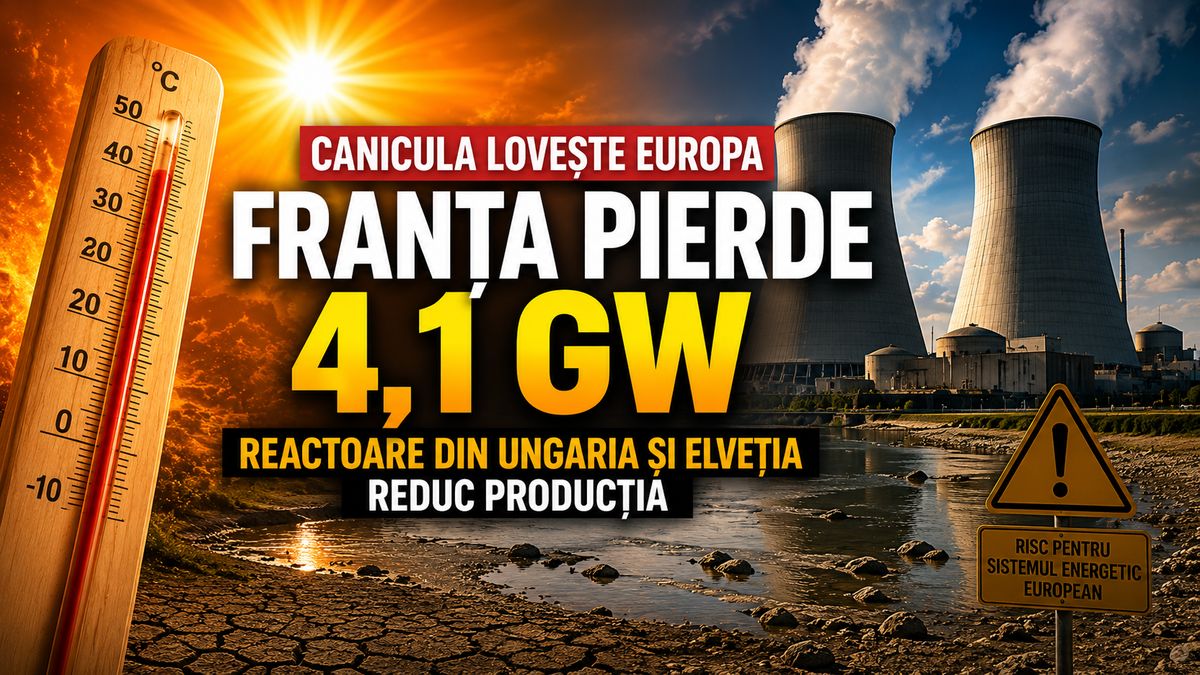
The heatwave sweeping across Europe is beginning to put direct pressure on the energy system, not just the population. High temperatures are driving up electricity consumption through air conditioning use, while simultaneously reducing the capacity of some nuclear power plants to operate at full power. The most visible loss comes from France, where nuclear output has been temporarily reduced by approximately 4.1 GW. The issue is not related to nuclear fuel or reactor operations themselves, but rather to cooling. Many nuclear plants use river water to cool their facilities, and the water discharged back into the environment must comply with strict temperature limits. When rivers are already very warm, operators can no longer discharge the same volume of heated water without harming aquatic ecosystems. The only solution is to curtail power output. In France, this limitation is significant for the entire European market, as the French system is one of Europe's largest nuclear power producers and a major player in regional electricity exports. A 4.1 GW reduction does not trigger an automatic crisis, but it temporarily removes crucial dispatchable capacity from the market precisely when demand is rising. This phenomenon is not isolated. In Hungary, the Paks nuclear power plant temporarily reduced output at some units due to the high temperature of the Danube. In Switzerland, operators curtailed reactor operations to comply with regulations on discharge water temperatures in rivers. Although these reductions are smaller than in France, the signal is the same: while nuclear energy remains stable and predictable, it is not entirely immune to extreme weather events. The heatwave is also putting pressure on hydropower. Low river flows are limiting hydropower generation, which is particularly critical during hours when the system requires flexibility. On a typical summer day, solar energy can cover a significant portion of demand at midday, but after sunset, the system relies on hydro, gas, batteries, imports, or other dispatchable capacities. If hydro output drops and nuclear power is curtailed, the safety margin narrows. For transmission system operators, this combination is challenging: higher demand, reduced nuclear output, weaker hydropower, high solar volatility, and tighter cross-border commercial flows. During heatwaves, power grids must not only transport more energy but do so under more difficult technical conditions, with equipment exposed to high temperatures and a market highly sensitive to any imbalance. For Romania, the impact is indirect but relevant. Romania does not rely directly on French, Swiss, or Hungarian reactors, but it is part of the interconnected European market. When major producers reduce available capacity, regional flows shift, and wholesale prices can become more volatile during peak demand hours. At the same time, Romania faces its own summer challenge: growing solar generation at midday, but a critical need for balancing and dispatchable capacity in the evening. The heatwave highlights an increasingly clear vulnerability in the European energy system. Simply expanding generation capacity is not enough. Europe needs stronger grids, storage, flexible capacity, and market rules that can better manage days when weather simultaneously impacts demand, generation, and energy transmission.
Ioana Buzoaica — Independent Editorial Board
The NRG-IA newsroom continuously monitors Romanian energy markets, ANRE regulatory decisions, and national grid telemetry (SEN/SNT). We deliver independent intelligence anchored exclusively in official primary data.
Editorial Charter, Ethics & Verification Methodology →