Hormuz and Drought Raise European Energy and River Transit Costs — NRG-IA
Piața de Energie Author: Ioana BuzoaicaEurope's energy risk is no longer one-dimensional. Hormuz tensions raise oil prices, while drought limits Rhine and Danube fuel distribution inland.
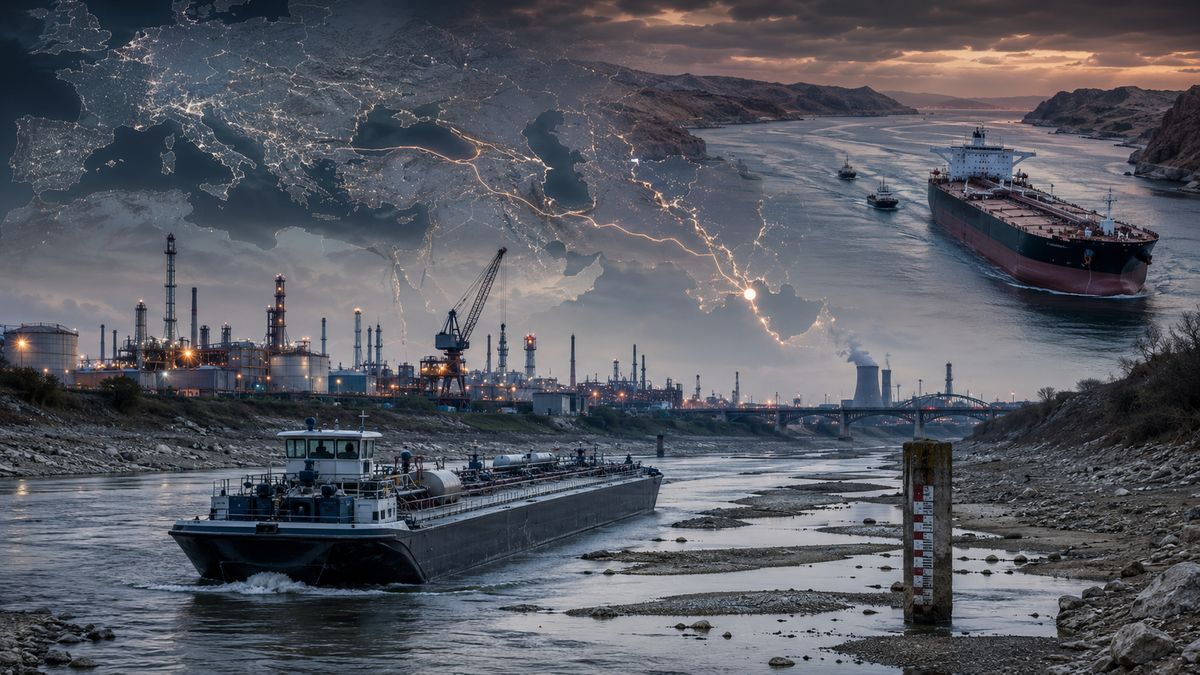
Europe is keeping a close eye on tankers attempting to cross the Strait of Hormuz, but a second pressure point is building deep within the continent. Water levels on the Rhine and Danube have dropped toward depths typically seen during severe droughts, forcing river vessels to drastically reduce their loads and driving shipping costs to levels several times higher than at the start of summer. These two risks emerge at different points in the energy supply chain, but they could amplify each other. Hormuz affects the price and availability of oil and liquefied natural gas before they reach Europe. The Rhine and the Danube impact what happens after these commodities arrive at ports: the transport of fuels, coal, chemicals, and raw materials to refineries, power plants, factories, and consumers. Brent crude was trading at around $85.83 per barrel on Thursday, up over 1%, following the escalation of conflict between the United States and Iran and the emergence of a new risk to energy transit through the Red Sea. Traffic through Hormuz—a corridor that before the war supported about a fifth of daily global oil and LNG trade—remained at very low levels. Meanwhile, at Kaub, the most critical chokepoint for navigation on the Middle Rhine, the navigable water depth was around 45 centimeters. Rain has begun to slightly lift water levels, and German authorities estimate a rise toward 68 centimeters over the weekend. While this improvement allows for larger cargo loads, it does not immediately restore transport to normal levels. Energy reaches the port, but it must also reach the European hinterland The major North Sea ports serve as the gateway for a significant portion of the energy and raw materials consumed in Europe. Rotterdam, Amsterdam, and Antwerp receive oil, petroleum products, coal, gas, and industrial goods from all over the world. From there, a significant share of these volumes must be moved inland. The Rhine connects North European ports to refineries, storage depots, chemical plants, power stations, and industrial hubs in Germany, France, Switzerland, and the Benelux region. German industry relies on this waterway to transport approximately 200 million tons of cargo annually. When water levels drop, vessels do not disappear from the river, but they can no longer be loaded to normal capacity. An overly heavy barge risks running aground in shallow stretches. Operators are forced to reduce cargo volumes, split the same shipment across multiple vessels, and introduce low-water surcharges. In some sectors of the Rhine, vessels have been operating at just 20% of their normal capacity. A vessel designed to carry 500 standard containers could pass through the Kaub area with less than a fifth of its usual load. Navigation continued, but with much lower efficiency and rapidly rising costs. The cost of oil transport on the Rhine has nearly tripled The most immediate impact is visible in logistics rates. The cost of tanker barge transport between Rotterdam and Karlsruhe has surged to around €110–120 per ton. At the beginning of the week, it stood at €60–70, and at the end of June, it was around €45 per ton. This means that in less than three weeks, the cost of moving petroleum products along this route has increased roughly two and a half times. This price spike does not reflect a physical shortage of fuel, but rather a loss of transport capacity: more vessels, more trips, and longer timeframes are required to move the same volume. For refineries, storage depots, and distributors, this difference becomes an additional cost that must either be absorbed into margins or passed down the supply chain. The effects may first appear in wholesale prices, regional supply, and industrial costs before reaching the pump or the consumer's bill. The Rhine carries not only gasoline and diesel, but also coal, ores, chemicals, industrial components, grain, and biofuels. When its capacity drops, all these cargo categories compete for a shrinking logistics space. German industry is already starting to scale back activity Low water levels are no longer just a theoretical risk. Thyssenkrupp Steel announced that transport difficulties are affecting raw material supplies to its Duisburg plant. The company has suspended its own barge operations and slightly reduced blast furnace production, turning to shallow-draft vessels to maintain supplies. The company's customers are not yet facing disruptions, and German industry is better prepared than during the severe droughts of 2018 and 2022. Companies have increased inventories, diversified routes, and deployed vessels specifically designed for shallower waters. These measures increase system resilience, but they come at a price. Rail or road transport is more expensive, more polluting, and has limited capacity. In the event of prolonged navigation disruptions, replacing the volumes transported on the Rhine would require thousands of additional trucks every day. A European industry trying to…
Ioana Buzoaica — Independent Editorial Board
The NRG-IA newsroom continuously monitors Romanian energy markets, ANRE regulatory decisions, and national grid telemetry (SEN/SNT). We deliver independent intelligence anchored exclusively in official primary data.
Editorial Charter, Ethics & Verification Methodology →