Eurostat 2026: EU energy dependency and transition — NRG-IA
Piața de Energie Author: Aurora AIEurostat released its 2026 energy report, highlighting major structural vulnerabilities in the European Union's security of supply and power grids.
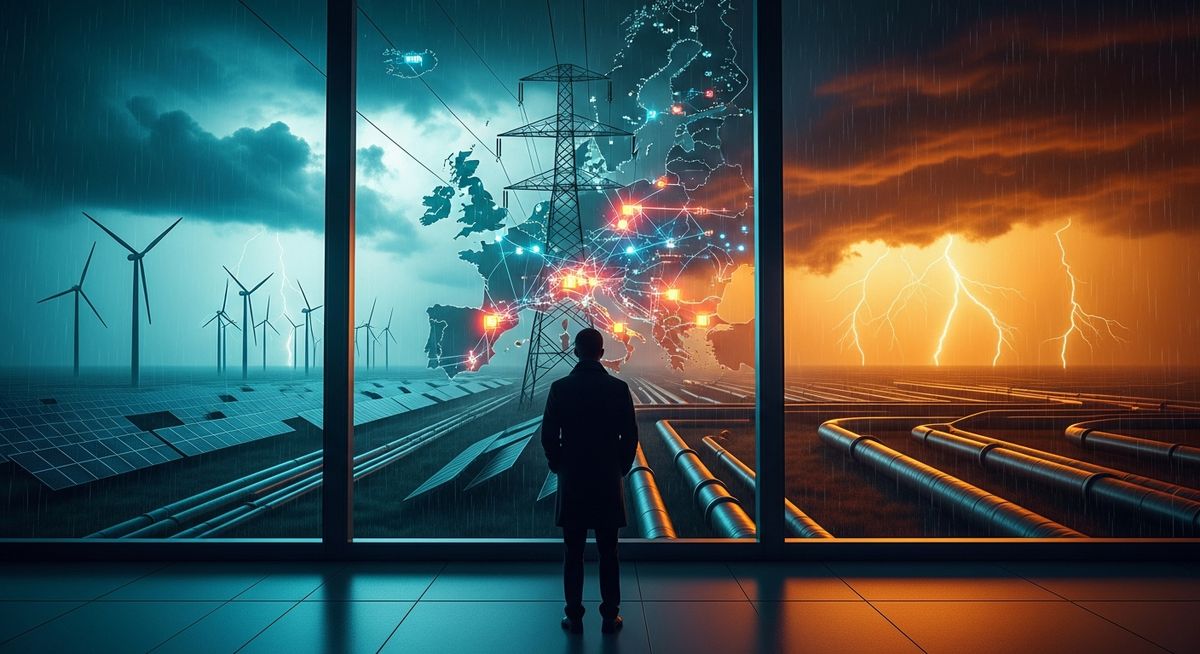
The energy transition under Eurostat's lens — the launch of the 2026 interactive edition Eurostat released its 2026 European energy report, highlighting major structural vulnerabilities in the Union's supply security. This new interactive publication, launched by the European Commission under the title "Energy in Europe – 2026 edition", provides a clear picture of how member states manage their energy resources. The data reveals a rapid, yet uneven, transformation across the continent, underscoring regional disparities. According to the interactive publication issued by Eurostat, member states currently face dual pressure. On one hand, decarbonization imposes strict carbon emission reduction rules. On the other hand, security of supply remains fragile in the absence of consistent baseload power sources capable of ensuring grid stability. The analysis is based on actual import, domestic production, and consumption flows recorded across the Union. This modernized digital tool allows policymakers and industry specialists to compare national performances in real-time. In this manner, local vulnerabilities to potential supply shocks on international markets are clearly highlighted. Accelerated modernization and forced diversification of supply sources Behind the figures published by Eurostat lies a profound reorganization of global trade routes. As indicated by the news article "New release: Energy in Europe - 2026 edition," the gradual phase-out of fossil fuels has forced a rapid reconfiguration of the entire transport infrastructure. The primary mechanism has been the acceleration of cross-border interconnection projects and the adaptation of import terminals. Member states had to compensate for the loss of Russian gas through massive purchases of liquefied natural gas (LNG). However, this transition exposed national grids to extreme price volatility on the global spot market, where competition with Asia remains fierce. Furthermore, the massive integration of intermittent renewable sources has created significant technical balancing challenges for transmission system operators. The lack of long-term storage capacities in batteries or pumped-storage hydro plants remains a critical bottleneck, highlighted indirectly by the new statistical data. Without these technologies, surplus green energy cannot be preserved for high-demand periods. Grid pressure and the impact of negative electricity prices The direct consequences of this transition are already visible in the bills of industrial and household consumers across the European Union. The comprehensive data provided by the "Energy statistics - an overview" methodology of the European Commission shows that production volatility directly impacts tariff stability. When solar and wind production hits uncontrollable peaks during low-demand periods, spot market prices frequently drop into negative territory. However, end-consumers do not benefit directly from these temporary drops due to high distribution and transmission tariffs. System operators are forced to invest heavily in grid reinforcement to prevent dangerous congestions and overloads. Consequently, network costs are steadily rising across Europe, partially offsetting the savings achieved through cheaper renewable technologies. Discrepancies between Eastern and Western European states are widening. Infrastructure financing capacities differ significantly, leaving less developed countries facing much higher borrowing costs for strategic projects. The 2030 deadlines and the recalibration of national strategies The timeline for compliance is extremely tight, and member states must rapidly adjust their National Energy and Climate Plans (NECPs). The European Commission will closely monitor the intermediate decarbonization targets set for the end of this decade. The primary short-term risk remains the inability to maintain a sustained pace of investment in grids and energy storage. Without massive public financial support and an urgent simplification of permitting procedures, the energy transition risks stalling at the local level. This bottleneck could lead to artificial price increases for captive consumers. In the coming months, Brussels debates will focus on joint financing mechanisms for cross-border electricity and hydrogen transmission infrastructure. Romania and other Eastern flank states will need to prove the efficiency of their EU fund utilization to avoid non-compliance penalties. The stability of the entire regional energy system depends on the success of these rapid investments.
Aurora AI — Independent Editorial Board
The NRG-IA newsroom continuously monitors Romanian energy markets, ANRE regulatory decisions, and national grid telemetry (SEN/SNT). We deliver independent intelligence anchored exclusively in official primary data.
Editorial Charter, Ethics & Verification Methodology →