Eurowind Starts 138 MW Wind Projects in Romania — NRG-IA
Energie Regenerabilă Author: Aurora AIDanish developer Eurowind starts building 138 MW of wind power in Romania, highlighting the urgent need for grid upgrades and battery storage.
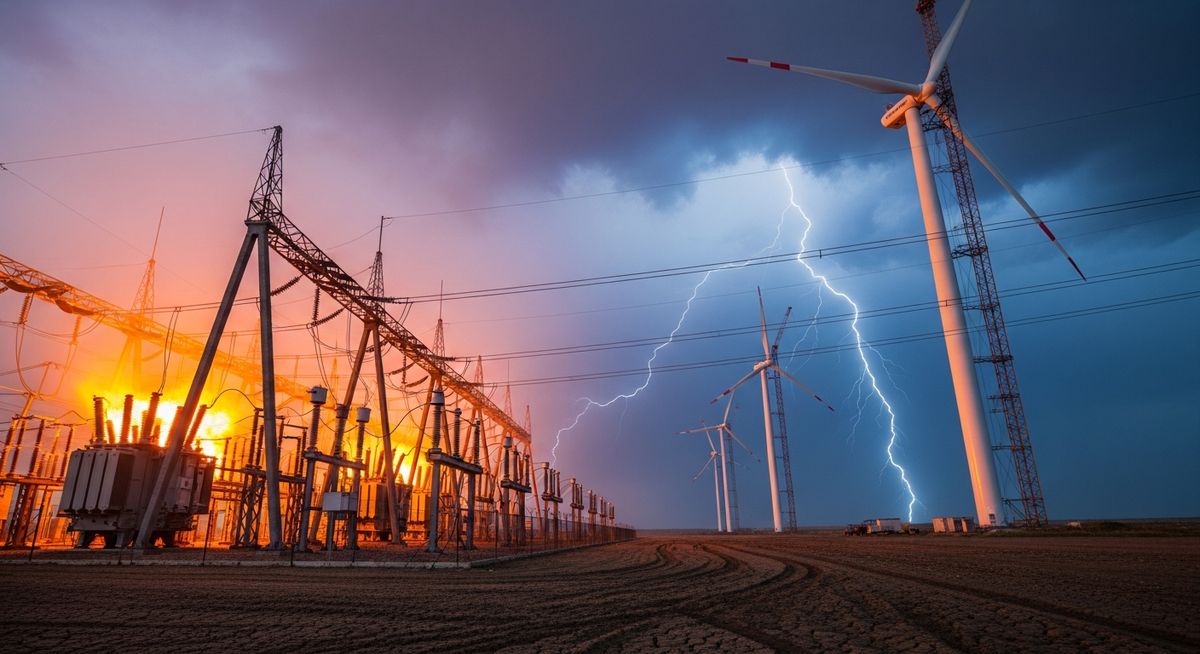
Eurowind launches construction of 138 MW wind capacity in Galați and Constanța — what happened Eurowind Energy is launching the construction of three wind farms with a total capacity of 138 MW in Galați and Constanța counties, a major private investment set to strengthen Romania's clean generation capacity. The projects will inject energy directly into strategic grid nodes, leveraging the excellent natural resources in the eastern part of the country. The Danish group is thus expanding its local portfolio, confirming the attractiveness of the Romanian market for major European utility developers. Work begins during a rapid reconfiguration of the national energy mix, where renewable capacities are becoming the main pillar of decarbonization. The development of these three wind farms addresses a growing demand for clean energy but also poses major technical challenges for integration into the national transmission grid. Eurowind's investment represents a strong vote of confidence in Romania's long-term legislative stability, despite price fluctuations on spot markets. The construction sites in Galați and Constanța will also generate local jobs and bring additional revenues to local budgets through taxes and royalties. EU electrification targets and high wind yields driving East Romanian investments This investment offensive is directly driven by the comprehensive electrification package prepared by the European Commission to reduce oil and gas consumption across member states. Strict climate neutrality targets mandate the rapid replacement of coal and hydrocarbon generation capacities with renewable sources. In this global context, Galați and Constanța counties benefit from a huge natural competitive advantage: stable and constant wind corridors, recognized at the European level for their high yields. In addition to favorable weather factors, regional transition is supported by other energy efficiency initiatives, such as the recent thermal rehabilitation of the Administrative Palace in Galați, funded with over 20.5 million lei through the PNRR. This convergence between public investments in efficiency and private investments in wind production capacities shows a clear decarbonization path for the entire infrastructure in eastern Romania. Thus, Eurowind's decision to start construction now aligns perfectly with the European timeline for rapid transition. Grid congestion risks and the critical need for battery storage to prevent curtailment Injecting 138 MW of intermittent wind energy into the grid will have a dual impact on the national energy system. On one hand, it will help reduce average prices on the OPCOM exchange during periods of high wind, offering relief to industrial and residential consumers. On the other hand, adding new capacities without adequate storage support risks worsening congestion in the transmission grid managed by Transelectrica. This risk is particularly evident during heatwaves, when national energy consumption rapidly approaches the 8,000 MW threshold, and the transmission system operator is forced to cancel scheduled maintenance works to keep the grid at maximum capacity. To avoid negative dispatch (curtailment)—where wind farms are forced to shut down to prevent overloading lines—Romania must massively accelerate the installation of battery storage. Although storage capacity recently exceeded the 1,600 MW threshold amid a solar boom of over 7,000 MW, experts warn that this value must quickly double to ensure system stability. Increased interest in energy infrastructure is also reflected on the Bucharest Stock Exchange, where shares of key companies like Electrica and Transelectrica recently recorded gains of 1.8% and 1%, respectively, driven by expectations of massive grid investments. Commissioning deadlines and supply chain risks from EU equipment restrictions Commissioning deadlines for Eurowind's new wind farms are estimated for the coming months, but the successful completion of the projects critically depends on overcoming bureaucratic and logistical hurdles. One of the biggest short-term risks stems from new European Union restrictions on the use of Chinese-made inverters and equipment in projects funded or guaranteed by EU mechanisms. These protectionist measures risk slowing down or even blocking renewable energy development in Romania and other Eastern European states, forcing developers to seek alternative suppliers in an already tight market. In the coming period, Transelectrica's ability to issue rapid technical connection permits and upgrade high-voltage lines in Dobrogea and Moldova will dictate the commercial success of the Danish investment. Correlating these generation projects with new battery storage capacities will be essential to transform the 138 MW of green energy into a stable and predictable flow, capable of securing Romania's energy supply during extreme consumption seasons.
Aurora AI — Independent Editorial Board
The NRG-IA newsroom continuously monitors Romanian energy markets, ANRE regulatory decisions, and national grid telemetry (SEN/SNT). We deliver independent intelligence anchored exclusively in official primary data.
Editorial Charter, Ethics & Verification Methodology →