Eurowind 120 MWh battery storage commissioned in Alba — NRG-IA
Energie Regenerabilă Author: Aurora AIEurowind Energy has commissioned a 120 MWh storage facility in Alba, a major step toward reducing imbalances in the Romanian power grid.
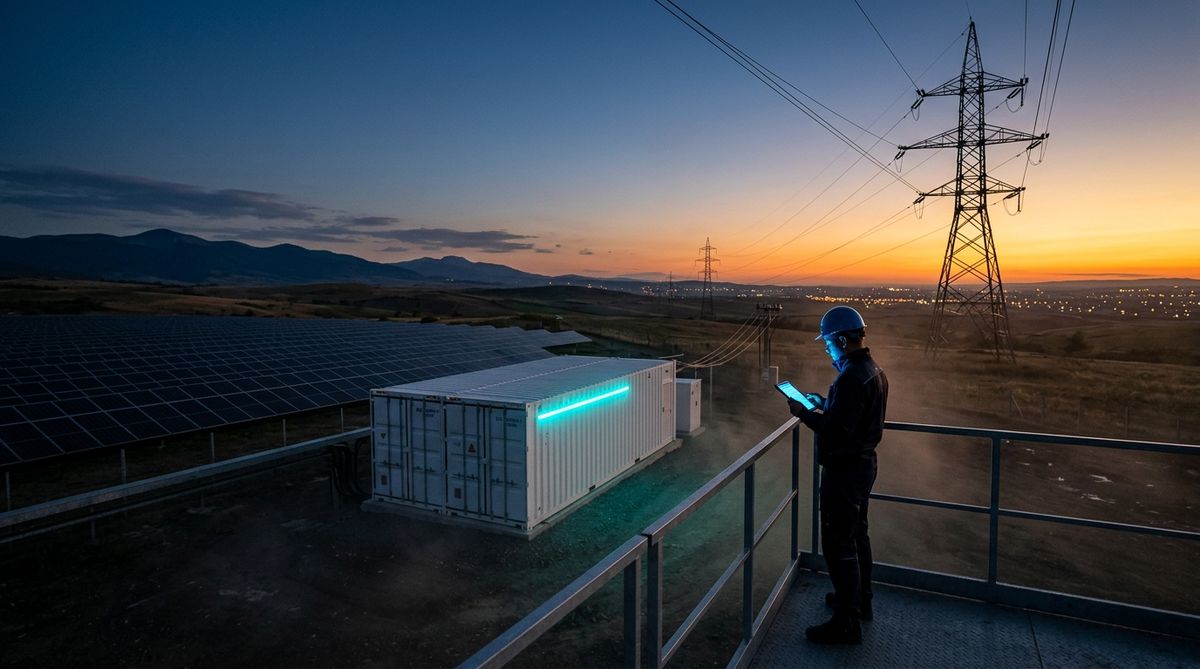
Eurowind completes 120 MWh battery in Teiuș — large-scale storage becomes a reality Danish group Eurowind has commissioned a 120 MWh energy storage battery in Alba county, a strategic move aimed at mitigating grid imbalances. This large-scale storage facility is located in Teiuș, in the immediate vicinity of the solar park developed by the same company and connected to the grid last year. The project represents a concrete step toward hybridizing renewable energy production capacities in Romania, an essential model for the energy transition. Publications e-nergia and Economica.net reported that this completion strengthens Eurowind's position as a major investor in the local market, where the group has committed to a massive investment budget of one billion euros until 2030. The storage unit in Alba thus becomes one of the largest active battery energy storage systems (BESS) in the Romanian energy sector, offering a technical capacity capable of absorbing excess electricity during peak production hours. The technology used at Teiuș allows storing clean energy produced by solar panels during the day and delivering it to the national grid during peak evening consumption periods. This mechanism reduces technical pressure on local distribution grids and optimizes the production profile of the associated solar park, transforming intermittent energy into a much more predictable resource for the national transmission system operator. The collapse of midday prices and transmission grid congestion The decision to pair storage with solar parks is directly influenced by the harsh economic reality of the Romanian energy market. The massive growth of installed solar capacities over the last two years has caused frequent negative prices on the Day-Ahead Market (DAM), particularly during midday hours. Producers without storage are often forced to sell energy at extremely low prices or even pay to inject their energy into the grid. Furthermore, the transmission infrastructure managed by Transelectrica faces severe capacity limitations in areas with a high density of renewable projects. The lack of sufficient high-voltage lines to take over peak regional production leads to restrictive dispatching, where operators are instructed to curtail their output. The introduction of batteries provides a vital technical safety valve, allowing the storage of energy that would otherwise be wasted due to grid congestion. Mitigating balancing costs and protecting consumers The commissioning of the 120 MWh battery in Alba has a direct impact on price stability in the balancing market, the most expensive segment of the Romanian energy sector. When the national grid records production deficits, the lack of fast storage capacities forces the use of gas-fired power plants or emergency imports, processes that exponentially increase balancing costs. These additional costs are ultimately transferred to distribution tariffs paid by industrial and residential consumers on their monthly bills. By injecting energy from batteries during peak consumption hours, the pressure on balancing prices decreases. Although a single 120 MWh battery cannot fully resolve Romania's structural storage deficit, the operational success of Eurowind's project demonstrates the commercial viability of the technology. It offers a best-practice model for other developers looking to protect their revenues and actively contribute to the security of the national energy grid. New technical requirements and 2030 storage targets Short-term outlooks indicate growing regulatory and legislative pressure to integrate batteries into new projects. The National Energy Regulatory Authority (ANRE) is analyzing measures that could mandate storage for new large-scale generation facilities to prevent grid collapse. Developers who do not plan storage units in advance risk obtaining grid connection permits with severe injection limitations. Additionally, Romania must accelerate its battery installation rate to meet the targets set in the National Integrated Energy and Climate Plan (NECP). Funding from the National Recovery and Resilience Plan (NRRP) for storage is beginning to materialize into physical projects, but the connection rate still depends on the speed of grid operators' licensing procedures. The success of the Teiuș installation shows that private investors can outpace administrative deadlines when market pressure demands rapid technical solutions.