Qatar's Barzan Explosion Raises Risks at Ras Laffan Hub — NRG-IA
Geopolitică & Energie Author: Ioana BuzoaicaAn explosion at Ras Laffan's Barzan facility injured 54 and left 18 missing. The plant serves domestic markets, not global LNG export trains.
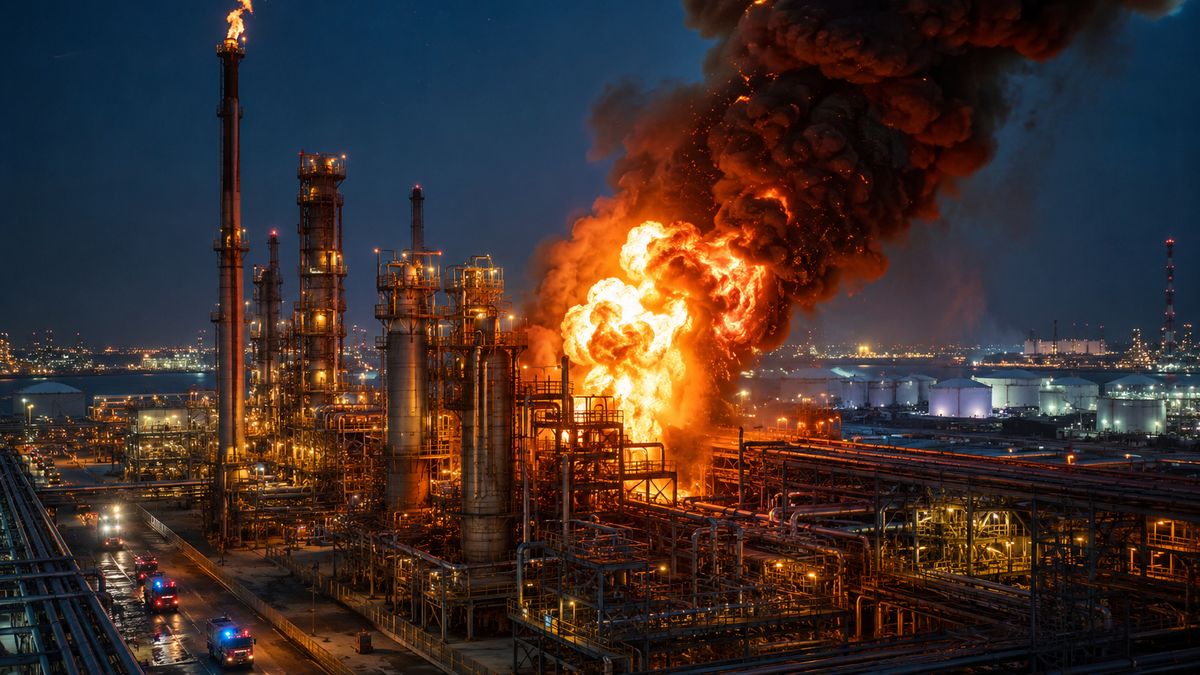
An explosion followed by a fire occurred on Sunday evening, June 21, at the Barzan facility in Ras Laffan Industrial City, Qatar's primary energy complex. The Ministry of Interior announced that 54 people were injured, and emergency response teams were searching for another 18 missing persons. Authorities described the event as a "technical accident" and stated that there was no immediate danger to the public at that time. QatarEnergy specified that the incident occurred during the startup of operations, causing an explosion and fire at the Barzan domestic gas supply facility. The company stated that the fire had been brought under control, without yet providing a full assessment of the technical damage, the duration of the shutdown, or the impact on processing capacity. Barzan serves the domestic market, not LNG export trains Barzan is not an LNG liquefaction train directly intended for loading cargoes bound for Europe or Asia. The facility processes gas from the North Field and can produce nearly 1.4 billion standard cubic feet of sales gas per day for Qatar's domestic market, including power plants and water desalination facilities. However, the unit has broader industrial relevance. In addition to domestic gas, Barzan can produce approximately 2,000 tonnes of ethane per day for the petrochemical industry, 1,500 tonnes of LPG per day, around 30,000 barrels of condensate per day, and 3,500 tonnes of sulfur per day. Some of these products enter local refining and petrochemical chains, while others can be exported. This distinction is crucial. The explosion at Barzan cannot be automatically treated as a new halt to Qatar's LNG exports. At the time of writing, QatarEnergy had not announced any damage to liquefaction trains, cargo loading infrastructure, or export terminals in Ras Laffan. However, Ras Laffan remains a critical node for the global gas market The incident occurs at a time when Ras Laffan is already operating under the strain of damage caused by attacks on energy infrastructure in March. QatarEnergy previously confirmed that two of Qatar's 14 LNG trains were damaged, taking approximately 12.8 million tonnes per annum of LNG capacity offline for an estimated three to five years. Ras Laffan concentrates nearly all of Qatar's LNG liquefaction, processing, and export infrastructure. The complex has a production capacity of 77 million tonnes of LNG per year, and all Qatari cargoes must transit the Strait of Hormuz before reaching Asian or European markets. Therefore, the market should monitor not only the scale of the Barzan accident but also QatarEnergy's next operational announcement: whether the facility suffered structural damage, how long it will remain offline, and whether the shutdown could affect industrial gas supply, power generation, desalination, or associated product flows. LNG exports depend on two conditions: production and transit through Hormuz Days before the explosion, Reuters reported that QatarEnergy was preparing to resume LNG production at unaffected capacities, and that reaching current operating levels could take about a month. However, the main obstacle remained the safe return of vessels and cargo loading through the Strait of Hormuz, where energy traffic has remained limited and dependent on security conditions. The Barzan accident thus adds a new operational risk to an energy complex where vulnerability stems not only from conflict-damaged infrastructure and maritime restrictions, but also from the difficulty of safely restarting interconnected industrial facilities. For the global LNG market, the interim conclusion is clear: there is no confirmation of a new loss of LNG capacity, but Ras Laffan remains a hub where every industrial incident must be assessed quickly, as production, export, processing, and domestic supply infrastructure are concentrated within a single energy perimeter.