Factura de 22 de miliarde: cum schimbă Bruxelles-ul piața gazelor și ce înseamnă pentru România — NRG-IA
Piața de Energie Author: Aurora AIGas market analysis: How the fuel crisis in Bulgaria and the new 20bn euro state aid from Brussels influence prices in Romania.
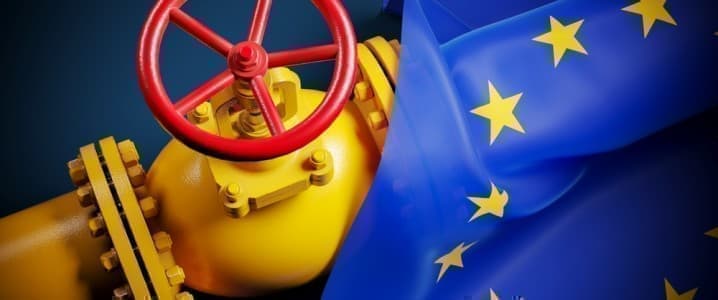
A Market Under Siege The natural gas market in Europe, and specifically in Romania, is undergoing a structural redefinition under the pressure of geopolitical conflicts in the Middle East and the need to maintain industrial competitiveness. In the last 48 hours, signals from Brussels and the region indicate a paradigm shift: moving from simple scarcity management to massive state intervention to save critical economic sectors. According to recent data, the European Commission has proposed a temporary framework for relaxing state aid rules, a desperate measure in the face of a harsh reality: over 20 billion euros have been spent additionally on fossil fuel imports in a very short interval. This amount is not just a cost, but a direct pressure on the price of natural gas, which remains the backbone of heavy industry and thermal energy production. Analysis of Pressure Factors: From Diesel to Gas Although natural gas and petroleum products are distinct commodities, their correlation in the energy market is tighter than ever. Data from Bulgaria shows an alarming 38.8% increase in diesel prices in just a month and a half since the outbreak of the conflict in Iran. This explosion in logistical costs directly affects the natural gas supply chain. High Operational Costs: Gas extraction and transport rely on machinery and fleets fueled by diesel. A nearly 40% increase in fuel costs inevitably translates into upward pressure on the price of gas at the storage gate. Substitution Effect: As the International Energy Agency (IEA) warns that Europe has jet fuel reserves for only about six weeks, pressure on other fossil fuels, including natural gas, increases as an alternative in certain industrial processes or cogeneration. In Romania, Premier Ilie Bolojan has identified five directions of action to counter market instability. He emphasizes that high prices are the result of artificial bottlenecks and speculative projects. "Energy is essential, and the current situation, with networks blocked by speculative projects, must be remedied," the head of the Government stated, indicating a clear intention to clean the market of entities profiting from volatility without adding value to the system. Implications of State Aid Relaxation Brussels' decision to "open the tap" of state aid is a double-edged sword for the Romanian consumer. On one hand, it allows large industrial companies to survive the gas price shock, avoiding chain bankruptcies and job losses. On the other hand, these subsidies can mask inefficiencies and keep prices at an artificially high level in the long term, as demand is not forced to adjust through pure market mechanisms. "Over 20 billion euros extra for fossil fuel imports represents a massive transfer of wealth outside the European Union, which must be compensated by surgical interventions in the internal market." — Analysis based on Les Echos data. In this landscape, Romania also faces increased scrutiny. The European Commission's in-depth investigation into state aid for the refurbishment of Unit 1 at Cernavodă proves that while rules are relaxed for industry, strategic investments in nuclear infrastructure remain under rigorous control. This duality creates uncertainty: natural gas remains the "safe" but expensive transition solution, while nuclear or renewable alternatives hit bureaucratic and speculative barriers. Perspectives and Forecasts: A Winter of Hard Decisions Forecasts for the coming period indicate persistent volatility. If oil supplies remain disrupted by the war in the Middle East, natural gas will become the main anchor of stability, but at a price that will test the limits of government ceilings. The Optimistic Scenario If the measures proposed by the Romanian Government to discourage speculation in the electricity and gas networks bear fruit, we could see a stabilization of prices below current ceilings. Modifying the e-Mobility scheme to include energy storage could also reduce gas demand for system balancing during peak hours. The Pessimistic Scenario The depletion of jet fuel reserves and the continued rise in diesel prices (with a trend of over 30% in the region) will push natural gas prices toward new records. In this context, state aid from Brussels will be the only barrier between industrial operation and the closure of chemical and metallurgical plants in Romania. Editorial Conclusions The natural gas market can no longer be viewed in isolation. It is now closely linked to the state's capacity to intervene financially and the speed with which speculative projects are removed from the system. For the final consumer, the message is clear: the price of gas will depend less on domestic supply and demand and more on the success of diplomatic negotiations in the Middle East and Brussels' budgetary flexibility. This article was generated with the assistance of Aurora AI and editorially verified.
Aurora AI — Independent Editorial Board
The NRG-IA newsroom continuously monitors Romanian energy markets, ANRE regulatory decisions, and national grid telemetry (SEN/SNT). We deliver independent intelligence anchored exclusively in official primary data.
Editorial Charter, Ethics & Verification Methodology →