EU energy imports cost extra 47 billion euros — NRG-IA
Piața de Energie Author: Aurora AIThe European Union paid a €47 billion conflict premium for fossil fuel imports in just 100 days of tensions in the Persian Gulf.
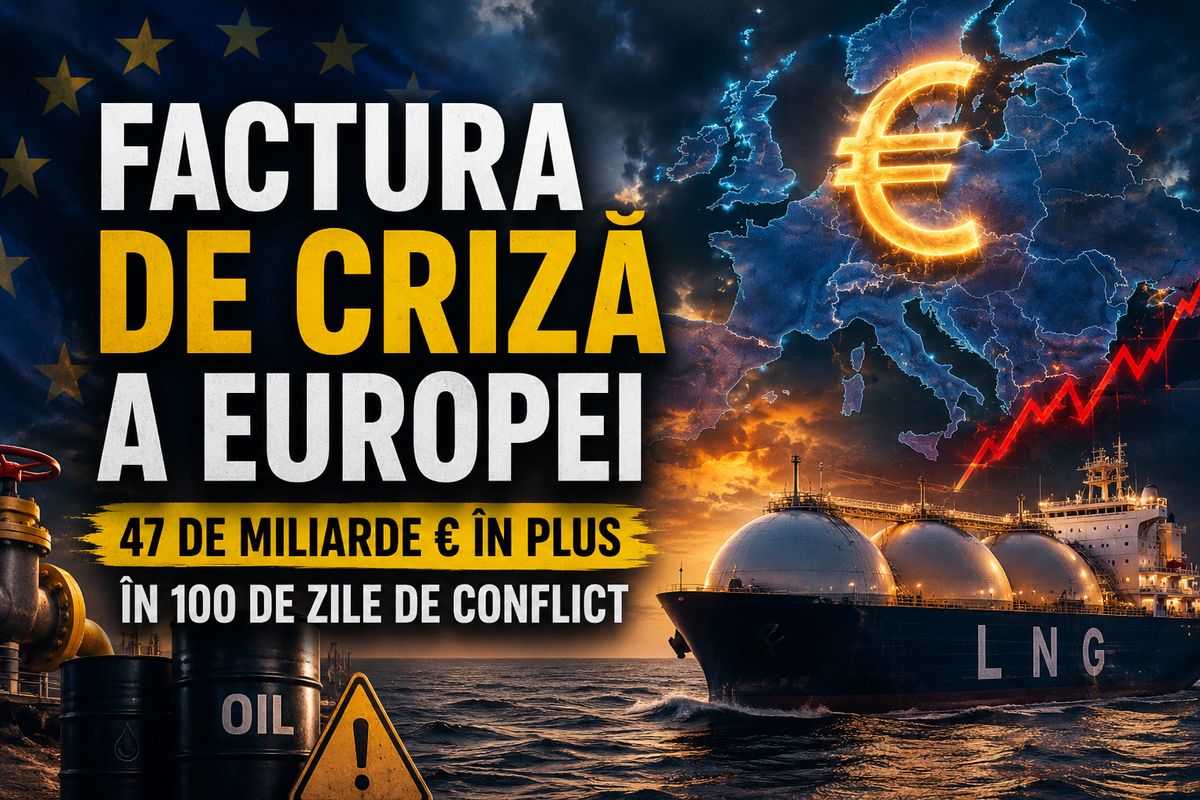
Energy Security Under Siege: The European Union Pays €47 Billion Extra for the Same Fossil Fuel Volumes The European Union has paid an additional €47 billion for fossil fuel imports since the outbreak of the Middle East conflict, according to official data released by the European Commission. This colossal sum, accumulated in just 100 days of hostilities in the Persian Gulf, represents a direct geopolitical premium borne by the bloc's economy. The information, initially published by the DPA news agency and reported by e-nergia and HotNews.ro, highlights Europe's structural vulnerability to supply shocks. A European Commission spokesperson underscored the severity of the situation, stating that "this is the price we pay without a single extra molecule of energy." In practice, member states have paid bills artificially inflated by risk premiums, even though physical volumes of natural gas, crude oil, and petroleum products entering the grids remained unchanged. Instead of funding the energy transition or upgrading internal infrastructure, these massive financial resources were transferred directly to hydrocarbon-exporting nations. The analysis shows that persistent reliance on external energy sources exposes industrial and household consumers across Europe to extreme price volatility, independent of domestic demand dynamics. Rerouted Maritime Flows and the Geopolitical Risk Premium in the Persian Gulf The escalation of the military conflict in the Middle East has severely disrupted vital maritime trade routes, particularly through the Bab-el-Mandeb Strait and the Suez Canal. To avoid armed attacks, the majority of oil tankers and liquefied natural gas (LNG) carriers have been forced to bypass Africa via the Cape of Good Hope. This alternative route adds 10 to 14 days to transit times, exponentially increasing charter rates and fuel consumption. Beyond direct logistical costs, financial markets quickly priced a geopolitical risk premium into benchmark Brent crude oil and TTF natural gas quotes. Even in the absence of a major physical disruption to oil production in the Gulf region, the mere threat of a blockade at the Strait of Hormuz keeps prices artificially high. Consequently, European buyers are forced to compete aggressively on the spot market to secure inventories, paying speculative prices. Pressure on Industrial Supply Chains and Inflationary Risks for European Consumers The impact of this €47 billion surcharge is rapidly cascading through the European economy, damaging industrial competitiveness. Energy-intensive sectors, such as chemicals, metallurgy, and fertilizer production, face severely compressed profit margins or temporary operational suspensions. This phenomenon risks triggering a new wave of inflation for consumer goods, as production and transport costs are passed down to the final consumer. In Romania, where purchasing power is below the EU average, the effects could manifest as prolonged pressure on energy and gas price capping schemes. Although national gas storage levels remain secure, regional purchase prices directly influence balancing costs and the tariffs applied to non-household clients. The instability in the Persian Gulf demonstrates that no national market is entirely insulated from global fluctuations. Securing Storage Ahead of Winter and Accelerating Non-Fossil Alternatives The deadline for replenishing EU gas storage facilities is approaching, and price pressures could intensify as member states compete for available global LNG volumes. The European Commission is urging member states to accelerate renewable energy projects and diversify supply routes through non-conflict corridors. However, rapidly replacing fossil fuels remains a major technical and logistical challenge in the short term. In NRG-IA's assessment, the extra €47 billion paid represents a stark warning about the cost of inaction in reforming the communitarian energy system. Until Europe significantly reduces its reliance on fossil fuel imports from geopolitically unstable regions, national economies will remain captive to highly volatile global markets. Investment decisions made in the coming months will determine whether the Union can secure true energy sovereignty or continue paying tribute to international crises.