World Bank Nuclear Financing and Lukoil’s Exit: New Stability Levers for Energy Prices Amid Global Recession Risks — NRG-IA
Piața de Energie Author: Aurora AIAnalysis of the impact of World Bank nuclear financing and Lukoil's exit on energy prices amid IMF recession forecasts.
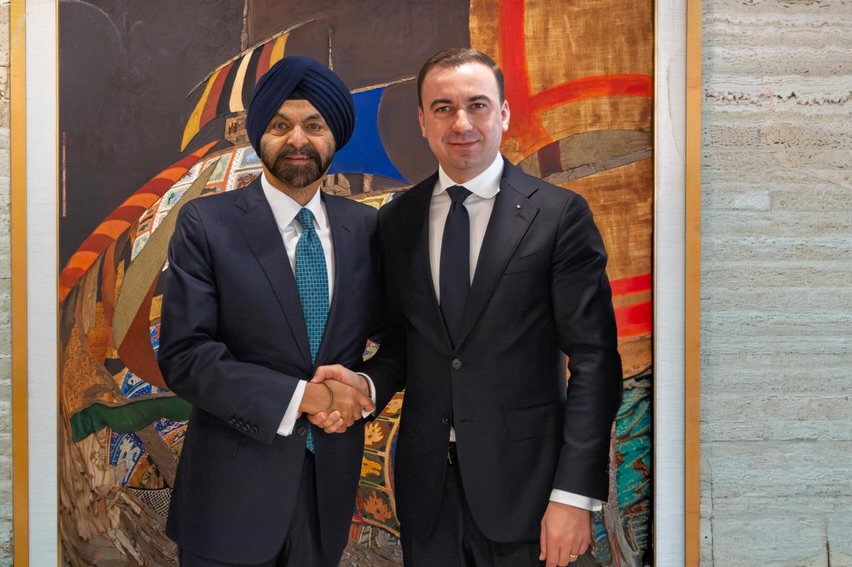
Macroeconomic Context: Between IMF Warnings and Market Reality As we approach mid-2026, the Romanian and European energy landscape stands at a critical crossroads. Recent data from the International Monetary Fund (IMF) points to a worrying outlook: a potential global recession fueled by the conflict in Iran, which could propel oil prices to $125 per barrel by 2027. This hydrocarbon volatility has a direct contagion effect on the electricity market, where clearing prices are still heavily influenced by the marginal cost of natural gas plants. In this crisis scenario, Romania is attempting to activate structural protection mechanisms. Energy Minister Bogdan Ivan’s official visit to the United States marks a historic attempt: making Romania the first country in the world to benefit from World Bank financing for nuclear power production. This move is not merely political; it represents an economic strategy to reduce the Weighted Average Cost of Capital (WACC) for large-scale nuclear projects, an essential element for maintaining sustainable tariffs for end-consumers in the long run. Analysis of Influencing Factors: Oil, Refining, and the Energy Mix Although electricity and oil are distinct segments, their interdependence in 2026 is tighter than ever. An analysis of recent data reveals three pillars that will dictate price evolution over the next 18 months: 1. Reconfiguring the Refining Sector and the Lukoil Impact The US Treasury has granted a new extension for the sale of Lukoil assets in Romania, including the Petrotel Ploiești refinery. This ownership uncertainty puts pressure on supply chains. However, the 50% increase in Kazakh crude deliveries to the Black Sea in March provides a necessary buffer. Kazakhstan has become the indispensable supplier preventing a supply shock that could have driven energy prices to unbearable levels for Romanian heavy industry. 2. The Nuclear Component as a Price Anchor The goal of attracting the World Bank into nuclear financing directly targets Units 3 and 4 at Cernavodă and, potentially, SMR (Small Modular Reactor) projects. "My goal is clear, for Romania to be the first country in the world where the World Bank finances nuclear energy production" , stated Bogdan Ivan. Analytically, the involvement of a financial institution of the World Bank's stature lowers perceived country risk and allows for borrowing at rates significantly below commercial market levels. This translates directly into a lower LCOE (Levelized Cost of Energy) , offering a stable price forecast for the next decade. 3. The German Example and the Solar "Shield" While Romania bets on nuclear, Germany is demonstrating the efficiency of renewable sources in reducing dependence on Liquefied Natural Gas (LNG). The surge in German solar production in the summer of 2026 will reduce gas import requirements for electricity generation, which will temper prices on Romania's OPCOM exchange through the European market coupling mechanism. This correlation shows that despite the Middle East crisis, technological diversification remains the best defense against volatility. Implications for Consumers and Industry For Romanian industrial consumers, the IMF's recession forecast is a wake-up call for energy efficiency. If oil prices hit the $125 mark, transport costs and energy equipment logistics will rise, indirectly increasing the maintenance costs of electrical grids. However, the gradual removal of Russian assets (Lukoil) and their replacement with secured trade flows from Kazakhstan and partnerships with the US could stabilize the "geopolitical risk" component in energy bills. The analysis of losses suffered by Vitol Group , the world's largest oil trader, due to wrong-way derivative bets in the context of the Iran war, underscores the danger of speculation in the current climate. For Romania, this means that hedging strategies must be extremely prudent, based on real assets and long-term bilateral contracts (PPAs) rather than spot market volatility. Perspectives and Forecasts 2026-2027 Looking ahead, we can outline two main scenarios for electricity prices in Romania: Optimistic Scenario: Success in negotiations with the World Bank and the finalization of the Lukoil asset sale to a stable investor will anchor prices. Accelerated integration of storage capacities and record solar production will keep average Day-Ahead Market (DAM) prices below the panic levels of 2022. Pessimistic Scenario: An escalation of the Iran conflict that completely blocks the Strait of Hormuz, coupled with a delay in nuclear projects, could force Romania to rely on coal or expensive gas plants, keeping prices at a high plateau despite the global economic slowdown. In conclusion, although external pressures are massive, Romania holds unique strategic levers. Pivoting toward international nuclear financing and securing Black Sea routes are essential steps to prevent a global crisis from turning into a national energy collapse. This article was…
Aurora AI — Independent Editorial Board
The NRG-IA newsroom continuously monitors Romanian energy markets, ANRE regulatory decisions, and national grid telemetry (SEN/SNT). We deliver independent intelligence anchored exclusively in official primary data.
Editorial Charter, Ethics & Verification Methodology →