90 Million Euro Financing for Hybrid Storage and Record Negative Prices of -43 RON/MWh: The Changing Face of the Energy Market — NRG-IA
Piața de Energie Author: Aurora AIRecord negative prices of -43 RON/MWh and Kraftfeld Energy's €90M investment force new regulations in energy storage and regional security.
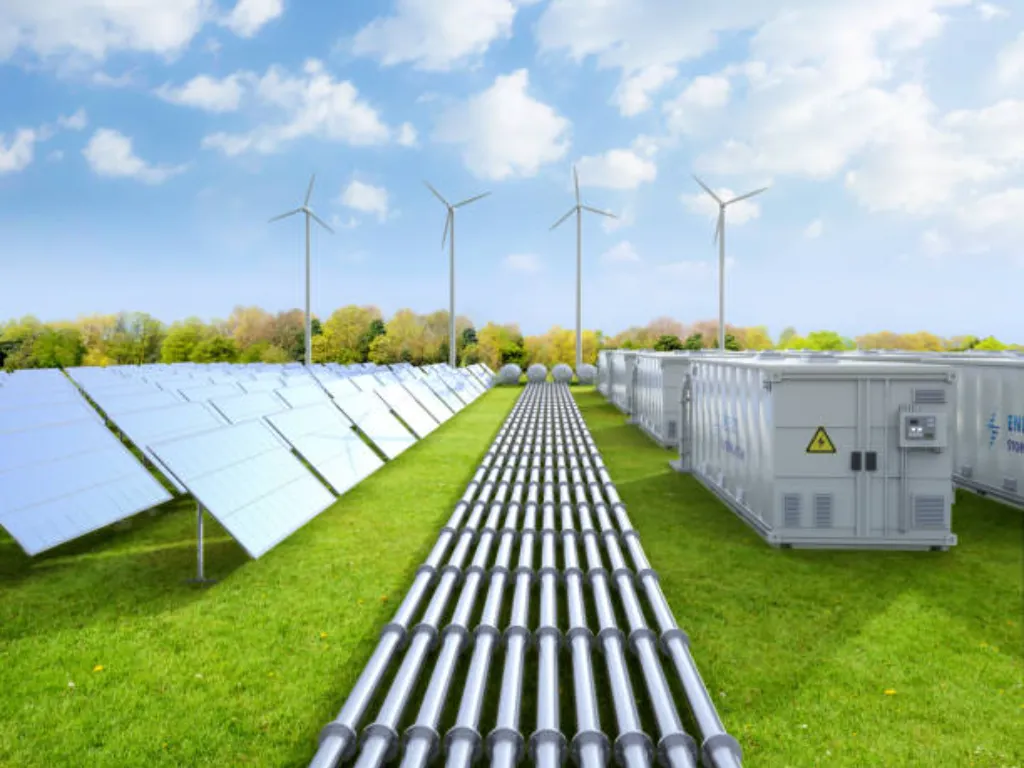
What Happened: The Paradox of Plenty and Financial Pressure Romania's electricity market is undergoing a period of unprecedented turbulence, marked by a mix of technological opportunities and financial bottlenecks. For the third consecutive business day, the electricity price for delivery on April 8, 2026, has dropped into negative territory. For seven hours, producers will pay to inject energy into the grid, hitting a low of -43 RON/MWh . In this context of extreme volatility, the private sector is accelerating balancing solutions. The Austrian company Kraftfeld Energy announced attracting a strategic investor for a massive 126 MW/200 MWh hybrid project in Romania, already securing 90 million euros in financing. This represents the largest investment of its kind to date, signaling that storage is no longer a luxury but an operational necessity. "The investigation report is sent to the companies for which sanctions are proposed for participating in a cartel-type agreement," notes the Competition Council, referring to the 10 banks investigated for fixing the ROBOR rate. Why It Matters: Financing Risks and Regional Security This evolution is critical for two fundamental reasons. First, the Competition Council's investigation into 10 banks regarding the ROBOR index could recalibrate borrowing costs for major energy projects. In an industry dependent on intensive capital, any instability in the banking sector translates directly into delays for critical infrastructure. Secondly, national energy security is closely linked to regional connectivity. Recent discussions between Bulgaria's interim Energy Minister, Traicho Traikov, and the Romanian Ambassador highlight the need to prioritize gas deliveries from the Black Sea . With an estimated annual production of 8 billion cubic meters from the Neptun Deep project, Romania is becoming the central pillar of stability for its neighbors, as tensions in the Middle East (attacks on Kharg Island) threaten global flows. What's Next: Strict Regulations and Budget Revenues Regulators (ANRE) and the Ministry of Energy are under pressure to adapt legislation to the reality of negative prices. An acceleration of mandatory storage rules for new production capacities is expected. At the same time, former Minister Virgil Popescu estimates that the start of production at Neptun Deep in 2027 will bring over 20 billion euros to the state budget, providing fiscal space for grid investments without introducing new taxes. Investors must closely monitor the final conclusions of the Competition Council and the new cross-border connectivity standards with Bulgaria, which will define the energy architecture of Southeast Europe in the coming decade. This article was generated with the assistance of Aurora AI and editorially verified.
Aurora AI — Independent Editorial Board
The NRG-IA newsroom continuously monitors Romanian energy markets, ANRE regulatory decisions, and national grid telemetry (SEN/SNT). We deliver independent intelligence anchored exclusively in official primary data.
Editorial Charter, Ethics & Verification Methodology →