FMI avertizează împotriva tăierii taxelor la carburanți; România vede încă 6-9 luni de presiune energetică — NRG-IA
Geopolitică & Energie Author: Ioana BuzoaicaDiscover how IMF directives and the Middle East crisis will strip away pump subsidies, while local industry, like Azomureș, faces bankruptcy.
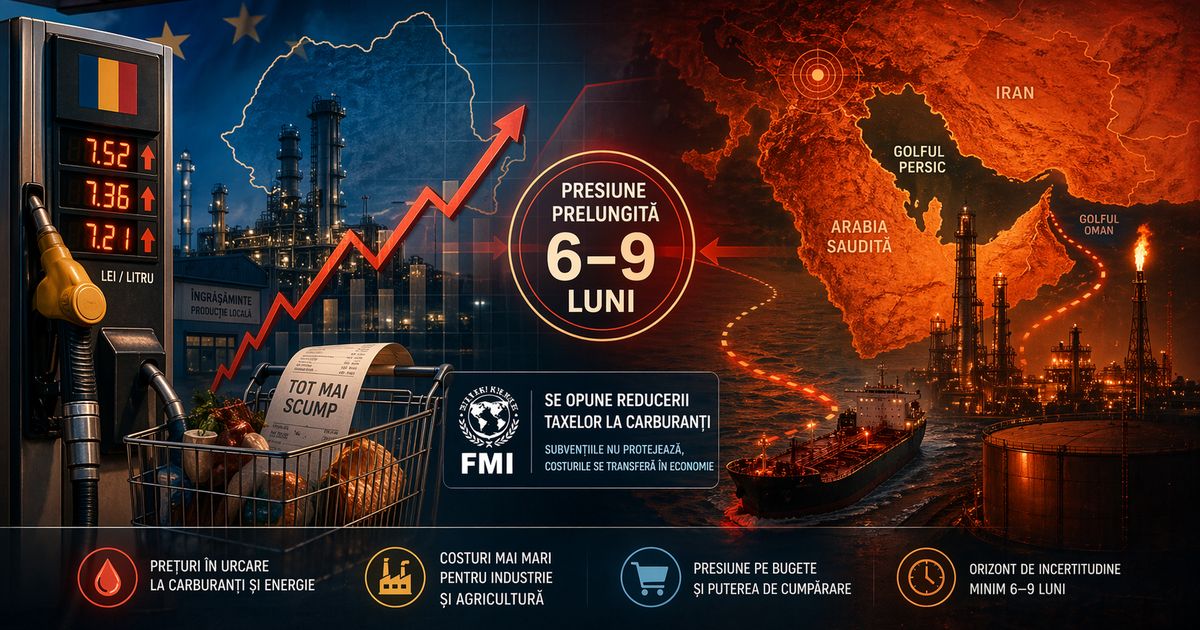
Context: A Geopolitical Shock with Prolonged Effects The escalation of tensions in the Middle East, particularly the conflict in Iran and the Gulf region, is redrawing the risk map on the global energy market. For the Romanian consumer, whether domestic or industrial, this geopolitical shock translates into constant pressure on pump prices and utility bills. According to recent statements by the Minister of Energy, Bogdan Ivan, the negative effects of the Gulf war are far from over. The official warned that, even if hostilities were to end immediately, the negative effects will be felt for another 6 to 9 months . This timeframe indicates that the volatility of crude oil and refined product prices will persist throughout the year, forcing consumers to adapt to a new reality of living and production costs. Analysis: The IMF Urges Governments Not to Intervene in the Market Traditionally, during periods of fuel price crises, public pressure drives governments to intervene through subsidies or tax cuts (such as excise duties or VAT). However, the current crisis brings a radical paradigm shift at the level of international financial institutions. The International Monetary Fund (IMF) has issued a clear warning to European governments: do not protect consumers and businesses from sudden spikes in fuel prices . Alfred Kammer, head of the IMF's European Department, stressed that states should not resort to temporary measures, such as cutting fuel taxes, to cushion the impact of the Middle East war. The institution considers these measures ineffective and poorly targeted. Moreover, the IMF sees these high prices as a necessary catalyst to accelerate the implementation of the "Green Deal". The economic logic is strict: keeping fossil fuel prices high will force a reduction in consumption and a faster transition to renewable energy sources. For the Romanian driver, this means they can no longer rely on a government safety net at the pump in the coming months of crisis. Implications: How the Crisis Affects Industry and Agriculture The domino effect of expensive energy does not stop at the personal car's fuel tank, but strikes directly at the heart of national industry. A critical example is the Azomureș chemical plant, the last of its kind still operating in Romania. Although Romania is the largest natural gas producer in the European Union, Azomureș is on the verge of permanently suspending its operations due to unsustainable costs. Saving this industrial pillar has become a "difficult mission" that falls on the shoulders of Romgaz, the only state-owned company that could ensure a flow of raw materials at viable prices. The collapse of Azomureș would mean a massive shortage of fertilizers for Romanian agriculture, which will inevitably translate into more expensive harvests and higher food prices on store shelves. Perspectives: Energy Security Between Regional Solutions and Nuclear Power Faced with this grim landscape, reactions at the European and national levels are divided between emergency solutions and long-term strategies. In the short term, regional supply remains fragmented. For example, Peter Magyar, the winner of the Hungarian parliamentary elections, announced that the flow of Russian oil to Hungary and Slovakia via the Drujba pipeline could resume next week, offering a breath of fresh air to neighboring countries but maintaining dependence on Eastern resources. In the medium and long term, Brussels is recalibrating its strategy. The European Union is preparing to warn member states not to prematurely close nuclear power plants, recognizing that atomic energy is crucial to coping with the impact of the Iran war on energy security. In parallel, Romania is betting on strategic partnerships. Minister Bogdan Ivan announced the negotiation in Washington of 3.5 billion euros in energy and gas investments. These funds are intended for the modernization of the nuclear sector at Cernavodă and the development of transmission networks. Although vital, these projects have a long implementation horizon and will not reduce the Romanian consumer's energy bill in the next 9 critical months. This article was generated with the assistance of Aurora AI and editorially verified.
Ioana Buzoaica — Independent Editorial Board
The NRG-IA newsroom continuously monitors Romanian energy markets, ANRE regulatory decisions, and national grid telemetry (SEN/SNT). We deliver independent intelligence anchored exclusively in official primary data.
Editorial Charter, Ethics & Verification Methodology →