Energy Prices: IMF Demands End to Subsidies Amid Hikes — NRG-IA
Piața de Energie Author: Ioana BuzoaicaEnergy prices could rise by 24% this year, but the IMF warns European governments to stop protecting consumers through subsidies.
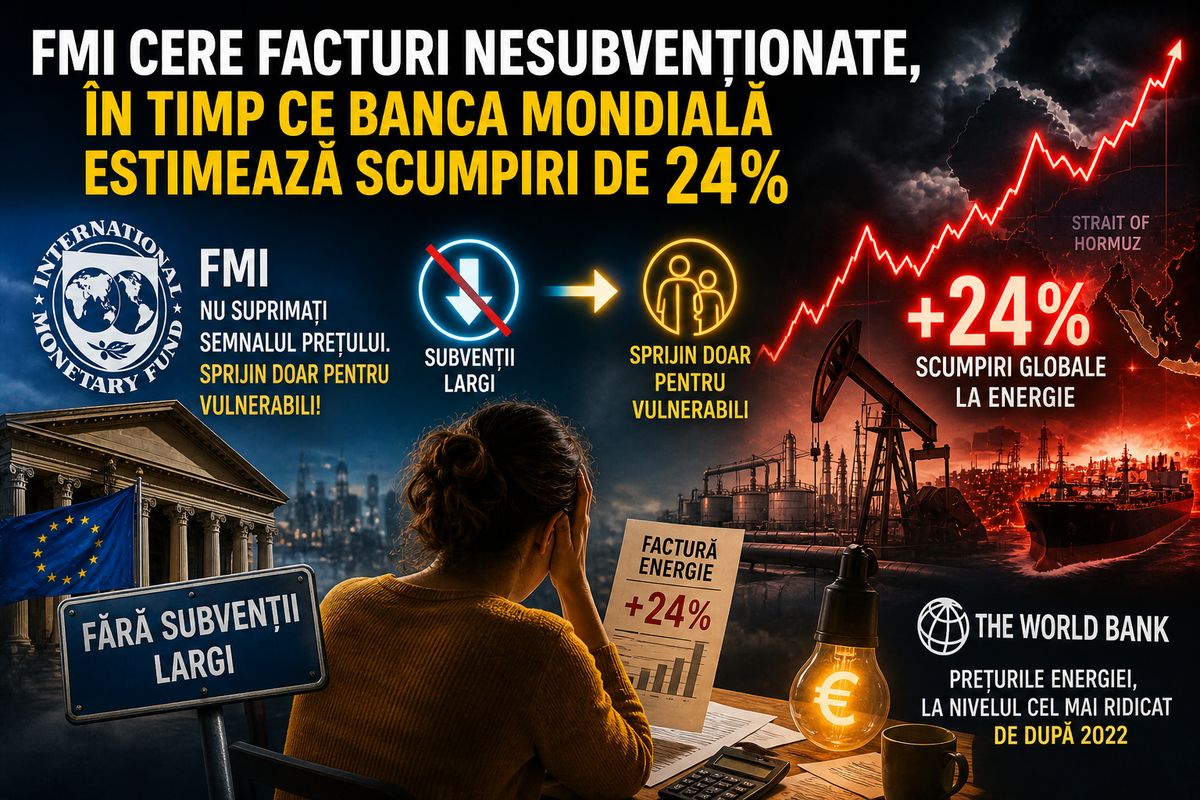
Current situation Global energy prices are set to rise by 24% this year, but the International Monetary Fund is demanding European governments let consumers feel the shock on their bills. This World Bank estimate indicates a return of tariffs to their highest level since the 2022 invasion of Ukraine. Despite this impending shock, international financial institutions are radically changing the state intervention paradigm. The IMF has issued a clear warning to Europe: governments should not protect the population from high fuel costs. This pressure comes amid a major physical crisis in the oil market. According to recent data, the blockade of Iranian exports is rapidly filling the Islamic country's storage facilities. The forced shutdown of wells risks causing long-term geological damage. This technical bottleneck severely limits global supply and puts constant pressure on international quotes. Analysis Why is the IMF demanding consumer exposure to massive prices? The answer lies in forcing the energy transition. Alfred Kammer, head of the IMF's European Department, urged Europe to accelerate the "Green Deal" by using high prices as a deterrent for fossil fuel consumption. This vision is supported by structural market changes, confirmed at the highest institutional level. "The vase is broken. The oil crisis triggered by the war with Iran has produced irreversible changes in global energy markets," warned Fatih Birol, director of the International Energy Agency. To counter the external shock, the Bucharest Government is trying to rapidly streamline the internal market. Prime Minister Ilie Bolojan announced a broad intervention to eliminate grid permit speculators. In parallel, the Executive declared two 400 kV lines of national importance: Suceava–Bălți and Gădălin–Suceava. These strategic investments are vital to unlock domestic production and transport cheap energy where it is needed. Implications for market and consumers For Romanian household and industrial consumers, the convergence of these factors means the end of the subsidized cheap energy era. The IMF explicitly emphasizes that temporary measures, such as cutting fuel taxes, are inefficient and poorly targeted. If the Government complies with these international directives, bills will directly reflect Middle East volatility. Consumers will have to fully absorb the 24% increase estimated by the World Bank. On the domestic market, eliminating speculative projects from the grid could unlock real investments in renewables. This is the only medium-term safety net for the Romanian energy system. However, until the new production capacities and 400 kV lines are completed, the market remains vulnerable. Romanian consumers remain captive to imports and quotes dictated by geopolitical crises. Scenarios and perspectives The near future of energy bills depends on an extremely strict geopolitical calendar. In an optimistic scenario, the Middle East disruptions end in May, as the World Bank factors in. This would stabilize oil and gas quotes. At the same time, the internal grid cleanup promised by the Government would bring new cheap megawatts into the national system, tempering final prices. The pessimistic scenario involves a prolonged conflict that forces Iran to permanently halt production. If this massive supply shock meets the European governments' refusal to subsidize bills, under IMF pressure, the consequences will be severe. We will witness a cost-of-living crisis comparable to the winter of 2022-2023. Consumers and industry must prepare financially for prices dictated exclusively by a free market under stress.