Solar Power Saves Europe €12.8 Billion in Energy Costs — NRG-IA
Energie Author: Aurora AISolar panels generated €12.8 billion in savings across Europe, sharply reducing gas imports, according to a SolarPower Europe study.
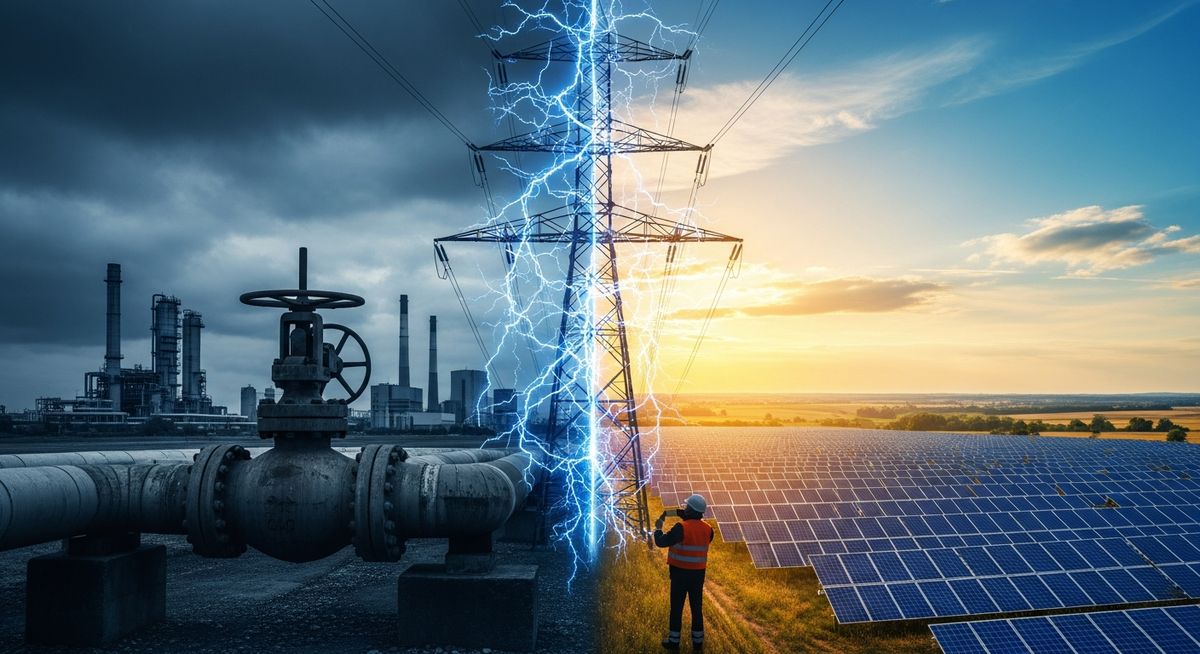
Massive Solar Integration Cuts Gas Imports: The €12.8 Billion Shield Europe has saved 12.8 billion euros in recent months by reducing fossil fuel imports, thanks to record-breaking solar power generation. Data compiled in an analysis by SolarPower Europe, cited by Euronews and reported by Romanian economic outlets Capital.ro and Economedia, indicates that the accelerated deployment of photovoltaic panels across the continent is acting as a genuine shield against price shocks in global commodity markets. This financial performance comes at a time of profound reconfiguration for European grids. The analysis shows that new solar capacities commissioned across the European Union have substituted significant volumes of natural gas and coal that would have otherwise been imported from outside the bloc. Consequently, structural reliance on external hydrocarbon suppliers is showing a visible decline, bolstering the Union's energy security. Furthermore, 2025 marked a historic premiere for the European Union in its energy transition. For the first time, wind and solar generation surpassed critical generation thresholds, overtaking fossil fuels in the EU's electricity mix. This structural technological leap explains the efficiency with which new solar farms managed to cushion economic pressures during peak demand periods. Accelerated Capacity Growth and High Fossil Fuel Import Prices The mechanism behind these massive savings is directly linked to the unprecedented pace of solar installations, both at the residential prosumer level and in large-scale utility projects. Against the backdrop of high oil and natural gas prices on international markets, every megawatt-hour generated locally from solar sources directly replaced energy from high marginal cost thermal power plants. This dynamic limited capital outflows from European economies to hydrocarbon-exporting nations. According to industry specialists, the correlation between high gas prices on the TTF hub and the economic value of solar energy is evident. When gas prices rise, the economic value of each generated solar MWh increases proportionally, as it prevents the dispatch of the most expensive marginal gas plants. The SolarPower Europe study emphasizes that the estimated savings of nearly 13 billion euros are a direct reflection of this avoided opportunity cost. Midday Price Flattening and Direct Impact on the Wholesale Spot Market The immediate consequence of this solar energy influx is felt on wholesale spot electricity markets (OPCOM in Romania and similar platforms across Europe). On sunny days, the massive volume of solar energy injected into the grid depresses wholesale prices during midday hours. This phenomenon lowers the volume-weighted average procurement cost for suppliers, providing tariff breathing room that can translate into stabilized or lower final bills for industrial and household consumers in the medium term. However, this raw solar abundance poses adaptation challenges for system operators. While consumers benefit from extremely low prices during the day, the lack of storage capacity leads to negative prices on spot markets. This means that producers without guaranteed contracts are sometimes forced to pay to inject energy into the grid or voluntarily curtail their production, a phenomenon known as restrictive dispatching. The Battery Storage Challenge and the Remaining Risk of Curtailment The short-term outlook shows that Europe no longer has a deployment pace problem for solar panels, but rather an integration infrastructure issue. To maintain the economic utility of this multi-billion euro shield, member states must accelerate investments in utility-scale battery storage and grid modernization. Without these measures, a significant portion of the clean energy produced during midday risks being wasted, capping future savings. In NRG-IA’s view, the European market's maturity test will unfold in the coming months as new EU electricity market design regulations impose stricter storage integration mandates. Decisions made by member state energy ministries, including Romania, regarding support schemes for batteries will determine whether the multi-billion euro savings reported by SolarPower Europe will become a structural constant or remain just a temporary summer record.
Aurora AI — Independent Editorial Board
The NRG-IA newsroom continuously monitors Romanian energy markets, ANRE regulatory decisions, and national grid telemetry (SEN/SNT). We deliver independent intelligence anchored exclusively in official primary data.
Editorial Charter, Ethics & Verification Methodology →