France Fuel Crisis: €1.4B Aid, Diesel at €2.41 & Supply Issues — NRG-IA
Piața de Energie Author: Ioana BuzoaicaFrance adds €450m to fuel aid, raising total support to €1.4b and expanding commuter relief to 5.5m people amid high prices and localized shortages.
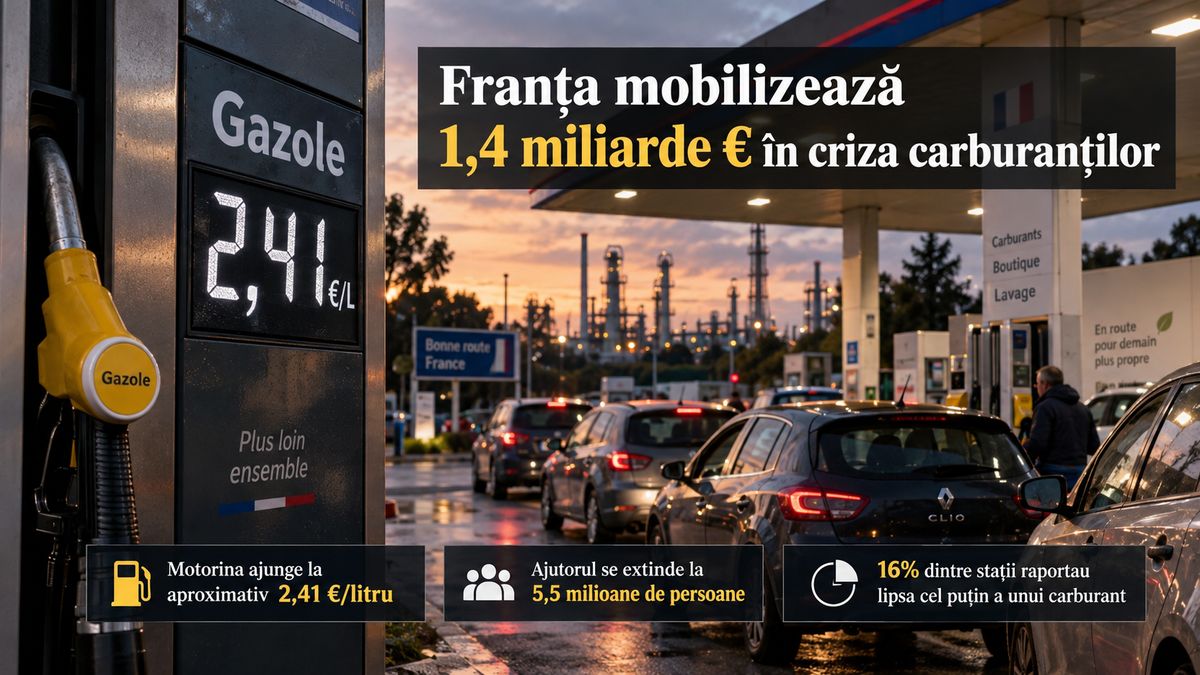
France has entered a new phase of its fuel crisis. On September 22, the government announced an additional €450 million for households and economic sectors hit by rising fuel prices, raising the cumulative value of interventions to approximately €1.4 billion. The number of people eligible for aid targeting heavy car users for work is set to increase from around 3 million to 5.5 million. Pressure is visible in both pricing and supply. Diesel is trading at the pump around €2.40–2.41 per liter, compared to an average of approximately €1.69 in February, prior to the war with Iran. On September 21, the official French fuel price platform showed that 84% of stations were operating without difficulties, meaning approximately 16% reported shortages of at least gasoline or diesel. However, France is not currently facing a generalized national shortage. The government asserts that supply chains remain functional and that it has visibility for the next six to eight weeks. The issue is that prices have surged, and local tensions in the distribution network have intensified in a global diesel market that is much tighter than that of crude oil. Diesel Surges by Over 70 Cents per Liter Since February The pressure on French consumers is heavily concentrated on diesel. The monthly average was around €1.69/liter in February, climbed to €2.26/liter in April, and returned in September toward the highs reached in the spring. On Sunday, September 20, Economy Minister Roland Lescure indicated a price of approximately €2.41/liter. The difference compared to the beginning of the year is about 72 cents per liter. For a 50-liter tank, the order of magnitude of the additional cost thus reaches approximately €36 compared to the average level in February. The increase cannot be explained solely by Brent crude price movements. The major issue is the availability of the refined product. Diesel shipments from the Middle East between March and August were roughly half of those in the comparable period of the previous year, while attacks on Russian oil infrastructure reduced another key source of supply. The European diesel market has reacted much more violently than the crude oil market, with European diesel futures reaching more than double their level at the start of the year. A temporary drop in Brent does not automatically translate proportionally to French pumps when the refined product remains scarce. One in Six Stations Reports Shortage of At Least One Fuel Type Availability issues escalated rapidly in the second half of September. Government data from September 21 showed difficulties at approximately 16% of service stations, up from levels of around 10–11% just a few days prior. Regional disparities are significant: Pays de la Loire saw 20% of stations facing difficulties, Grand Est reached 19%, and Île-de-France, Normandy, and Centre-Val de Loire stood at around 18%. However, a significant portion of the stockouts is concentrated within a single network. Lescure stated that approximately 91% of the stations reporting shortages belonged to TotalEnergies. The company is currently capping diesel at €2.25/liter and gasoline at €1.99/liter at its stations—levels below the market average—which has drawn in additional consumers and concentrated demand. The current situation thus combines a global supply issue with local distribution imbalances. France has fuel in its system, but certain networks and regions are struggling to deliver it to the pump quickly enough. Commuter Aid Expanded to 5.5 Million People Paris's response is primarily built on targeted support rather than a general price reduction for the entire population. The scheme designed for individuals traveling long distances for work is being expanded from approximately 3 million to 5.5 million beneficiaries . For the October–December period, the aid amounts to €100 , and those already enrolled in the program will receive the payment automatically. The government estimates that for the average consumption of eligible beneficiaries, this support is equivalent to approximately 40 cents per liter of fuel . Criteria have been broadened to include more working households. The scheme mainly targets individuals living more than 15 kilometers from their workplace or driving at least 8,000 kilometers annually for professional purposes. The additional support is not limited to households. Agriculture continues to benefit from a 15-cent rebate per liter of agricultural diesel, while construction companies can receive 20 cents per liter of non-road diesel, capped at €4,000 per company. For fisheries, one of the sectors most exposed to fuel prices, the new scheme can compensate for up to 70% of the cost increase and is supplemented by interest-free loans. Measures for agriculture, construction, and fisheries have been extended until the end of the year. Paris Seeks to Squeeze More Diesel from Domestic Refineries France is not only intervening in consumer bills. The government is also trying…