Fixed Electricity: PPC 27 Months, ENGIE to 2028 — NRG-IA
Piața de Energie Author: Ioana BuzoaicaRomania's 12-month power contract is fading: PPC offers 27-month fixed rates, while ENGIE locks prices until late 2028, shifting retail competition.
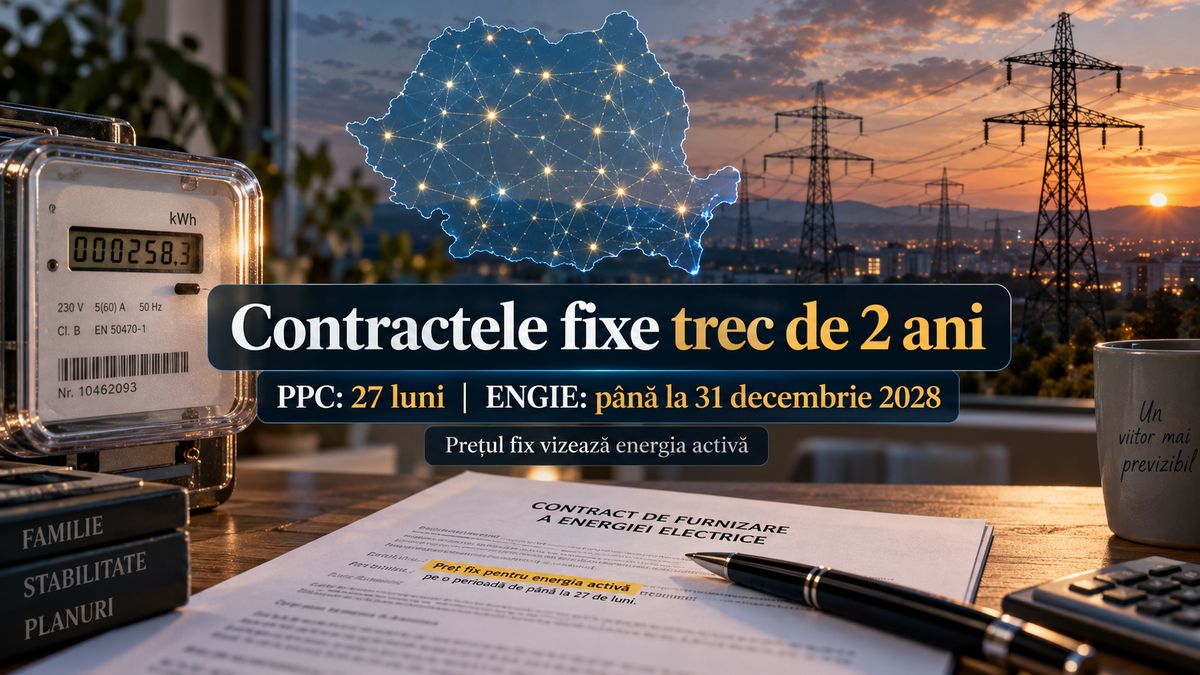
The residential electricity supply market is beginning to break away from the standard annual contract model. In September 2026, two of the major companies active in Romania are already offering active energy price lock-in periods exceeding two years: PPC has launched PPC Fix 27, designed for 27 months, while ENGIE's Ampero Verde Online offer maintains commercial terms until December 31, 2028. This shift alters one of the unwritten rules of energy retailing in recent years. Suppliers are no longer competing solely on the best price available at the time of signing, but also on the duration they are willing to maintain it. For households, contract length is thus becoming almost as important as the price paid per kilowatt-hour. PPC Fix 27 sets an active energy price of RON 0.670/kWh and a daily subscription fee of RON 0.35, VAT included, for a period of 27 months. Based on currently applicable taxes and regulated tariffs, the company estimates a final price of approximately RON 1.37–1.46/kWh, varying by distribution zone. Through Ampero Verde Online, ENGIE extends its terms until the end of 2028. The offer, drafted on September 15, sets the active energy price at RON 0.790/kWh. With current regulated components, the final bill is calculated based on a price that varies by distribution zone, starting at approximately RON 1.52/kWh. Long-Term Contracts Turn Predictability into a Product The difference compared to classic 12-month contracts is not just calendar-based. When a supplier maintains a fixed commercial component for over two years, they assume the long-term risk that the energy required by customers might cost more than anticipated. This risk can be managed through bilateral contracts, forward purchases, term products, self-generation, or a combination of hedging instruments. However, this does not mean that long-term purchased energy is automatically cheaper. The supplier is also buying predictability, attempting to translate this protection into a price they can sustain for the customer. For the consumer, the mechanism works in reverse. A long-term contract reduces exposure to future fluctuations in the commercial component but limits the benefit of potential price drops in new offers. If the wholesale market surges, a customer locked into today's price gains stability. If prices drop significantly in 2027 or 2028, an agreement signed today may become less competitive than the products available then. This new generation of contracts shifts the consumer's choice from the simple question of "what is the lowest price right now?" to a more complex one: how much is the security of a known price for the next two years worth? Wholesale Market Remains Expensive Enough for Stability to Matter The extension of contract durations comes in a market where wholesale electricity continues to record high levels. For delivery on September 17, the day-ahead market managed by OPCOM recorded an average price of RON 890.53/MWh, with several hourly intervals where quotes exceeded RON 1,000/MWh. Such a level cannot be directly compared to the price on a household bill. The day-ahead market (DAM) represents a wholesale market for next-day delivery, whereas the consumer's bill includes a much broader cost structure and may be backed by energy purchased by the supplier through previously concluded contracts. However, the data shows why predictability holds commercial value. A supplier promising a 27-month price must build a procurement strategy capable of withstanding periods of high wholesale prices. The customer is buying precisely this protection against the direct pass-through of these fluctuations into the commercial component of the contract. A Fixed Active Energy Price Does Not Freeze the Entire Bill The most important distinction for consumers is between the active energy price and the final amount paid on the bill. While fixed offers from suppliers can keep the contractually agreed commercial component unchanged, the bill also includes distribution, transmission, and system tariffs, contributions, green certificates, excise duties, and VAT. These components are set or influenced by regulation and legislation and can change during the contract term. PPC explicitly states this possibility in the PPC Fix 27 documentation. The same principle applies to ENGIE's offer. Consequently, a customer may have the same contractual active energy price and yet pay a different final bill if regulated tariffs or applicable taxes are modified in the meantime. This detail becomes increasingly important as the contract period lengthens. Over 12 months, the probability of multiple regulatory changes is lower than over an interval spanning more than two calendar years. Long-Term Contracts Also Change the Early Exit Calculation Switching suppliers and the early termination of a fixed-term contract are two legally distinct matters. The technical process of switching suppliers is carried out through the Online Supplier Switching Platform…