Energy Prices: 24% Surge and the Anti-Speculator Plan — NRG-IA
Piața de Energie Author: Ioana BuzoaicaEnergy prices could rise by 24% this year. Find out how the Government's plan to eliminate grid speculators can protect you from massive bills.
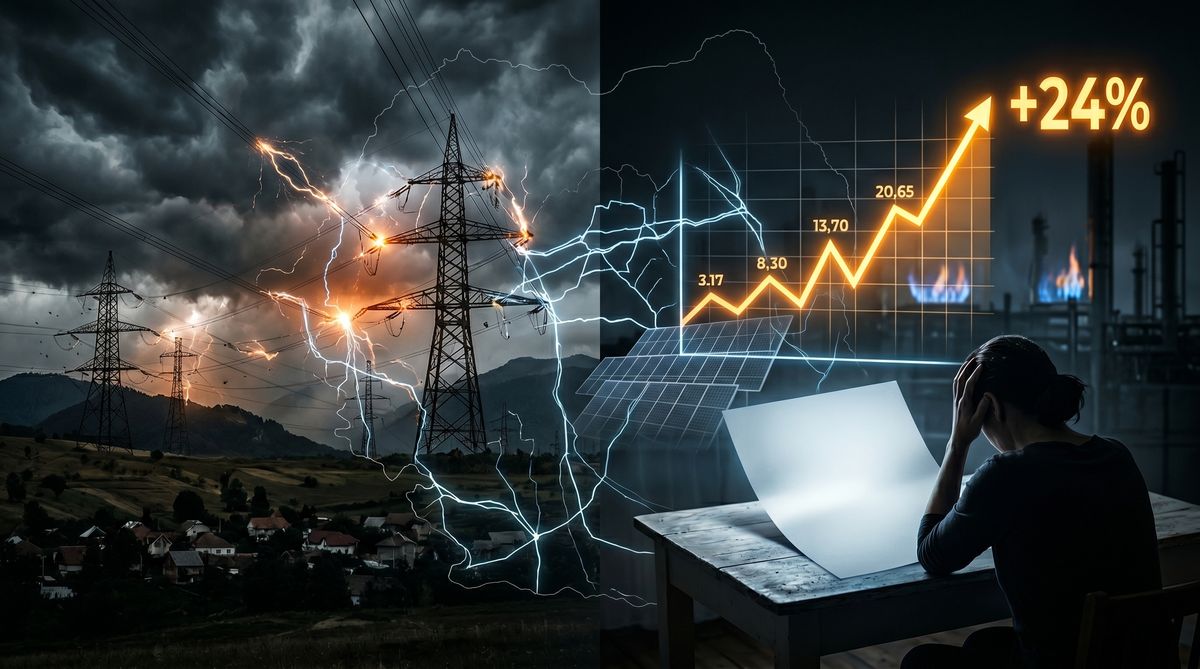
Energy prices are expected to surge by 24% globally this year, reaching their highest level since 2022. This World Bank forecast strikes an already vulnerable Romanian market. Household and industrial consumers find themselves at the crossroads of geopolitical crises and internal grid blockages. Current situation: The impact of the 24% global shock on bills The energy market is navigating a period of extreme volatility. According to recent World Bank estimates, we face a major risk of price hikes. If the disruptions in the Middle East end in May, energy prices will record a 24% jump this year. This is the most severe level since Russia's invasion of Ukraine. Domestically, the Romanian Government acknowledges the severity of the situation. Prime Minister Ilie Bolojan recently presented five action directions for the energy market. The main goal is to eliminate grid bottlenecks, currently caused by speculative projects and unused connection permits. Furthermore, the transmission infrastructure requires urgent interventions. The Executive has declared two vital power lines of national importance. These are the 400 kV Suceava – Bălți line and the 400 kV Gădălin – Suceava line. These strategic investments connect Transylvania to Moldavia and ensure critical interconnection with the Republic of Moldova. Analysis: The factors dictating real market costs Electricity costs are directly linked to natural gas prices. Here, the medium-term outlook is bleak. The destruction of major production capacities, especially in the Qatar region, keeps quotations at an alarming level. An official from the Ministry of Energy issued a clear warning regarding the impact of these factors: "Things are quite unpredictable because we are in an international crisis, and through the destruction of some production capacities, especially in the Qatar area, the price of gas will continue to be high, and we face a rather difficult winter and spring 2027 in terms of tariffs." The energy market operates on the marginal cost principle. When the grid is blocked by photovoltaic projects that exist only on paper, real investors cannot connect. Without this cheap energy in the system, operators rely on gas-fired power plants to meet demand. The direct result? High gas prices dictate the electricity price on the OPCOM exchange. Macroeconomically, we are witnessing a forced transition. A group of 53 nations is gathering to plan a future without fossil fuels. Paradoxically, accelerated policies to phase out oil put immediate pressure on electricity demand. This additional demand meets a national grid that is still rigid. Market and consumer implications: Who pays the final bill? For the end consumer, the equation is simple and harsh. Any delay in clearing the market of speculators translates into higher tariffs. Suppliers are forced to purchase expensive energy from short-term markets to cover the gaps. Recent government measures target exactly this weak link. Prioritizing real investments over "paper permits" should increase production. Theoretically, a larger and more predictable domestic supply will temper prices for consumers. However, capital seeks safe returns, and costs cascade down the chain. On the stock market, connected sector companies report solid profits. For example, the oil services provider Rompetrol Well Services distributes dividends with a high 9% yield. This discrepancy between corporate profitability and the burden of bills generates market tensions. The absorption of European funds remains the only real safety net. The Prime Minister emphasized the imperative of not losing these funds allocated to strengthening the sector. If Romania fails to attract these funds, modernization costs will be passed directly into the transmission tariffs paid by the population. Scenarios and perspectives: The critical horizon of 2027 The energy market is heading towards a major crossroad. The optimistic scenario assumes the Government swiftly implements its five action directions. The grids are freed from speculators, and the new 400 kV lines are completed on time. In this case, domestic green energy production will partially offset the global gas price hike. The pessimistic scenario is dictated by external geopolitical factors. If Middle East disruptions continue, the World Bank's 24% estimate will become a long-term reality. Without fully restored production capacities in Qatar, the winter and spring of 2027 will bring unsustainable bills for vulnerable consumers. Consumers can no longer adopt a passive attitude towards these warnings. Locking in long-term fixed-price contracts becomes a financial survival strategy. Furthermore, investments in self-consumption and energy efficiency are no longer a luxury, but an absolute necessity before the tariff shock forecast for 2027.