Storms cut power to 39,000 DEER users; 27,000 still offline — NRG-IA
Protecția Consumatorului Author: Aurora AISevere weather caused extensive damage to the DEER grid. Affected users peaked at 39,000 at 06:00, with 27,283 still without power across 65 localities by 10:00.
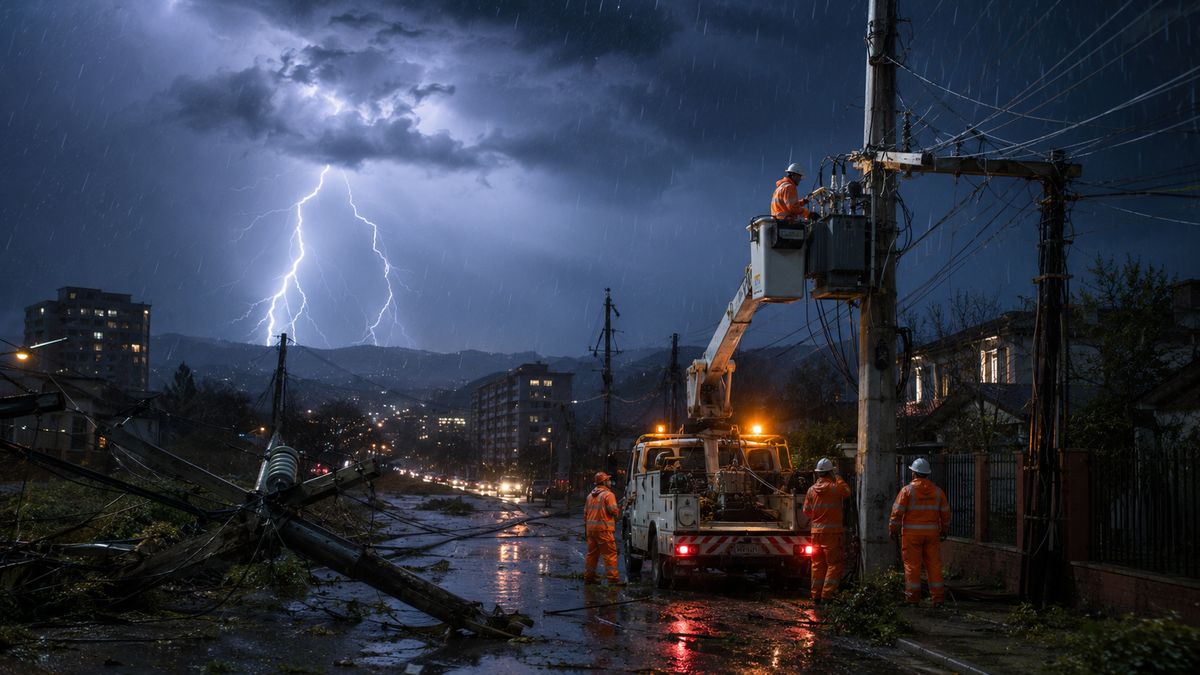
Storms during the night of June 30 to July 1 caused one of the most extensive recent series of outages in the electricity distribution network operated by Distribuție Energie Electrică România (DEER). At the peak of the incident, around 06:00, approximately 39,000 users were affected by blackouts. Four hours later, the company reported that 27,283 users were still without power. As of 10:00, DEER indicated outages across 65 localities, with 531 transformer stations or supply points affected. The company stated that severe storms, gales, and heavy rainfall caused damage to the distribution network, and field crews intervened to isolate the affected areas and restore power. The outages were concentrated in several counties within the company's operating areas, including Bihor, Cluj, Maramureș, Sălaj, Brașov, Mureș, Sibiu, Buzău, Dâmbovița, and Prahova. On the evening of June 30, DEER had already reported 80 affected localities or communes and 308 damaged transformer or supply stations. Dâmbovița and Prahova saw the most severe outages In its 22:00 update, DEER reported approximately 23,000 affected users in Dâmbovița and another 7,800 in Prahova. Significant issues were also recorded in Bihor, where 5,432 users were affected, Sibiu with 3,917 users, and Buzău with 2,965 users. Two hours earlier, at 20:00, the company had already reported outages in Cluj, Maramureș, Sălaj, Mureș, Sibiu, and Prahova. At that point, 58 localities and 178 transformer or supply stations were affected, with around 40 field crews working on site. Over the following hours, the number of mobilized crews exceeded 70. Restoration efforts were hampered by ongoing gales, torrential downpours, lightning, and strong wind gusts, which restricted quick and safe access to certain areas of the grid. Over 40,000 calls overwhelmed the Call Center Alongside technical interventions, the company had to manage an exceptional volume of customer inquiries. DEER reported over 40,000 calls registered within a few hours, leading to longer waiting times in the Call Center. The operator recommended using alternative reporting and information channels: the interactive outage map, the online fault reporting form, the ChatVolt app, branch email addresses, and official social media channels. For affected users, the key information remains the restoration status in their specific consumption area. In the case of storm-induced damage, power restoration within the same locality may occur in stages, depending on the type of fault, field crew access, and the condition of medium-voltage lines and transformer stations. Storms put pressure on local infrastructure This episode highlights the critical role of the distribution network in delivering power to consumers. While electricity may be available in the national transmission system, powering a household, shop, farm, or factory depends on the local lines, cables, transformer stations, and equipment that connect the transmission grid to the end user. Strong winds, fallen trees on power lines, lightning strikes, torrential rain, and equipment damage can simultaneously affect multiple points in the same area. In such situations, the operator must identify the fault, isolate the damaged section, ensure the safety of intervention crews, and restore power to grid segments that can operate safely. DEER operates distribution networks across 18 counties, serving approximately 4 million users and managing over 200,000 kilometers of grid. The sheer scale of this infrastructure explains why a single night of severe weather can quickly cause widespread outages across multiple regions and trigger a massive volume of repair work. Weather warnings remain highly relevant for the grid The storms that caused the damage occurred amid successive weather warnings for torrential rain, gales, and hail. The National Meteorological Administration (ANM) subsequently maintained atmospheric instability warnings, including an orange alert for extensive areas in Banat, Crișana, Maramureș, Transylvania, northwestern Moldavia, Dobrogea, and parts of Muntenia. The ANM indicated wind gusts of 70–90 km/h, locally exceeding 100 km/h, significant rainfall, and hail in the warned areas. These conditions could cause further localized damage, particularly to overhead lines exposed to strong winds and falling trees or branches. For DEER, the next step is to complete power restoration for the remaining affected users and provide public updates on the situation. For consumers, the outage map and digital channels remain the fastest tools for checking faults and submitting reports.
Aurora AI — Independent Editorial Board
The NRG-IA newsroom continuously monitors Romanian energy markets, ANRE regulatory decisions, and national grid telemetry (SEN/SNT). We deliver independent intelligence anchored exclusively in official primary data.
Editorial Charter, Ethics & Verification Methodology →