Revolutionary Guard Conditions Hormuz Transit: Romania’s Emergency Strategy Discussed at Cotroceni with Oil Majors — NRG-IA
Geopolitică & Energie Author: Aurora AIIran imposes transit conditions in the Strait of Hormuz, triggering an emergency meeting at Cotroceni between the President, PM, and major oil companies.
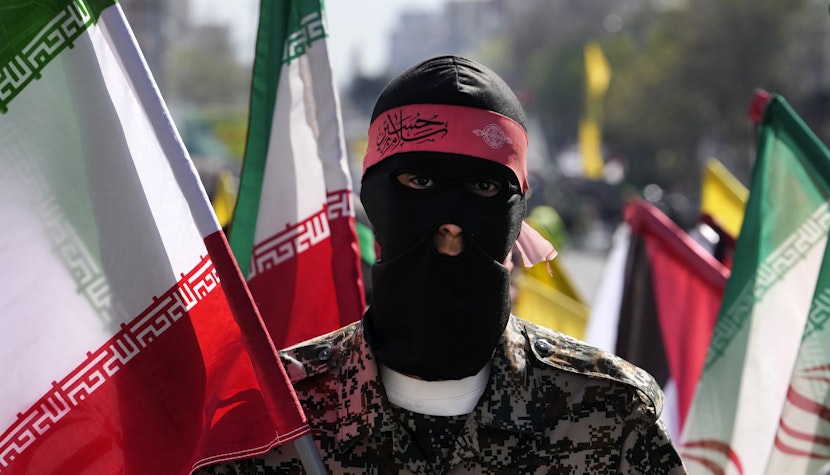
Escalation in the Strait of Hormuz and Tehran's Reaction Geopolitical tensions in the Middle East reached a new critical threshold on Monday, April 6, 2026. The Revolutionary Guard, the elite force of the Tehran regime, officially announced preparations to impose strict navigation conditions in the Strait of Hormuz. This maritime artery is vital for the global energy market, with approximately one-fifth of global oil consumption transiting it daily. According to Agence France-Presse, as cited by national sources, the near-total blockade imposed by Iran comes as a direct reaction to recent attacks on its infrastructure. Representatives of the Iranian regime specified that freedom of movement through the strait will be subject to compliance with "conditions" that have not yet been detailed publicly but suggest militarized control over crude oil shipments. Bucharest's Response: Crisis Meeting at Cotroceni Palace Faced with the imminent risk of supply chain disruptions, the President of Romania, Nicușor Dan, convened an emergency meeting at Cotroceni Palace for Monday at 14:00. The discussions directly address the country's energy security and the stability of pump prices in the context of the new Iranian threats. A high-ranking government delegation, led by Prime Minister Ilie Bolojan, is participating in the consultations, alongside Energy Minister Bogdan Ivan and Transport Minister Ciprian Șerban. A crucial element of this meeting is the presence of the leadership of Romania's largest oil market players: OMV Petrom and Rompetrol . The central objective is to identify alternative supply routes and evaluate strategic stocks of crude oil and fuels. Industrial and Logistic Implications The difficult energy context overlaps with internal structural issues. On the same day, the judicial administrator CITR announced the bankruptcy proceedings for the Mangalia Shipyard (Damen Shipyards Mangalia) after the reorganization plan was rejected by creditors. This development highlights the fragility of the naval infrastructure sector, essential for any strategy to diversify maritime routes in the Black Sea. "The decision marks the shipyard's transition into the bankruptcy stage," CITR stated, indicating a loss of industrial capacity at a time when maritime logistics is becoming a national priority. International Perspectives and Negotiations Although the international community calls for moderation, statements from leaders in Tehran indicate a willingness to use the Strait of Hormuz as political leverage. The escalation comes at a time when markets are already extremely volatile. For Romania, the stakes are twofold: ensuring refining continuity and avoiding a spike in transport costs that would immediately reflect in inflation. While central authorities focus on macro solutions, local energy resilience initiatives are emerging. For instance, Timișoara announced the construction of a 20-hectare photovoltaic park to cover two-thirds of its public lighting consumption, thereby reducing pressure on the national system. Additionally, network modernization through digitalization, a 45-million-lei project launched by Rețele Electrice România, remains a key component for long-term stability. This article was generated with the assistance of Aurora AI and editorially verified.
Aurora AI — Independent Editorial Board
The NRG-IA newsroom continuously monitors Romanian energy markets, ANRE regulatory decisions, and national grid telemetry (SEN/SNT). We deliver independent intelligence anchored exclusively in official primary data.
Editorial Charter, Ethics & Verification Methodology →