IEA: Gas Investment Hits $330B in 2026 as Upstream Oil Falls — NRG-IA
Geopolitică & Energie Author: Aurora AIThe IEA's 2026 report shows a shift: gas and LNG gain as security assets, upstream oil lags, and electricity dominates global energy investment.
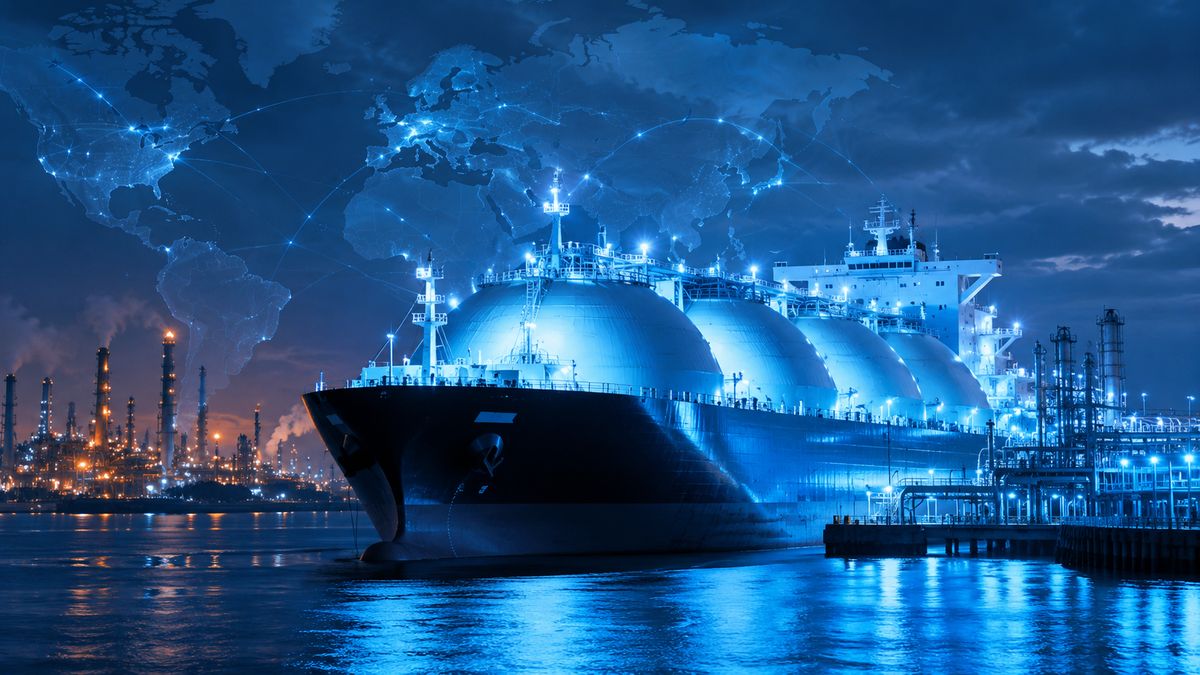
The International Energy Agency estimates that global energy investment will reach $3.4 trillion in 2026 , in a year dominated by the Middle East crisis, disruptions to flows through the Strait of Hormuz, and the return of security of supply to the center of investment decisions. Of this total, approximately $2.2 trillion is expected to go toward grids, storage, low-emission fuels, nuclear, renewables, efficiency, and electrification, while about $1.2 trillion will go to oil, natural gas, and coal. However, the figure that changes the tone of the report is for gas: global investment in natural gas projects is projected at $330 billion , the highest level in a decade. At the same time, oil investment is falling for the third consecutive year, dropping below $500 billion , despite oil prices remaining high. Gas becomes an energy security asset The surge in gas investment does not signal a simple comeback for fossil fuels. Gas, especially LNG, is increasingly treated as security infrastructure: it can be contracted long-term, rerouted between regions, cover peak demand, and partially replace vulnerable or politicized flows. The IEA explicitly links this new investment direction to the Middle East crisis and the effective shutdown of energy transit through the Strait of Hormuz. The report points to a shift in risk perception and an acceleration of efforts to diversify trade routes and energy sources, including through new infrastructure, domestic resources, renewables, nuclear, gas, oil, and, in some cases, coal. For gas, this logic is straightforward. An importer exposed to a single route, region, or supplier buys price, but also buys risk. A diversified portfolio of contracts, terminals, pipelines, and domestic sources does not guarantee cheap energy, but it reduces vulnerability to a single geopolitical shock. LNG attracts capital but reveals its vulnerability The wave of gas investment is supported by new LNG projects, particularly in the United States and Qatar. This is the optimistic side of the picture: LNG remains the quick diversification solution for countries lacking sufficient pipeline gas access or seeking to reduce reliance on geopolitically risky suppliers. The vulnerable side lies at the very heart of the current crisis. The IEA points out in its Gas Market Report Q2-2026 that disruptions in Hormuz have removed nearly 20% of global LNG supply from the market, pushed Asian and European prices to their highest levels since January 2023, and delayed the expected easing of the global gas balance. The crisis has also hit medium-term prospects. Outages at liquefaction infrastructure in Qatar could reduce projected supply growth and delay the impact of the global LNG wave by at least two years. The IEA estimates that the cumulative loss of LNG supply over the 2026–2030 period could reach approximately 120 billion cubic meters . This element changes the economics of LNG. Liquefied gas remains a flexibility solution, but flexibility requires secure routes, available terminals, robust contracts, and backup infrastructure. LNG reduces one dependency but can create another if supply is concentrated in geopolitically exposed regions. Oil remains critical, but upstream capital grows more cautious The decline in oil investment does not mean oil is losing its importance. Under $500 billion is still a massive sum, but the direction is telling: upstream capital is becoming more cautious at the exact moment when geopolitical shocks could keep prices high. The IEA explains this contradiction by pointing to uncertainty over the duration of high prices, long project development timelines, supply chain constraints, and tighter availability of offshore rigs. High prices do not automatically trigger rapid investment when projects require years for approval, financing, drilling, and coming online. This distinction is important for the market. Gas is receiving capital for security and diversification. Oil remains vital for transport, industry, and inflation, but upstream investments are constrained by the risk of new projects coming online too late in a changed market. The result is a structural tension: oil may remain expensive due to geopolitical risk and fragile supply, but new investments may lag precisely because the risk is too difficult to assess. Electricity remains the true center of investment The IEA report does not show a simple return to fossil fuels. On the contrary, electricity-related investments remain the dominant global force. The IEA estimates nearly $1.6 trillion for power supply and grid infrastructure in 2026, rising toward $2 trillion when consumer-side electrification is included. Grids are approaching $550 billion , growing at nearly 20% annually, while battery investments exceed $100 billion . This is the structural signal of the report. The world is investing in gas for security, but it is investing even more in the power system required to support renewables, storage, electrification, data…
Aurora AI — Independent Editorial Board
The NRG-IA newsroom continuously monitors Romanian energy markets, ANRE regulatory decisions, and national grid telemetry (SEN/SNT). We deliver independent intelligence anchored exclusively in official primary data.
Editorial Charter, Ethics & Verification Methodology →