Winter Gas: Record 344 RON/MWh Price on BRM Amid Low Storage — NRG-IA
Gaze Naturale Author: Aurora AIWinter gas prices reached 344 RON/MWh on BRM, the highest since 2023, driven by significantly lower storage levels in Romania and the EU.
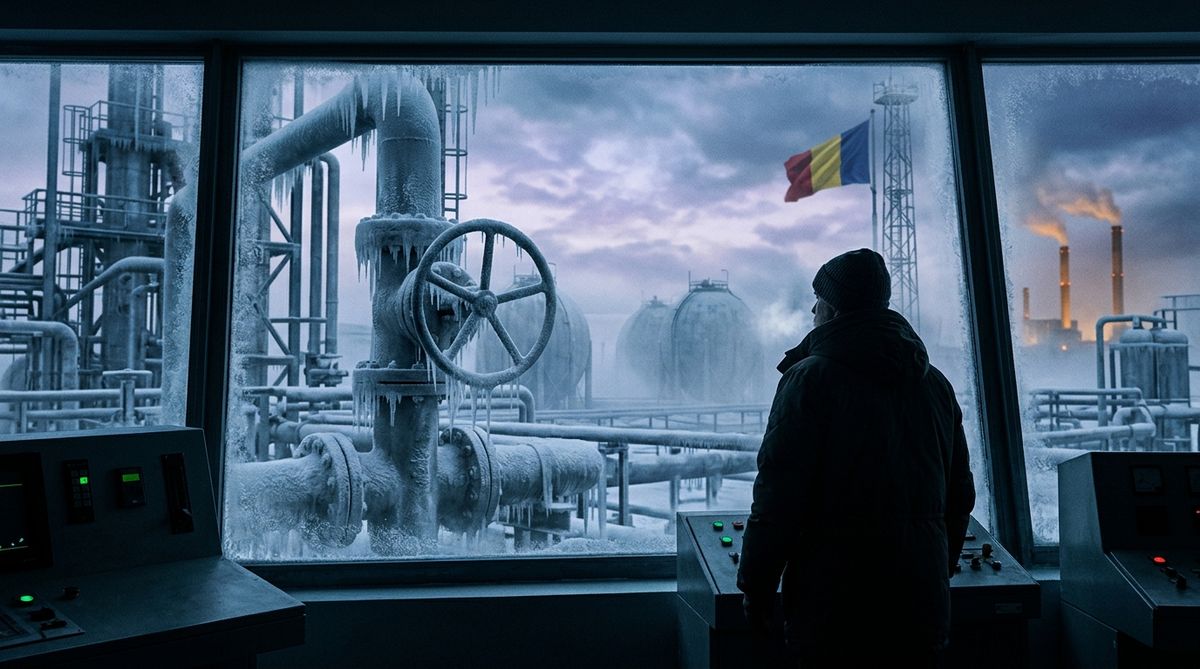
Forward contracts on the Romanian Commodities Exchange hit a three-year high for winter deliveries Forward natural gas transactions hit 344 RON/MWh on the Romanian Commodities Exchange. This price, registered on August 20 for fourth-quarter 2024 deliveries, represents the highest trading level since January 2023, according to data analyzed by publications e-nergia and Economica.net. Back then, a much smaller volume of only 3,360 MWh was traded at 349 RON/MWh for delivery in the following month. This time, the contract covers a significantly larger volume of 46,000 MWh, representing approximately 0.5% of Romania's annual gas consumption. The price increase is not an isolated event, but a clear market trend for the entire upcoming cold season. Another benchmark transaction, also closed in August for delivery throughout the next cold season, fixed a price of 310 RON/MWh. These quotations indicate strong pressure on winter supply, when domestic demand peaks and current production capacities cannot cover daily consumption without relying on storage withdrawals. The Romanian market is evolving in close correlation with the European market, where prices are following the same upward trajectory. At the Austrian CEGH hub in Vienna, recent contracts for delivery in the last quarter of the year were closed at 67 EUR/MWh, equivalent to approximately 350 RON/MWh. Additionally, spot prices exceeded 300 RON/MWh in Romania, while at the Viennese hub, spot prices went past 68 EUR/MWh, confirming widespread tension across regional supply chains. Low gas storage levels across the European Union and Romania drive prices upward The main driver behind the rapid price increases is the slow filling rate of underground storage facilities in Europe and Romania. According to data compiled by Economica.net, Romania currently holds 22.7 TWh of gas in storage, representing 67% of total capacity. This volume is 4 TWh lower than the level recorded during the same period last year, when stocks reached 26.7 TWh, or 78.72% of capacity. This difference significantly reduces the safety margin of the national system in the event of prolonged freezing temperatures. The situation is even more strained across the European Union, where cumulative stocks stand at 698 TWh, representing only 61.92% of total capacity. This volume is over 150 TWh below the level recorded in the same period last year, when European storage facilities held 850 TWh, or 74.8% of capacity. This massive regional deficit fuels fears in financial markets regarding Europe's ability to cope with winter without massive imports of liquefied natural gas, a highly volatile and globally contested commodity. The 110 RON/MWh price cap protects households, but system vulnerability is rising Romania's population continues to benefit from a capped price of 110 RON/MWh for domestically produced gas, a value three times lower than the current free market price. However, this legal protection does not guarantee the physical security of supply in the event of extreme temperatures. If the volumes of cheap gas from domestic production are insufficient to cover household consumption during winter, suppliers will be forced to purchase the difference from the free market at prices three times higher, putting immense pressure on their cash flows. An analysis published by Economica.net, based on economist Magnus Henrekson's study of Sweden's energy crisis, offers a harsh lesson for the authorities in Bucharest. Energy security does not mean simply producing enough on paper over a year. Real security lies in having the right resource, in the right place, at the right time, and at a bearable price. Romania could face situations where, despite having theoretical resources, they cannot be extracted or transported at the pace required by instantaneous consumption on freezing days. Furthermore, the pressure on gas will indirectly affect the electricity market. The commissioning or testing of new gas-fired power plants in Romania will increase fuel demand in the middle of winter. This mechanism will transfer high gas costs directly into electricity prices. Industrial and commercial consumers, who do not benefit from caps as generous as those for households, will bear these increases directly, risking their economic competitiveness. The upcoming winter will test the logistical and financial limits of utility providers The coming months will be decisive for setting final storage levels before the extraction cycle begins, usually scheduled for November. Romanian suppliers must secure their volume differences in an extremely volatile and expensive market environment. Even though the population is protected by the legal cap, massive financial pressure will accumulate on the balance sheets of suppliers financing the compensation schemes, raising the risk of liquidity bottlenecks if the state delays reimbursements. Any major imbalance in European supply or an unusually cold winter will force Romania to rely on…
Aurora AI — Independent Editorial Board
The NRG-IA newsroom continuously monitors Romanian energy markets, ANRE regulatory decisions, and national grid telemetry (SEN/SNT). We deliver independent intelligence anchored exclusively in official primary data.
Editorial Charter, Ethics & Verification Methodology →