Qatar Restarts LNG, but Hormuz Remains Global Gas Bottleneck — NRG-IA
Gaze Naturale Author: Aurora AIQatar sends LNG tankers to Ras Laffan ahead of Hormuz reopening. While the market gets a calming signal, damaged capacity and transit safety limit full recovery.
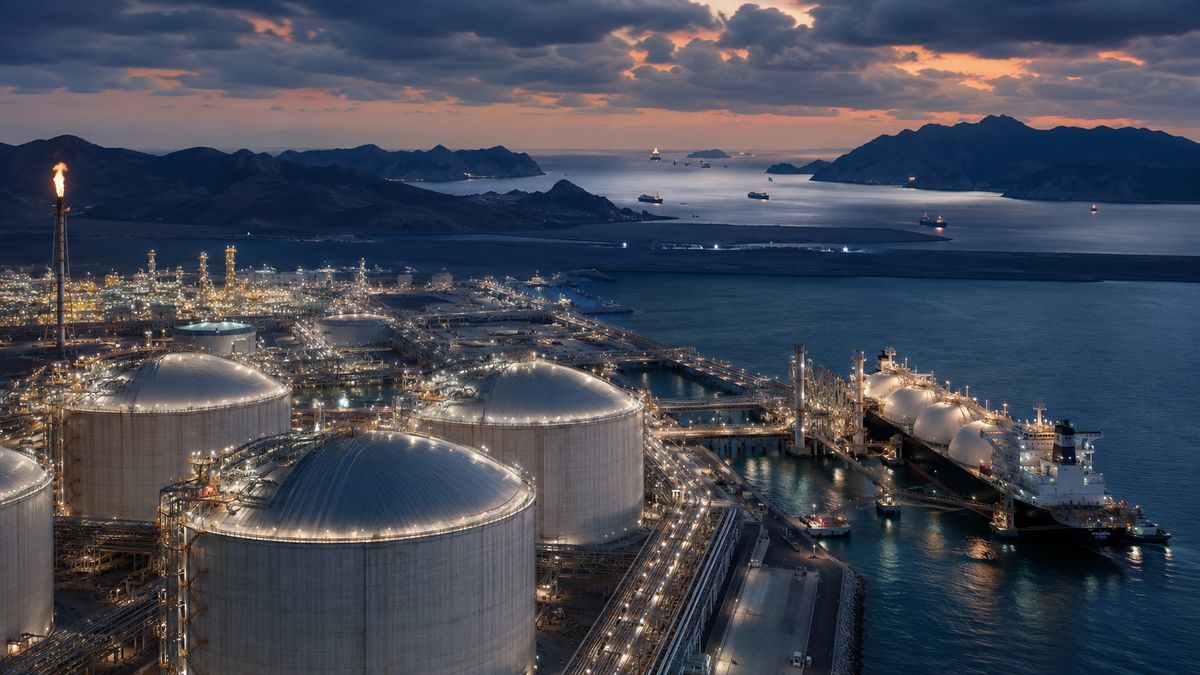
Qatar is preparing for the return of its LNG to the global market, but the critical bottleneck remains the same: the Strait of Hormuz. Following the US–Iran agreement and the prospect of reopening the maritime route, several Qatari LNG tankers are heading toward Ras Laffan, the export complex in the Persian Gulf, to resume loading and trade flows. Oilprice reports that at least four Qatari-owned LNG vessels have recently set sail for Ras Laffan, a fifth carrier is en route to the region, and four other vessels are idling in the Gulf of Oman, potentially preparing to enter through Hormuz toward Qatari facilities. For the gas market, this signal has an immediate impact. Qatar is one of the pillars of global LNG, and the blockade of Hormuz struck a vital supply route for Asia and Europe. The return of vessels to Ras Laffan indicates that Doha wants to quickly recover volumes, revenues, and commercial credibility. However, this recovery does not depend solely on production facilities. It hinges on vessels, transit corridors, insurance, maritime safety, and shipowners' confidence that the strait can be crossed without major risk. Vessels return to Ras Laffan Ras Laffan is the hub of Qatar's LNG exports. From there, LNG carriers transport liquefied gas to customers in Asia and Europe. The near-total closure of the Hormuz route turned the terminal into a geographically constrained asset: Qatar might have had the technical capacity, contracts, and customers, but without safe transit through the strait, its LNG remained trapped in the Persian Gulf. Oilprice notes that since the outbreak of the war with Iran on February 28, Qatar had stopped sending its own LNG carriers into the Persian Gulf. The resumption of vessel movements indicates an operational repositioning ahead of the strait's full reopening. This is the difference between a political announcement and a physical market recovery. Prices react to agreements, but gas only reaches the buyer when vessels enter, load, exit Hormuz, and arrive at regasification terminals. Production can recover faster than shipping QatarEnergy has informed customers that it could restore approximately 50% of its production capacity within a month of safe navigation resuming through Hormuz, and about 80% within two months, according to Bloomberg sources cited by Oilprice. The essential condition remains the preservation of the US–Iran agreement and the sustainable restoration of safety along this critical route. Reuters confirms the same logic: QatarEnergy is prepared to quickly resume production at Ras Laffan and could reach full capacity at unaffected facilities within a month. However, the source cited by Reuters indicates that the main issue is logistical, rather than restarting production itself. This distinction changes the significance of the news. In an LNG crisis, industrial capacity does not guarantee delivery. Gas must be liquefied, loaded, transported, insured, and unloaded. Any bottleneck along the way quickly translates into higher prices, volatility, and competition among buyers. Damaged capacity remains a multi-year issue Qatar is not returning with the full capacity it had available before the conflict. In March, Reuters reported that Iranian attacks damaged two of Qatar's 14 LNG trains and one of its two GTL facilities, knocking out approximately 17% of the country's LNG capacity, equivalent to 12.8 million tonnes per year. Repairs could take between three and five years, according to statements attributed to QatarEnergy. QatarEnergy LNG indicates that its system operates 14 liquefaction trains with a total capacity of 77 million tonnes per year. The temporary loss of 17% of this base is not a minor incident for the global market. It reduces the flexible volume available precisely at a time when Asia and Europe are competing for cargoes, and the global LNG market remains sensitive to weather, inventory levels, and geopolitical risks. The correct formula is clear: Qatar can quickly restart its unaffected capacity, but the damaged capacity remains a structural issue. The market is receiving a signal of recovery, not a guarantee of full normalization. Hormuz dictates the actual speed of recovery The Strait of Hormuz is primarily known as an oil route, but for gas, the stakes are just as high. Qatari LNG must exit the Persian Gulf through the same strait. If the route is unsafe, global LNG supply loses one of its most important suppliers just as global demand could rapidly increase. Reuters notes that the near-total blockade of Hormuz halted nearly 20% of global LNG trade and contributed to a 31% surge in European gas prices. In such a context, even a few days of maritime uncertainty can have disproportionate effects on prices. Safety is not restored by political declarations alone. Shipowners must assess the risk, insurers must reinstate commercial coverage, and potential mine-clearing operations or securing maritime corridors could delay a full return. Reuters…