Greece heat pumps: solar integration and residential net zero — NRG-IA
Energie Regenerabilă Author: Aurora AIGreece funds 100,000 heat pumps coupled with residential solar panels to slash natural gas imports and stabilize its power grid.
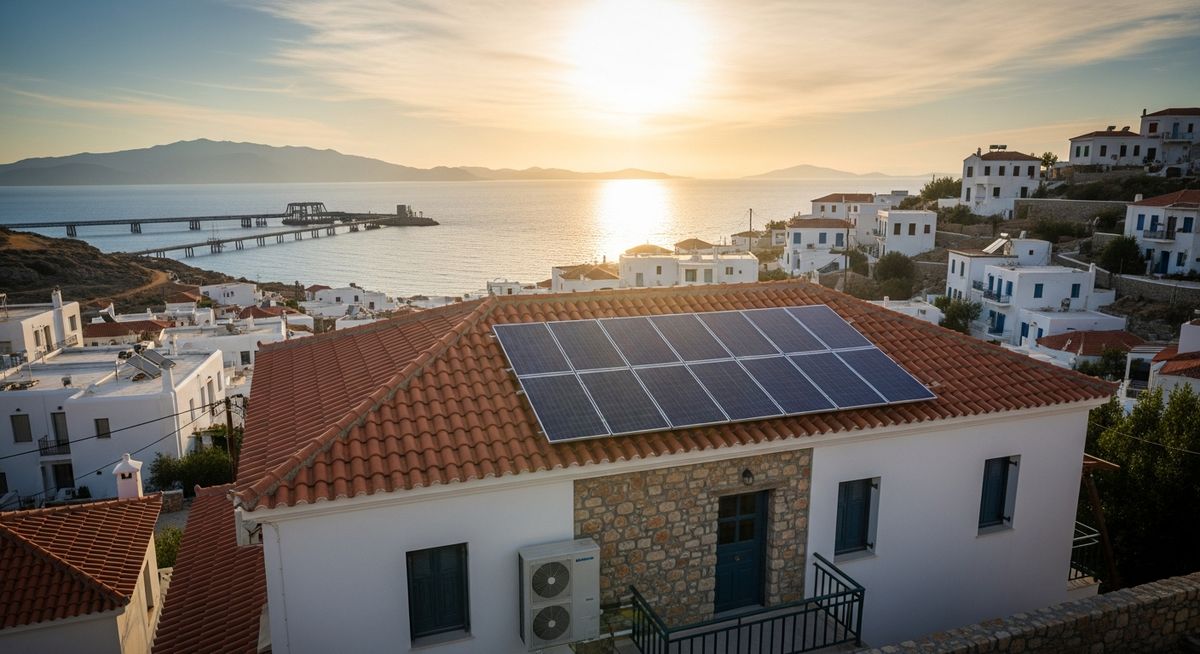
State subsidies for heat pumps in Greece — what happened Greece funds 100,000 heat pumps coupled with residential solar panels to accelerate its green transition. The Ministry of Environment and Energy in Athens has launched a massive subsidy program targeting households, aimed at replacing archaic oil- or liquefied gas-based heating systems with clean alternatives. This initiative marks a paradigm shift in the country's energy policy, emphasizing the direct coupling of renewable energy production with local thermal consumption. The funding mechanism covers a significant portion of acquisition and installation costs, facilitating access to high-efficiency technologies for vulnerable consumers. Unlike previous programs, the new government scheme conditions the support for heat pumps on the simultaneous installation of a solar photovoltaic system. This integrated approach ensures that a large share of the electricity needed to run the heat pump is produced right on the beneficiary's roof, reducing pressure on the national grid. Greece's accelerated transition comes as the residential buildings sector accounts for a significant share of the country's carbon dioxide emissions. By electrifying heating and cooling, Athens hopes not only to meet its decarbonization targets set by the National Energy and Climate Plan (NECP) but also to offer structural protection to consumers against the volatility of wholesale energy markets. The plunge in solar technology costs and European financial incentives The main catalyst for this green offensive is the global plunge in photovoltaic equipment costs, a trend accelerated by China's massive manufacturing capacity, combined with non-repayable European funds from the Recovery and Resilience Facility (RRF). Economies of scale have turned solar energy into the cheapest source of electricity available, outcompeting fossil fuels even when system balancing costs are factored in. In Europe, however, the adoption rate of heat pumps differs fundamentally from one region to another. According to an analysis published by EnergyTransition.org, member states find themselves in completely different phases of this thermal transition. While northern countries integrated these systems decades ago, the Mediterranean region, now led by Greece, is rapidly catching up due to a major climatic advantage: air-to-water heat pumps operate with an extremely high coefficient of performance (COP) in mild climates. Moreover, modern power conversion technology, such as the new high-efficiency solutions launched by companies like ABB, allows for a much more stable integration of residential solar systems with battery storage. These smart inverters optimize bidirectional flows, ensuring that energy produced at noon is not wasted but stored or used directly by the heat pump's compressor to prepare the thermal agent needed for evening hours. Reducing gas imports and balancing the grid through flexible consumption Replacing gas and fossil fuel heating systems with solar-powered heat pumps has a direct impact on Greece's trade balance and grid stability. Every megawatt-hour generated locally by prosumers directly reduces costly imports of liquefied natural gas (LNG) and pipeline gas, strengthening energy security in a highly volatile regional geopolitical context. However, the massive injection of solar energy during the day creates overproduction phenomena that can destabilize local distribution networks. To mitigate this risk, energy suppliers are looking for innovative demand-side management solutions. A relevant example is the PPC Group (Public Power Corporation), which also operates in Romania, which ran pilot programs offering free active energy (at zero lei/kWh or the euro equivalent) during specific hours of maximum solar production. The results of this pilot program are highly telling for the future of the market: participants in the PPC program recorded a 28% increase in consumption during the free-energy hours compared to their historical behavior in those same intervals. This behavior demonstrates that users can be incentivized to shift their flexible consumption – such as running heat pumps or charging electric vehicles – to periods when the sun shines brightest, transforming passive consumers into active balancing resources for the power system. Mandatory storage integration and the risk of local grid congestion The major short-term challenge for Athens authorities and the Greek grid operator is the physical limitation of the transmission and distribution infrastructure. Without massive investments in grid digitalization and reinforcement, the explosion of prosumers risks leading to frequent curtailments and clean energy losses. For this reason, the Greek government is analyzing the introduction of strict deadlines for mandatory battery storage integration in all new residential and commercial solar projects. A decision on this matter could be implemented by the end of this year, forcing the market…