EIA: How US LNG Dominates the European Energy Market — NRG-IA
Geopolitică & Energie Author: Aurora AIAnalysis of historical and recent EIA reports reveals how US LNG imports have become the cornerstone of European energy security.
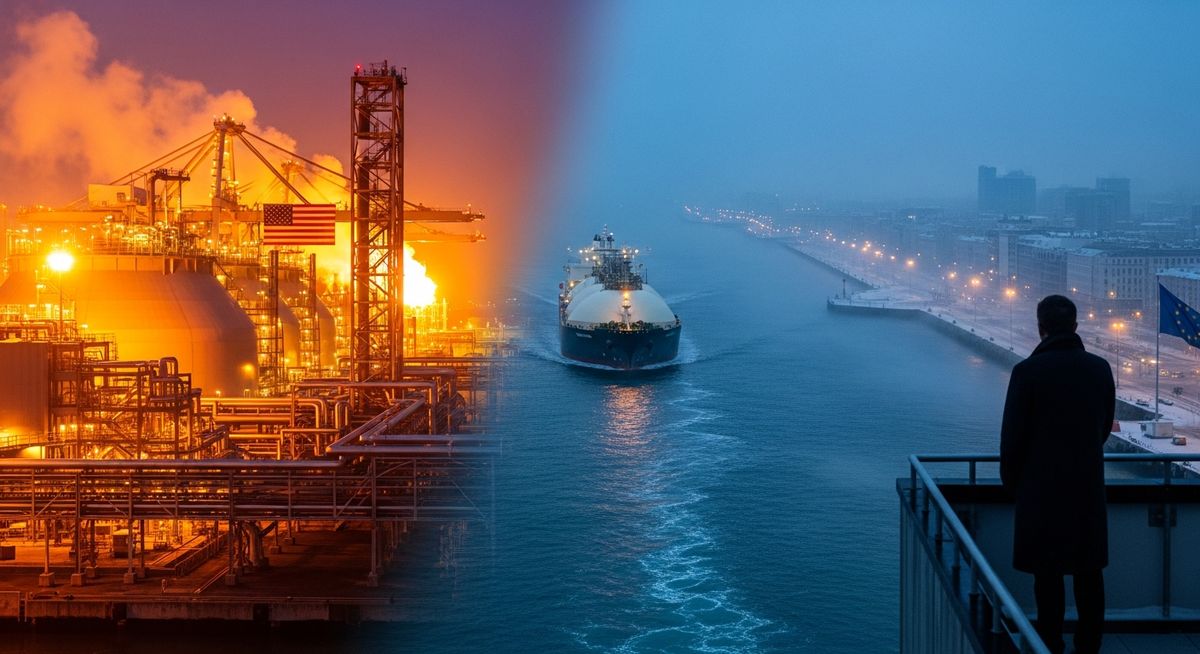
Reconfiguring Global LNG Flows — How Washington Became Europe's Energy Anchor The U.S. Energy Information Administration (EIA) confirms a structural reconfiguration of global energy flows, with American liquefied natural gas (LNG) exports to Europe becoming the cornerstone of the continent's supply. Historical and recent data from the agency show that Europe's reliance on transatlantic deliveries has transitioned from a mere commercial arbitrage mechanism to a critical national security necessity. This structural transformation is clearly reflected in the evolution of the EIA's international reports over recent years. According to EIA international data from July 20, 2023 (Source 1), global energy demand and transport routes have entered a phase of permanent realignment, permanently breaking away from pre-crisis patterns. This shift was paved by a massive expansion of U.S. infrastructure. As early as November 2018 (Source 5), the EIA projected in its global outlooks that the United States would become a long-term net energy exporter, driven by record shale production. By January 2020 (Source 3, Source 4), just before the major disruptions of the pandemic, the EIA highlighted rapid liquefaction capacity growth along the East Coast and the Gulf of Mexico. Although the market shock of October 2020 (Source 2) temporarily depressed global demand and crashed prices, the infrastructure built during that period enabled the U.S. to react swiftly when Europe had to urgently replace its traditional supply sources. The Decline of European Domestic Production and the Accelerated Decoupling from Russian Gas This increased European dependence on U.S. LNG, as monitored by the EIA, is the direct result of collapsing domestic gas production within EU member states and the permanent shutdown of most Russian pipeline import routes. The rapid decoupling left an annual supply gap of over 100 billion cubic meters in the European grid. In the absence of fast-track alternatives on the continent, LNG terminals became the sole lifeline for industrialized nations. EIA data correlation reveals that the expansion of U.S. export capacities directly coincided with the accelerated decline of mature North Sea fields and the Netherlands' decision to halt production at the giant Groningen field. Without American shale gas, countries like Germany or Italy would have been unable to secure necessary storage volumes for the cold seasons over the past two years—a trend consistently documented in the U.S. agency's flow analyses. Structural Volatility and High Logistic Costs on Consumer Bills The direct consequence of this new supply model is the immediate exposure of European consumers to price movements on the U.S. Henry Hub and global maritime freight rates. While U.S. LNG provides physical security, it carries a significantly higher logistical cost than gas previously transported via onshore pipelines. Liquefaction, LNG carrier shipping, and regasification add a permanent price premium that final consumers, including those in Romania, feel in their distribution tariffs. Furthermore, market correlation means that any technical incident at export terminals in Texas or Louisiana, such as temporary shutdowns due to hurricanes, instantly translates into price spikes on Europe's benchmark hub (TTF). European energy security is no longer a localized issue; it directly depends on the stability of the power grid and weather conditions in the southern United States. Winter 2024-2025 and the Risk of Fierce Competition with Asian Markets The short-term outlook points to a period of heightened tension as the cold season approaches. Europe will enter direct competition for American LNG cargoes with Asian economies, particularly China and Japan, where industrial demand is showing signs of rapid recovery. This global competition could keep prices elevated, limiting European governments' fiscal room for maneuver regarding price cap schemes. According to preliminary estimates based on EIA storage models, a prolonged winter in the Northern Hemisphere will test the logistical limits of the global LNG carrier fleet. For Romania and the South-Eastern European region, maintaining steady flows through the Vertical Corridor directly depends on the availability of these transatlantic volumes at terminals in Greece and Turkey, turning regulatory decisions in Washington into direct drivers of local utility bills.