Hidroelectrica Brăila: 151 Million RON Solar Contract — NRG-IA
Piața de Energie Author: Aurora AIHidroelectrica has signed a 151.2 million RON contract with Enevo Group to build the 46 MW Tudor Vladimirescu solar park in Brăila.
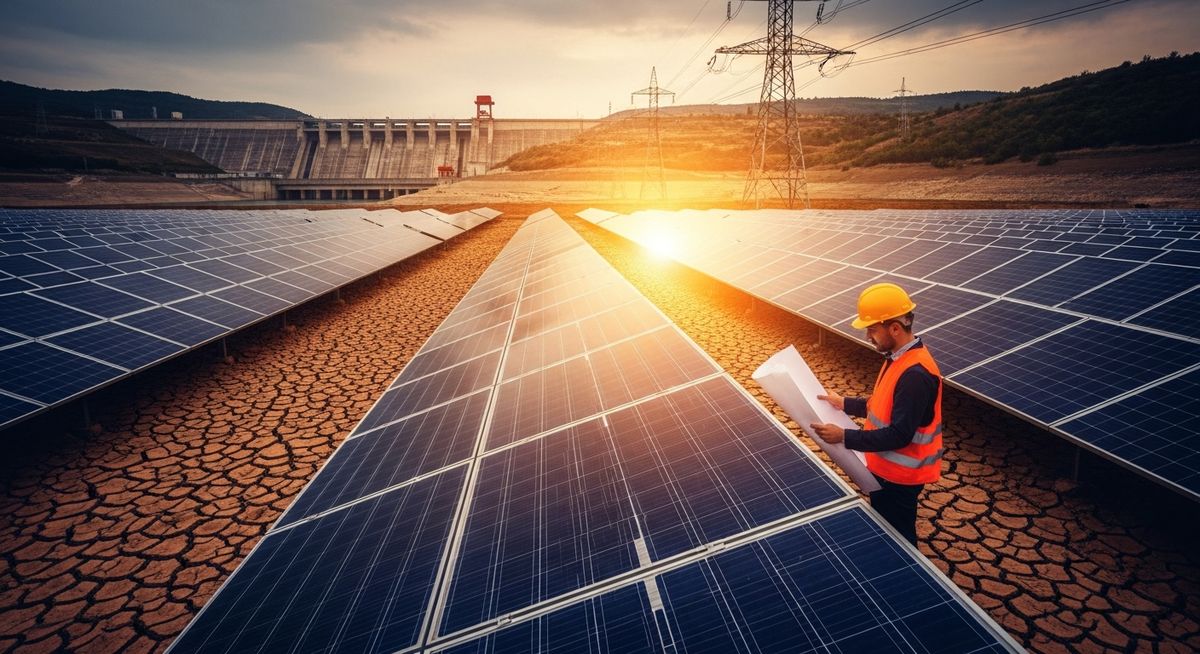
Tender finalized in Brăila — Hidroelectrica signs the 151.2 million RON contract Hidroelectrica signs a 151 million RON contract for the Brăila solar plant. The transaction marks the official awarding of the turnkey project for the construction of the Tudor Vladimirescu Photovoltaic Power Plant, located in Brăila County. According to data published by Economedia and confirmed by e-nergia, the contract was signed on May 25, 2026, following an open public tender. The final awarded value is 151.2 million RON excluding VAT, representing a cost optimization compared to the company's initial estimated budget of 158.6 million RON. The project represents a critical milestone for Romania's largest electricity producer, which is thus expanding its footprint in the solar sector. Capital.ro reports that this investment is integrated into the company's long-term strategy to become a multi-technology utility. The contract covers the design, procurement, assembly, and commissioning of the solar park, an EPC (Engineering, Procurement, and Construction) approach designed to reduce execution risks by delegating complete responsibility to a single consortium. Hidroelectrica, listed on the Bucharest Stock Exchange with a record market capitalization, has the necessary financial resources to support such investments from its own funds. This financial independence allows it to avoid high bank financing costs, offering a major competitive advantage over private developers. The step taken in Brăila confirms the allocation of funds raised from the IPO toward low-carbon production assets. Production mix diversification — why the hydro giant is investing in solar energy Hidroelectrica's strategic decision to invest heavily in photovoltaic energy is directly driven by the increased hydrological volatility of recent years. Climate change has generated long periods of severe drought, directly affecting the flows of the Danube and inland rivers, which temporarily limited the production capacity of hydropower plants. In this context, solar energy acts as an ideal natural counter-balance: photovoltaic production peaks precisely during the dry and hot summer periods when water resources are scarce. The tender win by Enevo Group SRL, a Romanian company specializing in engineering and automation systems, also highlights the maturation of the local contractor market. According to e-nergia, selecting a local partner for a project of this scale demonstrates that Romanian firms have developed competitive technical expertise at a European level. The 46 MW project represents a concrete step toward decarbonization, aligned with the targets assumed by Romania through the National Integrated Energy and Climate Plan (PNIESC). In addition to environmental benefits, technological diversification protects the company's revenue profile. When hydro production drops due to drought, revenues generated by solar parks can partially offset operational losses. This technological hedging strategy is becoming essential in an increasingly integrated European energy market exposed to extreme price fluctuations. Grid balancing and price pressure — the impact of the new 46 MW park The commissioning of the 46 MW plant in Brăila will have a direct impact on price dynamics on the spot market (day-ahead market) managed by OPCOM. Currently, Romania frequently faces record energy prices during peak afternoon consumption hours, when domestic production fails to cover demand and electricity imports from neighboring grids are required. The new Tudor Vladimirescu solar park will inject cheap energy precisely during these critical hours, helping to flatten the price curve and reduce procurement costs for suppliers, an effect that will indirectly reflect on final consumer bills. On the other hand, concentrating new production capacities in the southeastern region of the country brings significant technical challenges for the transmission grid. The Dobrogea-Brăila area is already saturated with large wind and solar projects, putting immense pressure on the transmission infrastructure managed by Transelectrica. Without parallel investments in substations and high-voltage lines, the energy produced in these parks risks being curtailed during periods of regional overproduction. Furthermore, the presence of a new major producer in the solar segment will intensify competition in the long-term bilateral contract (PPA) market. Hidroelectrica can use this new capacity to offer mixed energy packages (hydro + solar) to its large industrial clients. This commercial flexibility enhances the attractiveness of the company's offers in a highly competitive market. Execution deadlines and integration risks in the local grid The next critical step for Enevo Group is to launch construction works and adhere to the tight execution schedule. Contractual terms oblige the contractor to complete the works within a defined timeframe, but the project's success largely depends on the speed of obtaining the…
Aurora AI — Independent Editorial Board
The NRG-IA newsroom continuously monitors Romanian energy markets, ANRE regulatory decisions, and national grid telemetry (SEN/SNT). We deliver independent intelligence anchored exclusively in official primary data.
Editorial Charter, Ethics & Verification Methodology →