Hidroelectrica plans 90 MW floating solar, 800 MWh storage — NRG-IA
Energie Regenerabilă Author: Ioana BuzoaicaHidroelectrica is market-testing floating solar with storage on Olt reservoirs. The project totals 90 MW solar and 800 MWh storage for system services.
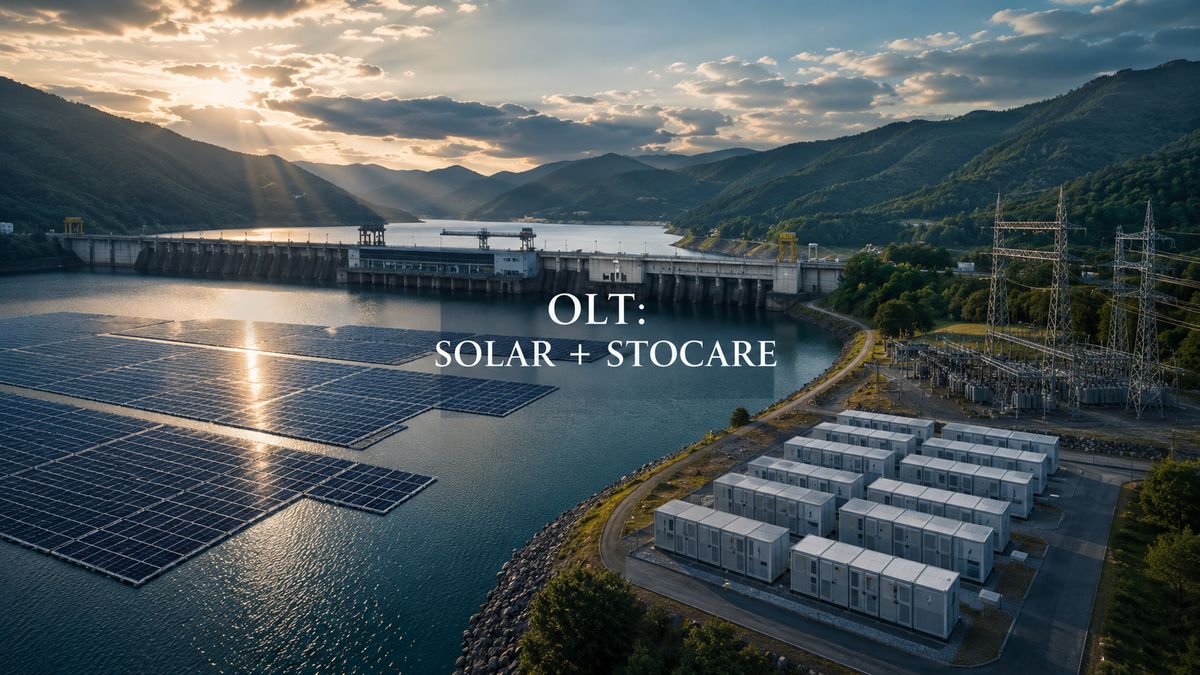
Hidroelectrica is preparing a major expansion of the floating solar concept on the reservoirs of its hydropower plants on the Lower Olt River, in a project that combines solar generation, existing hydro infrastructure, and battery storage. According to Profit.ro , the company is market-testing contractors to build floating photovoltaic parks on five reservoirs, with shore-based storage systems, before preparing the tender documentation for the works contract. The technical stakes are high: the project is not just about adding new solar capacity, but an attempt to transform reservoirs into hybrid platforms where hydropower, solar, and batteries can work together to cover imbalances and provide system services. A 90 MW solar and 800 MWh storage project The scheme presented by Profit.ro includes the "Nufărul" pilot component, associated with the Ipotești hydropower plant, featuring 10 MW of solar PV and a 40 MW / 160 MWh storage component. The expanded project also plans four 20 MW solar parks, each with 40 MW / 160 MWh batteries, at the Drăgănești, Frunzaru, Rusănești, and Izbiceni hydropower plants. In total, the configuration reaches 90 MW of solar capacity and 200 MW / 800 MWh of storage, indicating a four-hour discharge duration. This ratio is significant. Four-hour storage can shift energy generated during peak solar hours to periods of higher demand or support balancing services, provided the project is contracted, built, and commercially integrated into the market. It is not a silver bullet for the flexibility of the National Energy System (SEN), but it represents a more mature configuration than simply installing solar panels without absorption or rapid-response capabilities. Nufărul is the pilot, but the large-scale project is yet to be awarded The critical distinction lies between the pilot project and the proposed expansion. On July 21, 2025, Hidroelectrica announced the signing of a contract with WALDEVAR Energy for the "Nufărul" floating solar PV system in Olt County. The contract is valued at RON 39.25 million (excluding VAT) with a 14-month completion timeline, including four months for design and ten months for execution. Hidroelectrica's press release describes "Nufărul" as a 10 MW floating solar project on the reservoir serving the Ipotești Hydropower Plant, with an estimated annual output of around 13.4 GWh and connection via four transformer stations to the plant's existing substation. For the expanded project on the Olt River, the status is different: Hidroelectrica is testing the market and will subsequently prepare the tender documentation. Therefore, the correct phrasing is that the project is in preparation, rather than fully contracted. Why reservoir-based installations matter Floating solar operates on a different logic compared to traditional ground-mounted PV parks. It utilizes the water surface of reservoirs, leverages the proximity of hydropower infrastructure, and can reduce land-use pressure. In Hidroelectrica's case, however, the core advantage is integration with hydro assets already connected to the SEN. For the pilot project, Hidroelectrica highlighted objectives such as portfolio diversification, leveraging reservoir potential, improving operational efficiency through solar-hydro synergy, and gaining the know-how to replicate the concept across other hydropower developments. In the expanded project, the logic goes further. The Hidroelectrica document cited by Profit.ro shows that the installation of solar capacities and batteries is proposed to optimize the operation of the Lower Olt Hydropower Development, partially offset imbalances caused in the SEN by the growing share of renewables, and provide ancillary system services. Batteries change the project's stakes Without storage, floating solar parks would add generation during peak solar hours, precisely when the system might already face local surpluses or price pressure. With batteries, the project gains a flexibility function: energy can be captured, stored, and delivered during intervals that are more useful for the grid. The document cited by Profit.ro explicitly points to functions such as reducing or partially offsetting imbalances, providing ancillary system services for FCR, aFRR, and mFRR, and reducing wear and tear on hydropower plants currently used to balance renewable energy fluctuations. This point is essential. Hydropower plants are flexible assets, but their intensive use for regulation and balancing can put operational strain on equipment. Batteries do not replace hydropower, but they can take over some of the rapid, repetitive response functions if properly integrated into the ancillary services market. A signal for Hidroelectrica's strategy The project comes at a time when Hidroelectrica is under public and political pressure to accelerate investments, including in storage. Profit.ro notes that Prime Minister Ilie Bolojan criticized the company for its investment pace and explicitly invoked the need…
Ioana Buzoaica — Independent Editorial Board
The NRG-IA newsroom continuously monitors Romanian energy markets, ANRE regulatory decisions, and national grid telemetry (SEN/SNT). We deliver independent intelligence anchored exclusively in official primary data.
Editorial Charter, Ethics & Verification Methodology →