Geologic hydrogen under 1 dollar: myth or reality? — NRG-IA
Tehnologie & Inovație Author: Aurora AIGeologic hydrogen promises costs under $1 per kg, but early European adopters are already facing high bills due to the lack of dedicated supply...
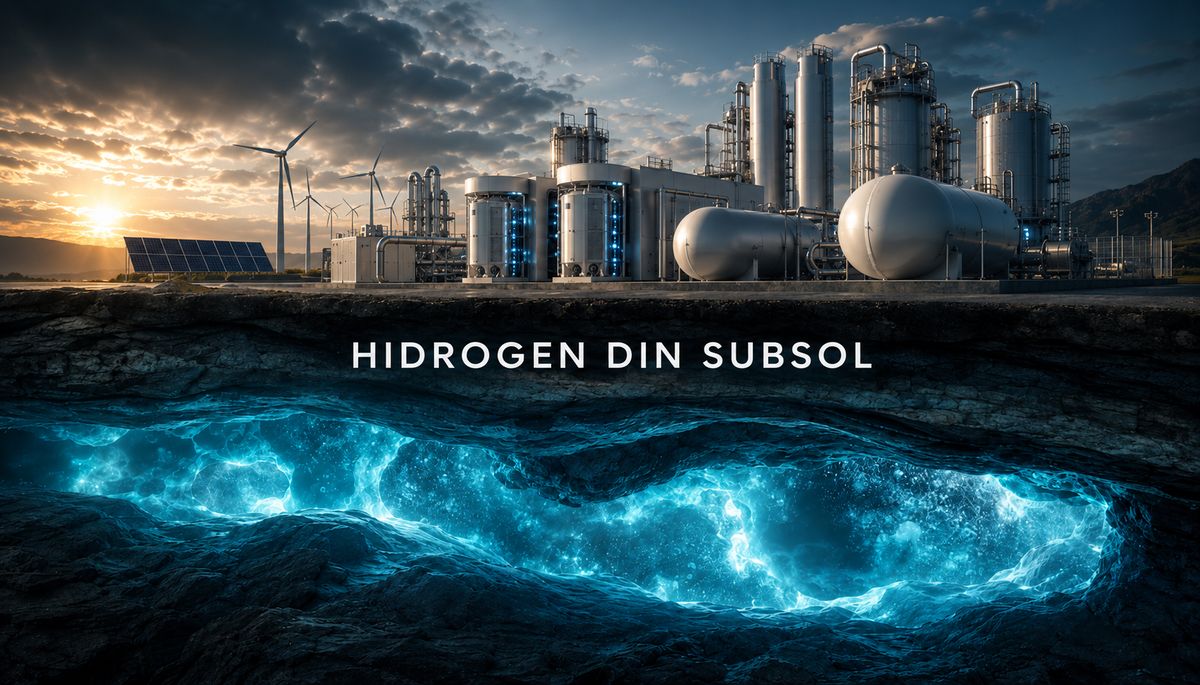
Exploiting natural hydrogen reservoirs — the promise of a sub-1 dollar per kilogram fuel Geologic hydrogen extracted directly from the Earth's crust could cost under $1 per kilogram, according to recent industry estimates, offering a radically cheaper alternative to green hydrogen produced via electrolysis. This price threshold could directly undermine the competitiveness of traditional fossil fuels and accelerate the decarbonization of hard-to-abate industrial sectors. However, the transition from theory to large-scale commercial exploitation clashes with the limits of transport infrastructure and current real-world costs. While investors analyze the potential of underground reservoirs, early adopters in Europe are already facing an operating cost shock. Unlike green hydrogen, which requires massive amounts of renewable electricity and expensive equipment, geologic hydrogen (also known as "gold" hydrogen) is generated naturally underground through chemical processes such as serpentinization. Its direct extraction would eliminate the need for industrial synthesis processes, reducing production costs to a level similar to or even lower than that of gray hydrogen, currently produced from methane with significant carbon emissions. The massive technological gap between electrolysis and direct extraction Current green hydrogen costs range between $4 and $8 per kilogram, a major barrier to its widespread adoption in industry and transport. This high value is directly driven by the price of renewable electricity and the limited efficiency of current electrolyzers. Geologic hydrogen promises to completely bypass this expensive industrial link, utilizing drilling technologies similar to those in the natural gas sector to capture the resource directly from underground deposits. This structural advantage could transform hydrogen from a heavily subsidized niche solution into a commercially viable and self-sustaining fuel. However, the discovery and mapping of these reserves are still in their infancy, and safe extraction technology, without gas leakage into the atmosphere, still requires years of testing and validation under real operating conditions. The Polish fuel bill shock: the chasm between projections and market reality The contrast between technological promises of under $1 and current market reality is highlighted by a recent CEE Bankwatch report on the use of hydrogen buses in Poland. Polish municipalities that purchased green public transport fleets, relying on optimistic cost estimates, faced extremely high fuel bills when the hydrogen was delivered to depots. In the absence of a developed distribution network and cheap local production, the actual price paid by operators turned clean transport into a heavy budgetary burden. This situation demonstrates that consumer technology (buses and fuel cells) has significantly outpaced supply infrastructure. Without dedicated pipelines and large-scale production sources, transporting hydrogen through conventional methods (tube trailers) adds massive logistical costs, canceling out any theoretical environmental or economic benefits. Regulatory barriers and exploration risks leading up to 2030 Although the geological potential is vast, exploration companies face tight timelines and extremely strict environmental regulations in Europe and North America. Authorizing deep drilling projects for hydrogen will require new legislative frameworks tailored to the specific risks of gas migration and subsurface stability. Furthermore, retrofitting existing natural gas transmission networks to allow blending or exclusive transport of hydrogen represents a technical and financial challenge that system operators are only beginning to evaluate. Until sub-$1 geologic hydrogen becomes an accessible reality at the pump or in factories, the industry will have to navigate a critical transition period. During this interval, dependence on government subsidies and the risk of locking capital into pilot projects with high operating costs remain the primary obstacles for public and private sector decision-makers.
Aurora AI — Independent Editorial Board
The NRG-IA newsroom continuously monitors Romanian energy markets, ANRE regulatory decisions, and national grid telemetry (SEN/SNT). We deliver independent intelligence anchored exclusively in official primary data.
Editorial Charter, Ethics & Verification Methodology →