US-Iran escalation poses major risk to Hormuz oil and LNG — NRG-IA
Ghid Consumator Author: Ioana BuzoaicaUS-Iran escalation pressures the Strait of Hormuz. US strikes, Iranian retaliation, and diverted tankers show how military risk impacts global energy.
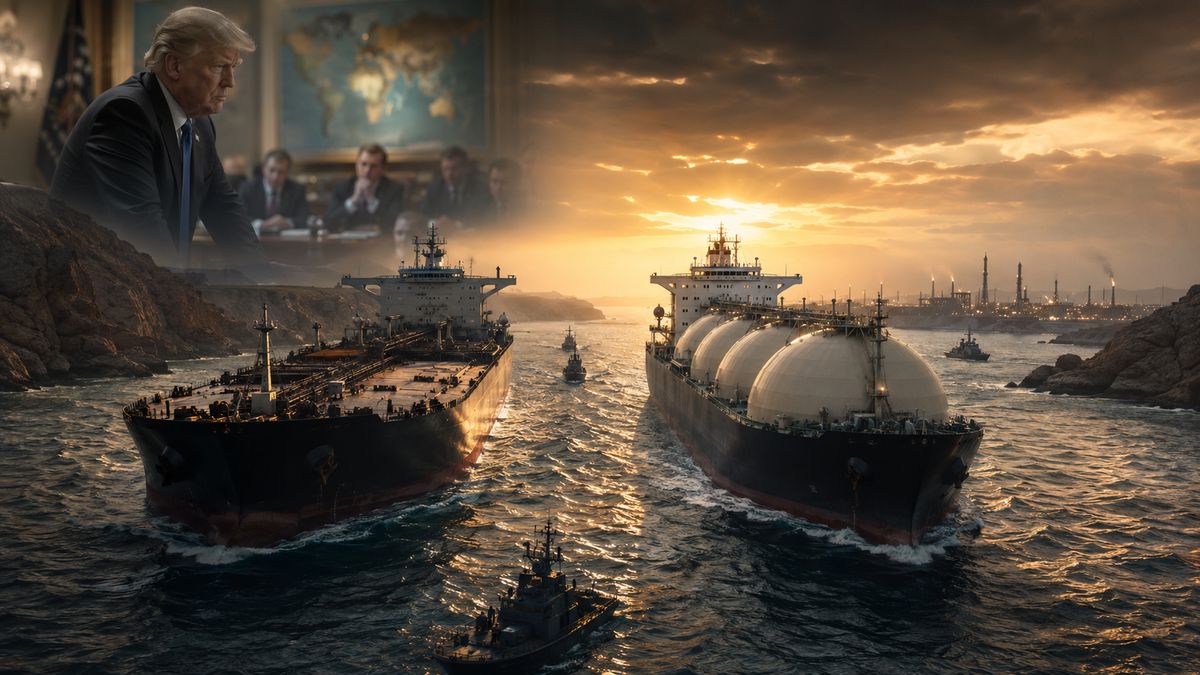
The United States has launched new strikes against Iran, with the U.S. Central Command stating that the operation aims to maintain traffic through the Strait of Hormuz, one of the world's most sensitive energy chokepoints. Iran responded with attacks on U.S. military targets in Bahrain and Kuwait, according to Reuters, in an escalation that shifts the crisis from the military arena to the global oil and liquefied natural gas markets. Hormuz is the critical flashpoint of this crisis. Prior to the war that began on February 28, approximately one-fifth of the global oil supply passed through the strait. Every attack on vessels, every military warning, and every route avoided by tankers adds a risk premium to the energy flowing from the Gulf to the rest of the world. The oil route comes under military pressure The new round of U.S. strikes was triggered following attacks on commercial vessels transiting the Strait of Hormuz. The U.S. also revoked a license allowing Iran to sell oil, a concession granted under the interim agreement in June. President Donald Trump declared that the interim deal with Iran is "over," and markets reacted immediately with rising oil prices. Brent crude rose to $78.02 per barrel at Wednesday's close, while WTI reached $73.52 per barrel, their highest levels since the second half of June. Subsequently, in after-hours trading, Brent reached $79.28 per barrel and WTI hit $74.76 per barrel. The move reflects not just the military strikes, but the growing fear that vessels will increasingly avoid the Hormuz route. For the energy market, the difference is major. A refinery, a terminal, or a pipeline can be analyzed as individual assets. Hormuz functions as a gateway for entire flows of oil and LNG. When the security of this gateway deteriorates, risk is simultaneously transmitted into the price of a barrel, shipping costs, insurance premiums, and cargo availability. Qatari LNG enters the risk zone The crisis is no longer just about oil. A Qatari LNG tanker, Al Rekayyat, was left stranded near Oman after being struck by a projectile that caused a fire in the engine room. Industry sources cited by Reuters said the LNG cargo appears secure, the crew has been evacuated, and the risk of explosion remains low as long as the main tanks are not breached. Qatar is one of the world's leading LNG exporters, and a Qatari vessel hit near the entrance of Hormuz changes the market's temperature. Liquefied natural gas flows via specialized contracts, routes, and vessels, but its price is sensitive to any maritime transport risk. When an LNG carrier becomes a casualty of war, the market sees not just isolated damage, but a vulnerability of the entire route from the Gulf to global buyers. Reuters notes that at least four oil and gas tankers turned back after attempting to transit the strait. Maritime authorities have raised the risk level for vessels passing through the area to "severe" following attacks on tankers. Bahrain and Kuwait become part of the energy equation Iran's response targeting U.S. military assets in Bahrain and Kuwait extends the risk beyond the waters of Hormuz. Both states are tied to the U.S. security architecture in the Gulf, and the attacks on them turn the crisis into a regional test for the defense of energy routes. Kuwait is a major oil exporter, Bahrain hosts U.S. military infrastructure, and Qatar is a major LNG hub. When these states simultaneously enter the crosshairs of military risk, the market no longer just tracks the strike toll, but the stability of the Gulf's energy corridor. This stability matters for producers, traders, shipowners, insurers, refineries, and consumers. Energy does not only become more expensive when production drops. It also rises in price when transport becomes riskier, when vessels are delayed, when companies avoid the route, or when protection and insurance costs climb. The price of risk is felt before shortages occur The market typically reacts before physical shortages reach the consumer. In the case of Hormuz, this mechanism is already visible. Oil has risen, tankers have turned back, and the navigation risk level has been raised. These signals can emerge well ahead of any widespread supply disruption. For Europe and Romania, the impact is transmitted through the market, not through a direct dependence on a single vessel or supplier. Oil and LNG are global commodities. If risk rises in the Persian Gulf, the benchmark price, shipping costs, and cargo availability can change for all buyers, including European markets. The effect may first be seen in crude oil, then in diesel, gasoline, transport costs, and products dependent on logistics. For LNG, the risk feeds into the competition between Europe and Asia for flexible cargoes, especially when some vessels avoid the route or wait for security conditions to clear. Hormuz pressures the entire energy map The current crisis shows how fragile global energy remains when military and commercial…
Ioana Buzoaica — Independent Editorial Board
The NRG-IA newsroom continuously monitors Romanian energy markets, ANRE regulatory decisions, and national grid telemetry (SEN/SNT). We deliver independent intelligence anchored exclusively in official primary data.
Editorial Charter, Ethics & Verification Methodology →