Strait of Hormuz: Oil Flows Exceed 13.5 Million bpd — NRG-IA
Geopolitică & Energie Author: Ioana BuzoaicaOil flows return to the Strait of Hormuz. The recovery to 13.5M bpd shows Iran is struggling to block Gulf exports, despite high risks and transit costs.
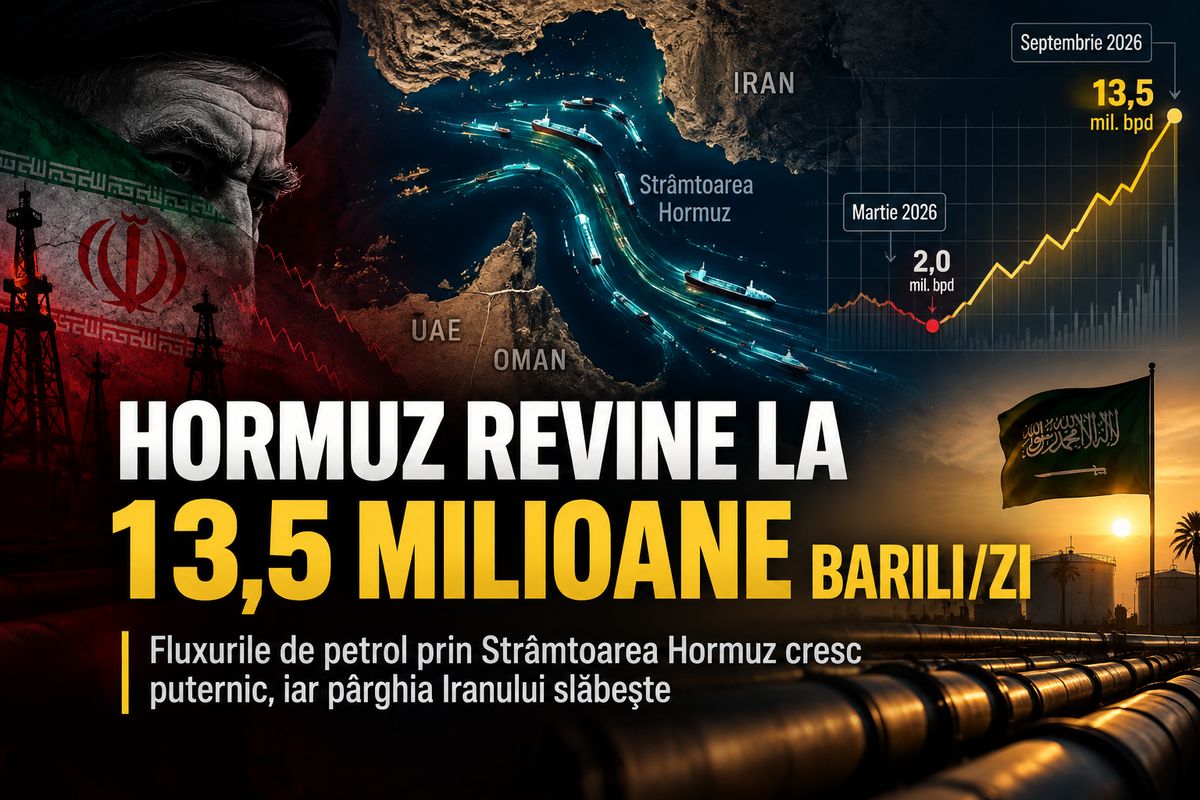
The Strait of Hormuz is once again carrying massive volumes of oil. Outbound flows from the Persian Gulf have exceeded 13.5 million barrels per day on a seven-day moving average, according to Kpler data analyzed by Rory Johnston, founder of Commodity Context. This is the highest level in months and a spectacular recovery from approximately 2 million barrels per day in March , immediately after the outbreak of war on February 28. However, this recovery does not return Hormuz to its pre-conflict state. Johnston estimates that approximately 20 million barrels per day passed through the strait before the war, while independent data from the U.S. Energy Information Administration shows a total oil flow of 21.6 million barrels per day in Q4 2025, before the average collapsed to just 4.9 million in Q2 2026. Nevertheless, the shift in September is significant enough to alter the strategic equation of the strait. Iran retains the capability to make Hormuz dangerous and costly, but tracking data shows it is finding it increasingly difficult to keep oil flows at the extremely depressed levels seen in the early months of the conflict. Saudi Arabia Pushes Oil Back Through Hormuz The primary driver of this recovery is Saudi Arabia. Attacks on the East-West pipeline, also known as Petroline, struck the very infrastructure built to allow Riyadh to transport oil from the eastern part of the country to Yanbu on the Red Sea, bypassing Hormuz. Prior to the damage, the pipeline carried approximately 5.5 million barrels per day , of which about 4.5 million were exported via Yanbu, according to Kpler. Attacks on several pumping stations in September drastically reduced the operation of this alternative route, forcing Saudi Aramco to redirect significant volumes back to Persian Gulf terminals. The effect was immediate. On September 20, Saudi Aramco loaded approximately 14 million barrels onto seven VLCCs at Ras Tanura. In the week beginning September 13, 22 tankers carrying approximately 42 million barrels exited through Hormuz, according to tracking data cited by Reuters. Subsequent Kpler data confirms that this move was not an isolated incident. In the week beginning September 20, crude exports through Hormuz had already reached 33.7 million barrels by Friday, while the previous week had closed at 49.2 million barrels. The majority of the tankers were carrying Saudi oil, followed by Iraqi crude. The paradox is stark: damage to the primary Saudi infrastructure built to bypass Hormuz has pushed even larger volumes of oil back through the very strait that Iran is trying to use as strategic leverage. Iran Can Disrupt Hormuz, but Struggles to Control Volumes The increase in flows changes the meaning of the question of who "controls" Hormuz. Military control, maritime safety, and effective control over the volume of oil transiting the strait are not the same thing. Iran retains the ability to threaten vessels, increase operational risk, and keep insurance and shipping costs exceptionally high. Attacks on vessels continued in September, including on tankers carrying Saudi oil. But if the Hormuz leverage is measured by the ability to physically block the exports of Gulf competitors, the recovery from around 2 million to over 13.5 million barrels per day indicates a substantial erosion of this capability. This is not the equivalent of full U.S. control over the strait, nor is it a return to normal operations. However, it is a fundamentally different situation compared to March: very large volumes are moving once again, and Gulf producers have developed operational procedures capable of transporting oil through a still-hostile environment. Iran itself continues to treat Hormuz as a bargaining chip. Tehran signaled in September that it would be prepared to reopen the strait within seven days if the United States reduces military pressure and lifts the blockade on Iranian ports. The offer shows that Hormuz remains a diplomatic lever, but the recovery of flows reduces the value of a threat based on an almost complete halt to oil traffic. Oil Flows Through Crisis Logistics The 13.5 million-plus barrels per day do not represent a return of the oil system to normal. Instead, they reflect the emergence of a much more sophisticated and far more expensive crisis logistics system. Producers are increasingly relying on shuttle tankers that exit the Gulf and perform ship-to-ship (STS) transfers in the Gulf of Oman to other VLCCs, which then proceed to Asia. STS activity has surged, and auxiliary infrastructure near Oman is beginning to reach capacity limits. Kpler estimates that liquid STS operations in the Gulf of Oman have risen from just 0.16 million barrels per day in 2025 to several million barrels per day after the outbreak of the conflict. On September 21, Reuters estimated that approximately 2.5 million barrels per day were being transferred through this new shuttle and STS system, up from 1.4 million in August. This procedure allows oil to…
Ioana Buzoaica — Independent Editorial Board
The NRG-IA newsroom continuously monitors Romanian energy markets, ANRE regulatory decisions, and national grid telemetry (SEN/SNT). We deliver independent intelligence anchored exclusively in official primary data.
Editorial Charter, Ethics & Verification Methodology →